
The Pharma Freight Problem Your BPO Can't See

June 6, 2026
•
6
mins
Cold chain accessorials, 15 ERP instances, and 20 years of outsourced dependency. The audit gap at scale.
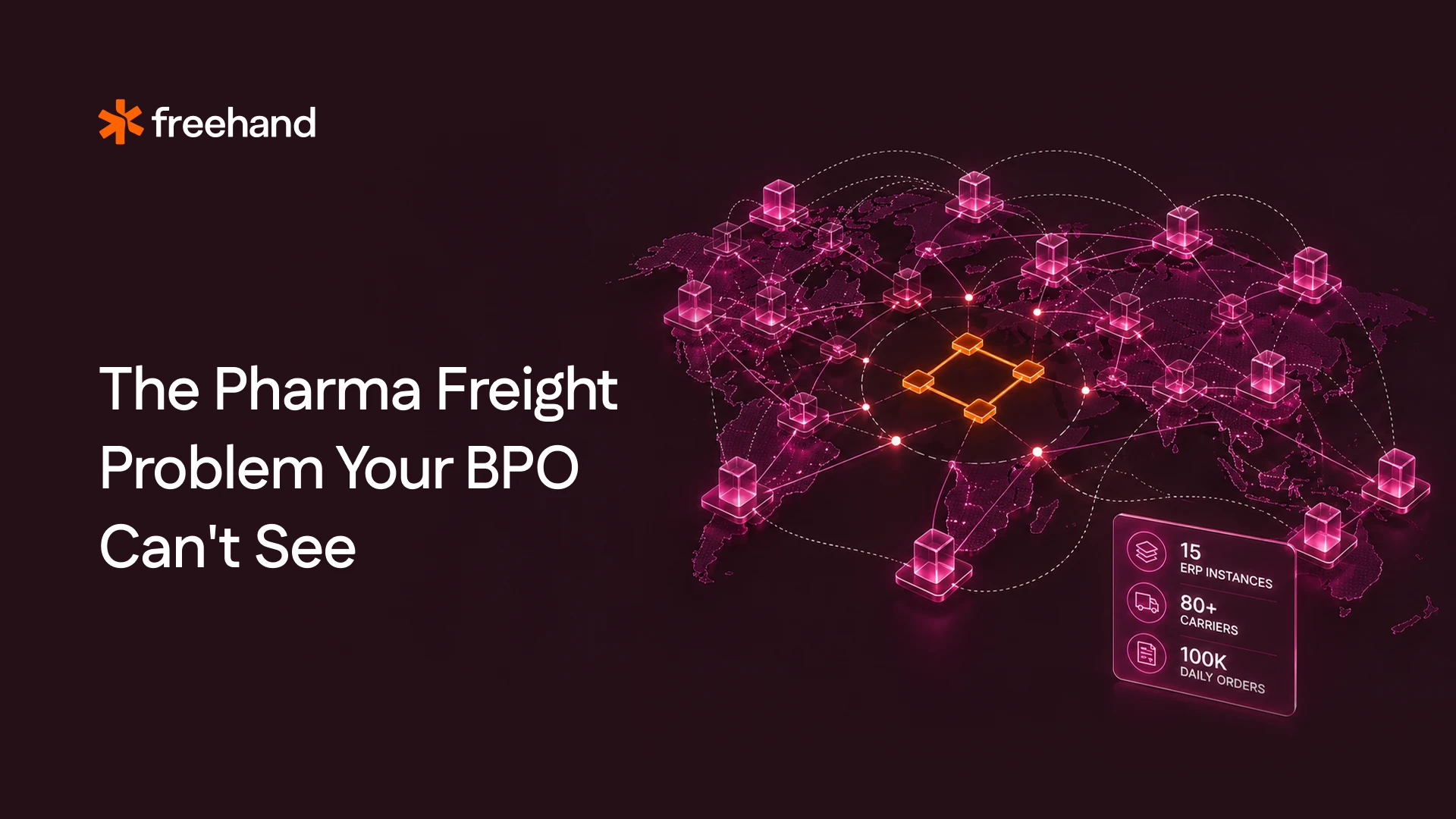
Global pharmaceutical companies operate freight networks of extraordinary complexity. A single organization may run 140 manufacturing facilities across 60-plus countries, manage multimodal freight across air, truckload, LTL, and ocean, coordinate through 400 globally managed sites, and process over 100,000 orders daily. The freight audit function that sits over this network is responsible for validating billing from 80-plus carrier relationships in formats ranging from structured EDI to PDF invoices from regional carriers who have never heard of EDI.
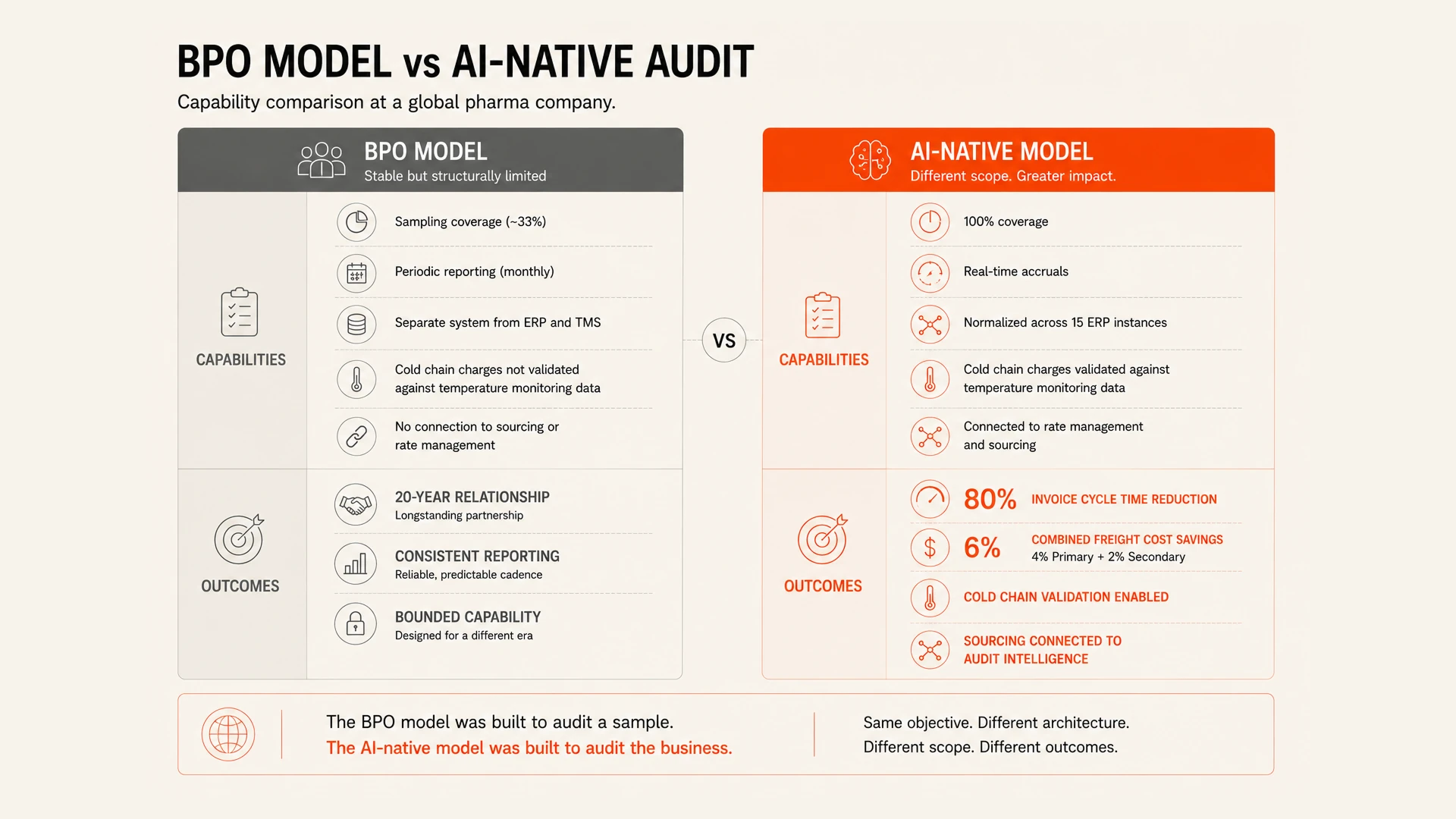
Most large pharmaceutical companies have been managing this with a BPO. One major global healthcare company relied on the same freight audit provider for 20 years in North America. The relationship was stable. The reporting was consistent. The audit was doing what the audit was designed to do. The problem was that the audit was designed for a simpler version of the freight network than the one that existed in 2025.
The 15-ERP problem
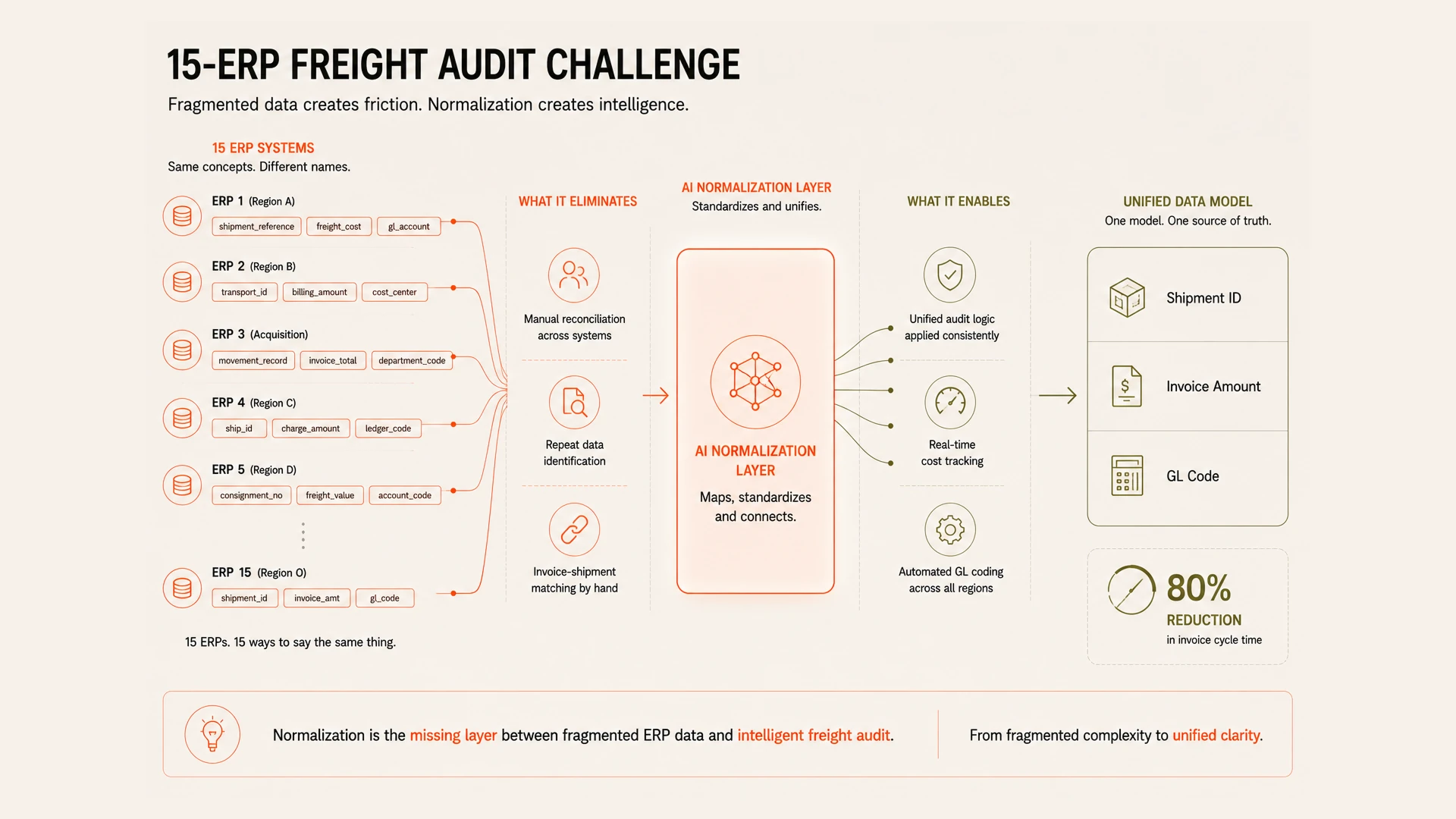
A pharmaceutical company with 15 global ERP instances — all SAP, but configured differently across regions, business units, and acquisition histories — does not have a unified view of shipment cost data. Fragmented source data across 15 systems produces repeat data, inconsistent field naming, and invoice discrepancies that require manual processes to identify and reconcile. The manual processes consume significant team hours every cycle. The discrepancies they find are the ones that were visible enough to surface through manual review. The ones that required systematic cross-referencing across multiple ERP instances were not being found.
The 80% reduction in invoice cycle time that followed deployment of an AI-native audit system at this company was not primarily from faster invoice processing. It was from eliminating the manual reconciliation work that the fragmented ERP environment had made necessary. When the audit system can normalize data across all 15 ERP instances automatically — connecting each invoice to the correct shipment record, the correct rate card, the correct GL coding — the manual reconciliation step disappears. The time that was spent on reconciliation becomes available for the decisions that actually require human judgment.
The cold chain audit gap
The pharmaceutical freight audit problem has a dimension that standard audit programs were never designed to address: temperature-sensitive billing. Cold chain shipments generate accessorial charges — temperature excursion handling fees, cryogenic surcharge premiums, GDP documentation fees, chain-of-custody handling charges — that are triggered by specific shipment conditions. A temperature excursion handling fee is legitimate if a temperature deviation occurred during transit. It is not legitimate if the monitoring data shows continuous in-range temperature throughout.
Validating these charges requires connecting the audit system to the temperature monitoring data — the IoT device records, the carrier's temperature log, the GDP documentation system. Most freight audit programs, including sophisticated BPO operations, were not built to make this connection. The charge is checked against the contracted fee schedule. Nobody checks whether the fee was earned. At the scale of a global pharmaceutical company with hundreds of cold chain movements weekly, the unearned cold chain charges that pass through audit represent a recoverable cost pool that has simply never been in scope.
“Cold chain billing is charged for temperature events. Most audit systems only check the rate on those charges. Nobody checks whether the event actually happened.”
What displacement of the BPO relationship delivered
The company that had relied on CT Logistics for freight audit and payment for 20 years in North America implemented Freehand as the replacement. The transition delivered capabilities that the BPO model was structurally unable to provide: 100% invoice coverage versus the sampling model the BPO operated under, real-time freight spend analysis with automated accruals versus the periodic reporting the BPO produced, and direct ownership of the audit process versus the dependency on the provider's team and tools.
The 6% combined freight cost savings across primary and secondary movements — 4% in primary movement through AI-powered load optimization and 2% in secondary movement through intelligent rate structuring — came from capabilities that the audit function itself was not previously connected to. When the audit system, the rate management system, and the sourcing system are all running on the same data infrastructure, the savings that procurement negotiates are immediately enforceable in audit, and the patterns that audit identifies feed directly into the next sourcing cycle. The BPO model, operating as a separate function on a separate system, could not produce this connection.