
What Tariff Volatility Does to Freight Contracts in Practice

July 11, 2026
•
6
mins
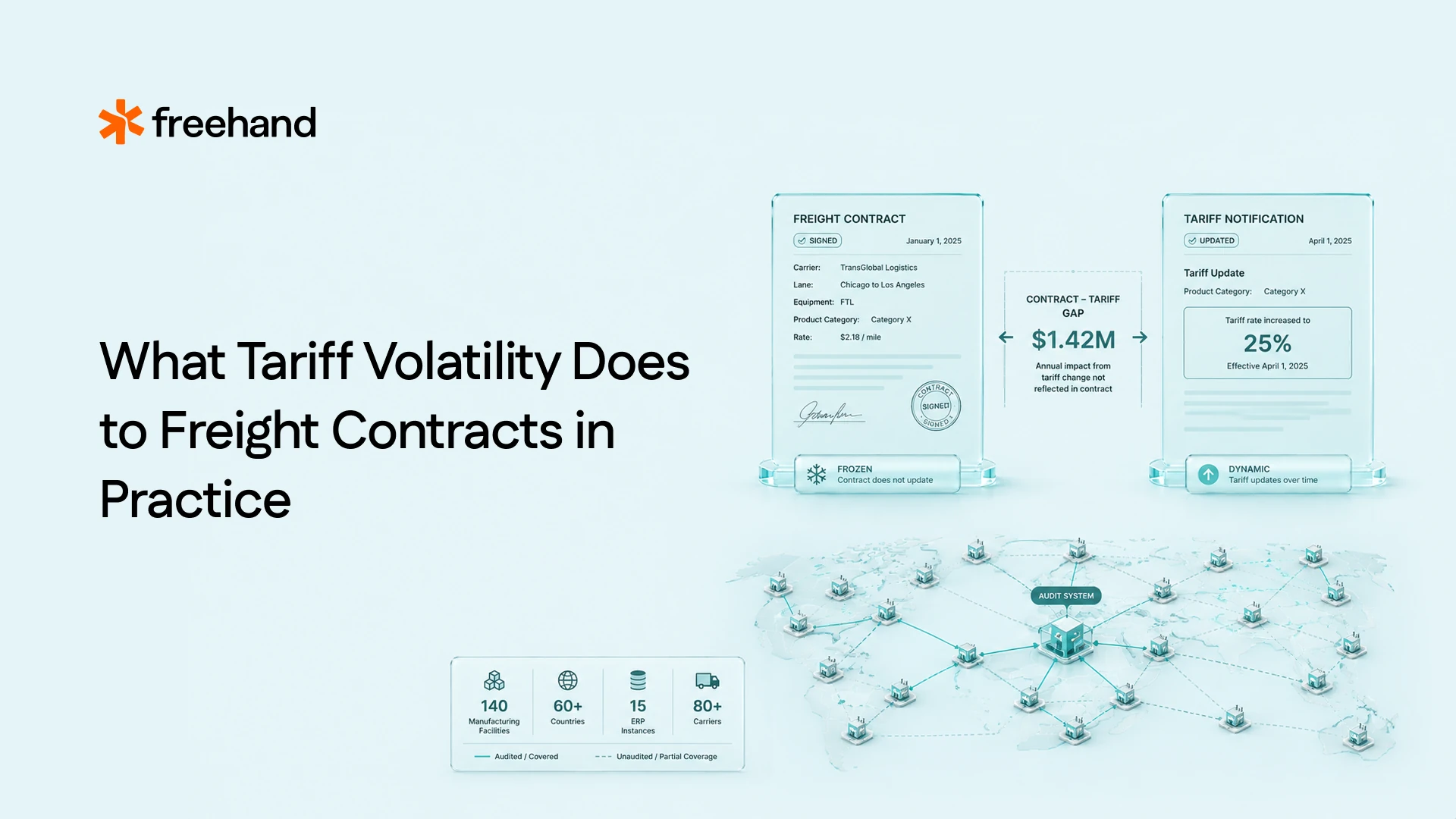
A freight contract signed before the tariff change is not wrong. It is just describing a cost structure that no longer exists.
A freight contract documents how two parties will price a service under conditions that existed when they negotiated it. When those conditions change significantly — a 25% tariff, a supply chain restructuring, a geopolitical rerouting — the contract does not automatically update. It continues to govern billing under terms agreed in a different cost environment.
This creates a recurring problem. The contract says the rate from Chicago to Los Angeles for this product category is $X. The tariff change has shifted the freight flow — different origin, different lane, different carriers. The contract governing these movements was written for a supply chain that no longer exists. The rate may still be approximately right. The lane coverage and accessorial structures may not.
Three ways tariff changes break freight contracts
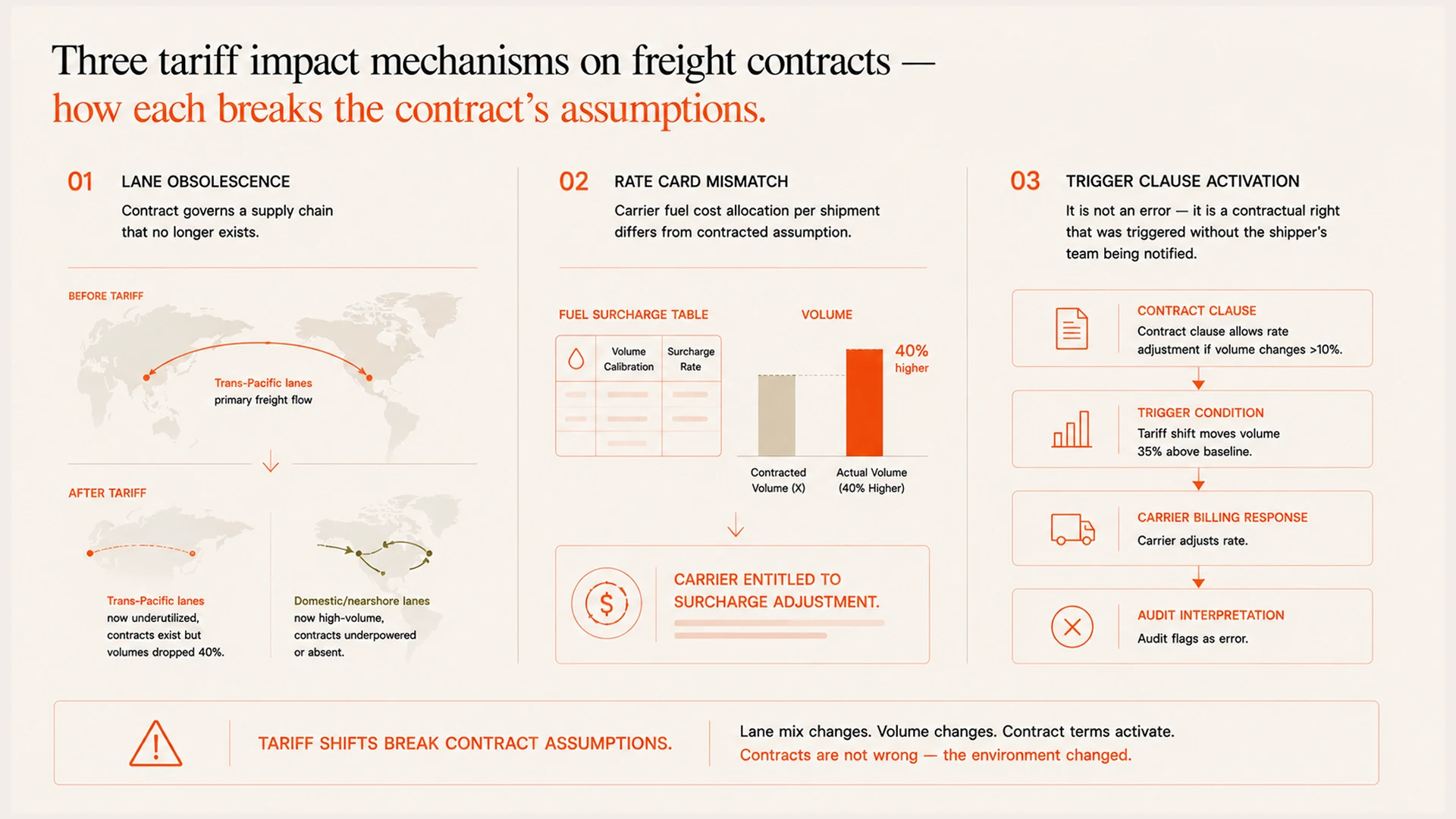
The first mechanism is lane obsolescence. A tariff change that makes sourcing from China economically unviable for a product category shifts freight flows from Trans-Pacific lanes to domestic or nearshore lanes. The freight contracts covering the Trans-Pacific lanes remain in place — they were signed annually and do not expire until the next RFQ cycle. The contracts covering the newly relevant domestic and nearshore lanes may not exist, may not have been recently negotiated, or may not reflect the volume increase that the supply chain shift produces.
The second mechanism is rate card mismatch. The fuel surcharge tables, accessorial schedules, and base rate structures in a freight contract are calibrated to the traffic patterns and carrier cost structures that existed when the contract was signed. A significant tariff change that alters the traffic patterns on lanes covered by the contract may make those calibrations incorrect — not necessarily by the carrier's fault, but because the contract was written for a volume and routing profile that no longer matches what is actually moving.
The third mechanism is trigger clause activation. Many freight contracts allow rate adjustment under specific conditions — fuel price movements, volume changes, geopolitical events. Tariff changes may activate these clauses without the shipper's team being alerted. The carrier adjusts billing. The audit system flags it as an error. It is not. It is a contractual right that was triggered, invisibly.
The compliance cost of tariff volatility
Tariff changes also affect the compliance dimension of freight contracts. Free trade agreement qualification — which determines whether a product moves at the preferential duty rate or the MFN tariff rate — depends on the product's country of origin and the percentage of value added in each country in the supply chain. When tariff changes drive supply chain restructuring, the origin and value-add percentages change. An FTA qualification that was valid before the restructuring may not be valid after it.
When supply chain restructuring changes the origin and value-added percentages of a product, FTA qualification that was valid before the restructuring may not be valid after it. A company that continues claiming FTA treatment without recalculating qualification incurs both the financial risk of customs audit and the compliance risk of a good-faith violation.

What systematic tariff response requires
Responding systematically to tariff changes — rather than discovering the implications six months later in a freight cost variance or a customs audit — requires connecting the trade compliance function, the freight contract management function, and the audit function to the same data infrastructure. When a tariff change occurs, the system should identify which product categories are affected, which freight contracts cover the lanes on which those products move, which trigger clauses in those contracts may be activated, and which FTA qualifications should be recalculated based on any sourcing changes.
This is the function that 98% of supply chain organizations were attempting to perform manually in response to the 2025 tariff changes, according to Gartner's supply chain survey. The ones who had built the connected data infrastructure were able to respond in days. The ones working from siloed contract management systems, disconnected audit platforms, and manual FTA qualification processes were still reconciling the impact months later — which is why the next tariff change, when it comes, will find most of them in the same position.