
Why Freight Sourcing and Audit Must Run on the Same Rate Repository

July 8, 2026
•
7
mins
When sourcing and audit use different rate data, the savings procurement negotiates are not the savings AP enforces.
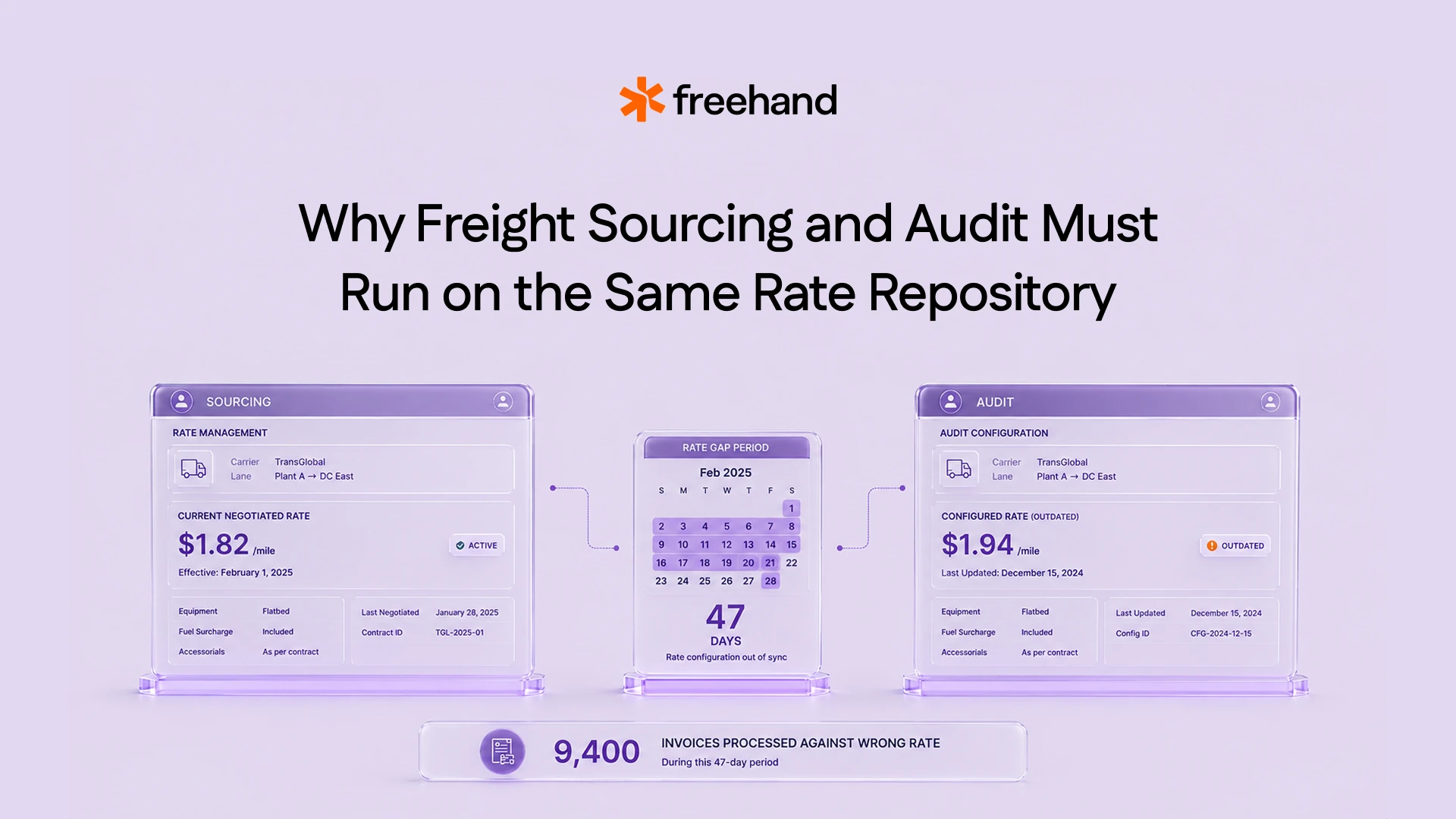
The gap between sourcing and audit is one of the most consistently overlooked sources of systematic freight cost leakage in enterprise operations. The sourcing team negotiates rates and updates the contract management system. The audit team validates invoices against the rate card in the audit platform. Between the two sits a manual process — someone has to transfer the newly negotiated rates from the contract system to the audit system. Until that transfer is complete and validated, the audit system is enforcing the old rates.
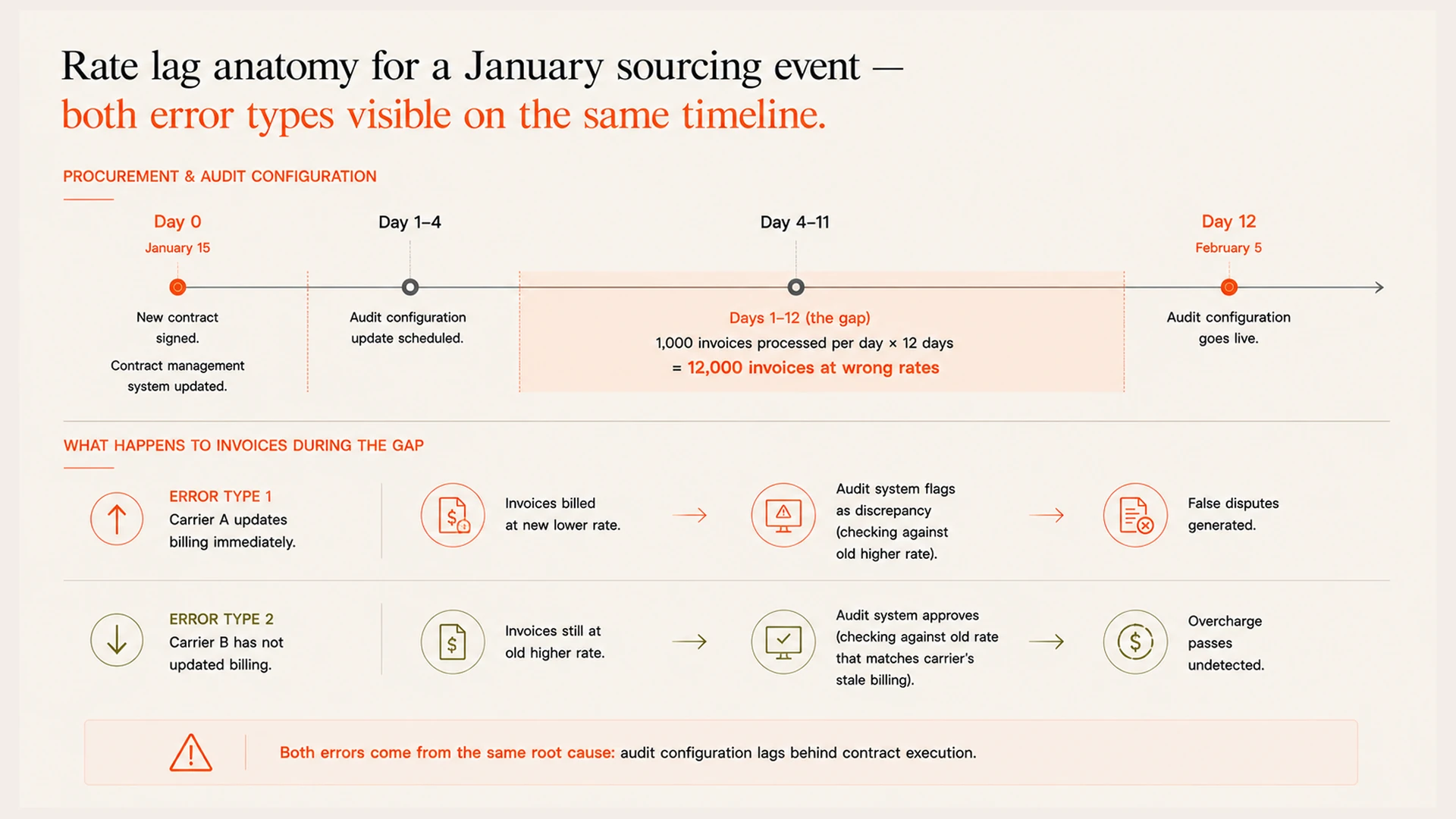
The duration of this transfer gap varies. In organizations with good process discipline and dedicated implementation resources, it runs two to four weeks. In organizations where the rate configuration update competes with other audit platform maintenance priorities, it runs four to eight weeks. During this window, two classes of error are being systematically produced: invoices at the new (lower) rate are being flagged as discrepancies and routed to manual exception review, and invoices at the old (higher) rate that carriers have already updated their billing to reflect are being approved when they should not be.
The two-direction error during rate transition
The first error type — false disputes on correct invoices — is visible and produces measurable friction. Carriers receive disputes for charges that comply with the new contract. They reject the disputes. The exception team has to review, confirm the carrier is correct, and close the disputes. The carrier relationship incurs unnecessary friction. The exception team spends time on work that was created by the audit system's configuration lag, not by a billing error.
The second error type — missed overcharges from stale rate cards — is less visible and more costly. When a carrier updates their billing to reflect new contract rates and the audit system is still checking the old ones, invoices that exceed the new contract may pass. When a carrier has not yet updated their billing — still charging the old higher rate — those invoices also pass, because the audit system thinks the old rate is still current. Both errors travel in the same direction: undetected overcharges.
What a shared live repository eliminates
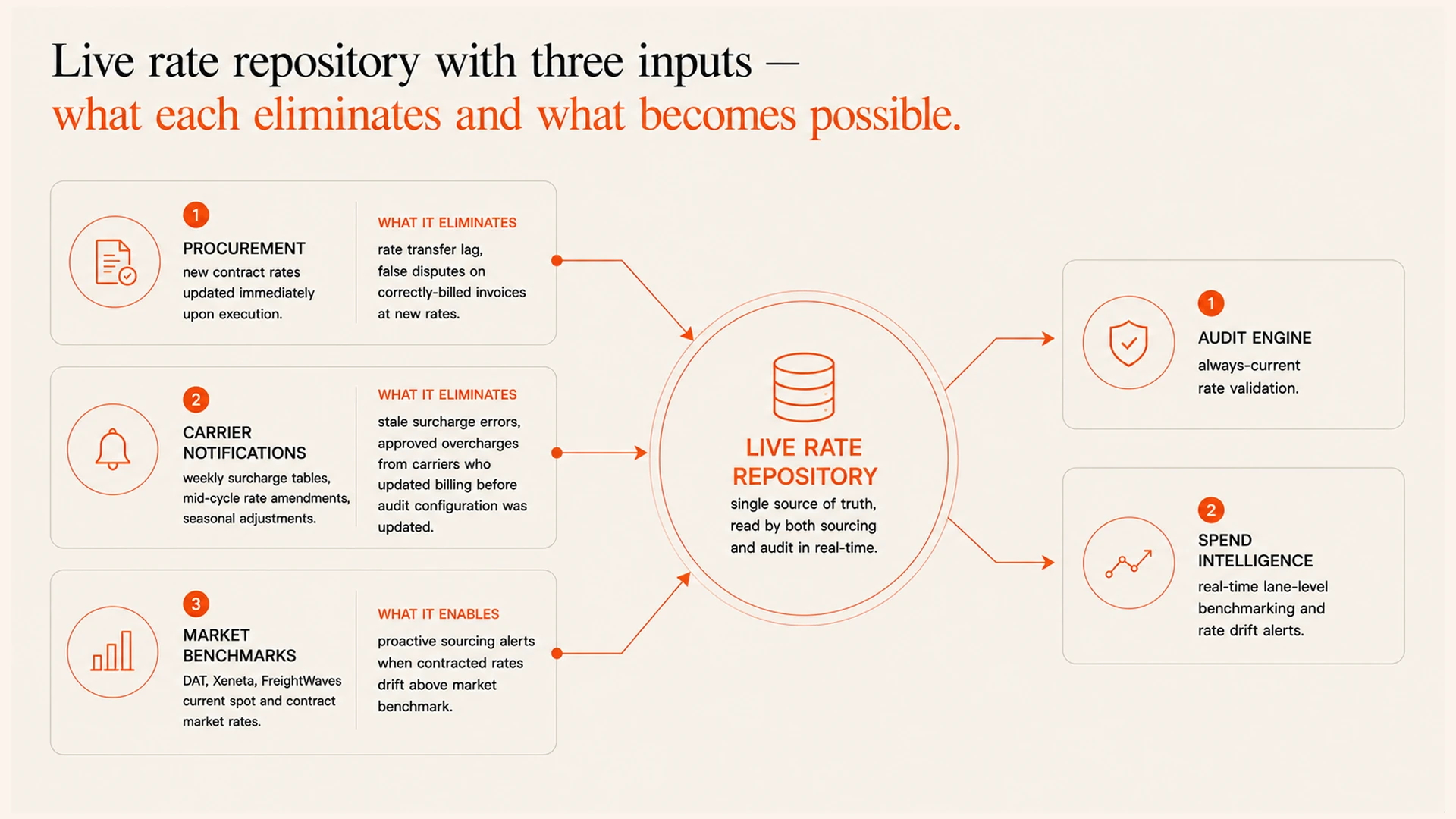
A live rate repository used by both sourcing and audit is not primarily a technology solution. It is an architectural decision that removes the handoff between two functions that should share the same data. When procurement completes a sourcing event and updates the rate repository, the audit engine reads from that same repository when processing the next invoice. There is no transfer step. There is no configuration update cycle. There is no validation period. The rate that was negotiated on Tuesday is available to the audit logic on Wednesday.
The audit system is not the only beneficiary of a live repository. The sourcing team gains access to audit data — the actual billing behavior of each carrier on each lane across the invoice population — as input to sourcing decisions. The lanes where carriers consistently bill above contracted rates are the lanes where the rate negotiation should focus. The carriers whose billing accuracy deteriorates as their volume grows are the ones whose contract terms should address performance. The connection between audit intelligence and sourcing strategy becomes a closed loop rather than two separate processes that run on different data.
“Sourcing negotiates what audit enforces. When those two functions read from different data, the savings are theoretical. When they read from the same data, the savings are immediate.”
Carrier rate change notifications as a third input
A live rate repository maintained only from procurement events will still have gaps. Carriers update their billing logic outside the contract amendment process: weekly fuel surcharge tables, mid-cycle accessorial adjustments, seasonal rate changes that carriers apply to their billing systems without formally notifying shippers. An audit system that is only updated when procurement runs a sourcing event will be accurate on the contracted rates but stale on the billing reality.
Ingesting carrier rate change notifications — the weekly published surcharge tables, the mid-cycle amendments, the seasonal adjustments — as a continuous feed into the live repository closes this gap. The audit system checks invoices not against the rates as they were at the last sourcing event but against the rates as they are today. The sourcing team gains visibility into how carrier billing reality has drifted from the contracted terms — which is often the trigger that justifies a mid-cycle renegotiation or a targeted sourcing event on specific lanes.