

Duplicate Invoices: Causes, Detection, and How to Prevent Them
.webp)
June 25, 2026
•
12
mins
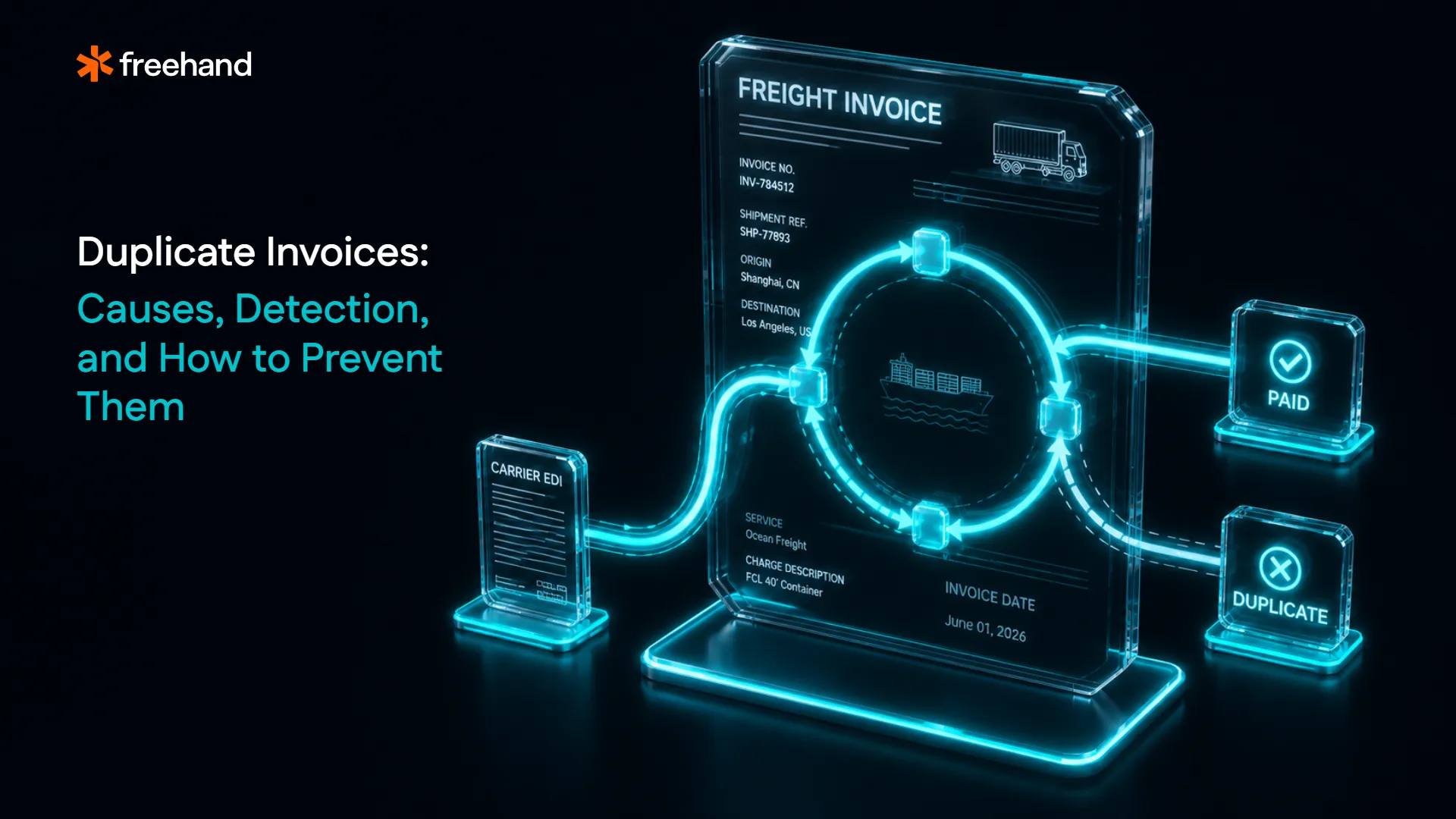
A duplicate invoice is any invoice that enters the accounts payable system more than once for the same transaction. It may be an exact copy or a near-identical resubmission with minor variations in date, formatting, or reference number. Left undetected, duplicate invoices cause overpayments, distort spend reporting, create VAT and audit complications, and in some cases signal deliberate fraud. Duplicate or miscalculated spend accounts for 1 to 3% of total supplier payments annually, and duplicate payment rates in high-volume AP environments can reach up to 3% of total outgoing payments.
Key Takeaways
- A duplicate invoice is any invoice submitted more than once for the same transaction, resulting in the same charge appearing in the accounts payable system multiple times, whether through accidental resubmission, system error, or deliberate fraud.
- Duplicate invoices fall into three categories: exact duplicates (identical invoice numbers and amounts), near-duplicates (minor variations in date, number, or formatting designed to evade header-level matching), and fraudulent duplicates (deliberate resubmissions with alterations intended to secure multiple payments).
- Standard header-level duplicate detection catches exact matches only. Near-duplicates require multi-field matching across carrier, amount, shipment reference, origin, destination, and date simultaneously.
- In freight and logistics, duplicate invoice risk is structurally higher than in general AP. Carrier invoices carry no PO reference, arrive through multiple channels, and are frequently resubmitted when payment confirmation is delayed.
What Are Duplicate Invoices?
A duplicate invoice is any invoice that appears more than once in accounts payable for the same underlying transaction, whether it is an exact copy of an invoice already in the system or a near-identical resubmission carrying minor variations designed to evade standard matching logic.
The definition has two meaningful parts. The first covers accidental duplicates: the same invoice submitted through two channels, re-entered manually by an AP clerk who could not confirm the original had been logged, or generated by a system that processed a single transaction twice.
The second covers deliberate duplicates: invoices resubmitted with altered dates, different invoice numbers, or modified amounts intended to look like new charges and clear AP without triggering a match flag.
Both categories produce the same operational outcome. Money leaves the organization for a transaction that was already paid or processed.
The recovery process, which requires contacting the supplier, requesting a credit, and waiting for resolution, is slow, contentious, and sometimes unsuccessful if the dispute window has closed.
The distinction between duplicate invoice types matters because different detection approaches catch different categories. Exact duplicate detection is straightforward. Near-duplicate and fraudulent duplicate detection requires more sophisticated matching logic that most manual AP processes and many basic AP systems do not apply.
What Causes Duplicate Invoices?
Duplicate invoices originate from two fundamentally different sources: accidental errors in the AP process or supplier billing systems, and deliberate fraud. Understanding which source is generating duplicates determines which controls will reduce them most effectively.
Accidental causes
The most common accidental cause is multi-channel invoice submission. A supplier sends an invoice by email and follows up with a paper copy when they don't receive payment confirmation. Both enter the AP workflow. If the AP team processes them independently without checking whether the invoice number already exists, both get logged.
Manual data entry at scale is the second common source.
An AP clerk re-enters an invoice because it's unclear whether the original was logged. A high-volume close period creates a condition where the same invoice gets keyed twice by two different team members. Both scenarios are ordinary process failures at ordinary AP volumes, not negligence.
System errors generate a third category. ERP imports that process the same data file twice, EDI feeds with duplicate message identifiers, and payment processing systems that retry a failed submission sometimes create invoice records without any human involvement.
Fraudulent causes
Fraudulent duplicate invoices are deliberate resubmissions designed to clear AP controls and secure multiple payments for a single transaction.
The most common tactic involves minor alterations: changing the invoice number by one digit, adjusting the invoice date by a few days, or modifying line item descriptions while keeping the total amount identical.
These alterations are calibrated to evade header-level matching (which checks only whether the exact invoice number already exists) while appearing legitimate to manual reviewers who don't cross-reference amounts and supplier details systematically across payment history.
Internal fraud is a separate risk. Employees with access to both invoice creation and payment approval functions can create and approve duplicate payments for personal gain. Separation of duties controls and two-person authorization requirements for payment runs address this risk specifically.
According to the ACFE's 2024 Report to the Nations, organizations lose nearly 5% of annual revenue to occupational fraud, and billing fraud, which includes duplicate invoice schemes, is among the most common categories.
What Is the Financial Impact of Duplicate Invoices?
The direct financial impact of duplicate invoices is the overpayment amount. The indirect impact, including AP remediation time, supplier dispute resolution, audit exposure, and distorted spend reporting, consistently exceeds the direct cost in high-volume AP environments.
On the direct side, a shipper processing 500 freight invoices per month with a 1 to 3% duplicate rate is generating 5 to 15 duplicate invoices per month. At an average shipment cost of $2,000, that is $10,000 to $30,000 per month in potential overpayments before recovery efforts are factored in. Recovery from carriers is slow and not guaranteed, particularly for older payments where the dispute window has partially or fully closed.
The indirect impact compounds the direct one.
AP teams investigating duplicate invoice alerts spend time that would otherwise go to exception resolution, supplier communication, or process improvement. Each confirmed duplicate requires contact with the supplier, credit note request, and ledger correction. In high-volume environments, duplicate investigation consumes a disproportionate share of AP capacity relative to the individual invoice values involved.
Spend reporting built from AP data that includes duplicate payments overstates supplier expenditure, distorts category cost baselines, and makes freight budget comparisons against prior periods unreliable. A cost reduction initiative that appears to be performing well may be partially obscured by duplicate payments inflating the baseline it is being compared against.
VAT and tax compliance adds another dimension. Paying the same invoice twice and reclaiming input tax on both payments creates a tax liability that persists until corrected. Auditors who identify duplicate payments in a period under review require explanation and documentation of remediation, generating compliance work that extends beyond the original error.
Worked example
A distribution enterprise processes 22,000 carrier invoices per month across 35 active carriers. Their AP system performs header-level matching on invoice numbers.
A carrier updates its billing system in Q2 and begins reusing a sequential invoice numbering format that overlaps with a prior period's numbers. The reused numbers don't match any open invoice in the current period, so header matching clears them. But 8% of those invoices are billing for shipments already paid under the previous numbering format.
The per-invoice average is $1,840. At 8% of 22,000 invoices per month across three months before the pattern is identified, the exposure is approximately $9.7M in duplicate payments cleared through a technically accurate but insufficient matching process.
Header matching confirmed no exact duplicate existed. Multi-field matching against shipment reference, origin, destination, delivery date, and amount would have flagged every resubmission within the same billing cycle.
What Are the Types of Duplicate Invoices?
Duplicate invoices fall into three types distinguished by their origin and the detection logic required to catch them. Exact duplicates are caught by basic matching. Near-duplicates and fraudulent duplicates require multi-field fuzzy matching and payment history verification.
The detection challenge is that the categories requiring the most sophisticated detection logic are also the ones with the highest financial exposure. An exact duplicate for $500 is trivial. A fraudulent duplicate campaign running systematic resubmissions across hundreds of invoices over multiple billing cycles is not.
{{blue-cta}}
How Do You Detect Duplicate Invoices?
Duplicate invoice detection runs across three layers of increasing sophistication: header-level matching for exact duplicates, multi-field matching for near-duplicates, and AI-based anomaly detection for behavioral patterns that indicate systematic fraud or structural billing issues.
Header-level matching
The baseline control. Header-level matching checks whether the exact invoice number from the incoming invoice already exists in the AP system. It catches exact duplicates efficiently and at low processing cost.
It misses every other category. A carrier that resubmits with a one-digit change to the invoice number, a slightly different date, or a reformatted invoice number passes header matching cleanly. A fraudulent resubmission with a new invoice number and the same amount also passes. Header matching is necessary but not sufficient as a duplicate detection control.
Multi-field matching
Multi-field matching compares incoming invoices against payment history across a combination of fields simultaneously: supplier ID, invoice amount, shipment reference number or pro number, origin, destination, delivery date, and service type. A duplicate that changes the invoice number but keeps the shipment reference, origin, destination, and amount identical will match on four of six fields and get flagged for review.
The key parameter is the lookback window. Duplicate detection should span at minimum 90 days of payment history, and longer for suppliers with slower billing cycles or multi-period invoicing practices. A duplicate from 45 days ago cleared by a 30-day lookback window represents a control failure with a straightforward fix.
AI and fuzzy matching
AI-based detection goes further by identifying near-matches that multi-field comparison might miss when field values are slightly different rather than identical. Fuzzy matching algorithms compare strings across fields and return a similarity score rather than a binary match or no-match. An invoice where the supplier name is spelled slightly differently, the amount is within 2% of a prior payment, and the shipment date is within three days of an already-paid transaction gets flagged as a probable duplicate for human review.
Behavioral pattern analysis adds a second AI layer: identifying suppliers, carriers, or internal users whose submission patterns are statistically anomalous relative to their historical behavior. A carrier that has never submitted invoice adjustments before and begins submitting multiple small-amount corrections against a prior billing period is exhibiting a behavioral signal that individual invoice-level matching cannot detect.
The accounts payable automation infrastructure running standard supplier invoice matching is the same system that should be running duplicate detection. Where it breaks down for freight is in the absence of shipment reference data from the TMS, which multi-field freight duplicate detection requires.
Why Is Duplicate Invoice Detection Harder in Freight?
Freight carrier invoices are structurally more vulnerable to duplicate submission than standard supplier invoices, and standard AP detection methods address fewer of the scenarios that generate freight duplicates. The combination of high invoice volume, multi-channel delivery, and absent PO references makes freight the highest-risk category for duplicate invoice exposure in most enterprise AP environments.
Standard supplier invoices reference a purchase order. When a duplicate arrives, a PO-based matching system flags that the PO has already been invoiced. The authorization baseline catches the duplicate before payment.
Carrier invoices carry no PO reference. The authorization baseline is the carrier contract and the shipment record, neither of which is held in a standard AP system. When a duplicate carrier invoice arrives, the AP system has no PO to check against. It compares the invoice number against payment history and, if the number is new, clears it.
Several freight-specific patterns generate duplicates that this architecture consistently misses:
Carrier and broker double-billing
When a shipper books freight through a broker, both the broker and the underlying carrier may submit invoices for the same load. The broker's invoice arrives from one supplier in one format. The carrier's invoice arrives from a different supplier in a different format. Both look like separate, legitimate transactions. Only a system that matches on shipment reference, origin, destination, and delivery date simultaneously identifies them as the same underlying movement.
Billing system resubmissions
Carrier billing systems automatically resubmit invoices that have not generated a payment confirmation within a defined window. If the original invoice is in a processing queue when the resubmission arrives, both may enter the payment run. The resubmission often carries a modified reference number because the carrier's system generates a new submission ID, making it invisible to header-level matching.
Multi-format invoice delivery
A carrier sends an EDI 210 invoice and follows up with a PDF invoice to the AP email address when EDI acknowledgment is delayed. Both are processed through different intake channels. Without a unified intake layer that normalizes both formats before matching, both invoice records may enter the system as distinct documents.
Accessorial invoices billed separately
In LTL and FTL billing, accessorial charges are sometimes billed on a separate supplemental invoice weeks after the original freight charge. If the supplemental invoice uses the same invoice number as the original, it fails header matching as a false positive (matching the original invoice when it should be treated as an addendum). If it uses a new invoice number, it passes header matching without the system confirming whether the underlying shipment has already been fully invoiced.
Effective freight duplicate detection requires freight invoice automation that holds shipment-level data from the TMS and runs multi-field matching against pro numbers, shipment references, origin-destination pairs, and delivery dates, not just invoice header fields.
How Do You Prevent Duplicate Invoices?
Preventing duplicate invoices requires controls at three points in the AP workflow: intake standardization to prevent multiple records from entering the system for the same document, matching logic that extends beyond header fields, and a payment verification step before funds are released.
Standardize invoice intake across all channels
Multiple invoice channels create multiple opportunities for the same document to enter the AP system independently. A centralized intake process that routes all invoices, regardless of channel, through a single normalization layer before they enter matching reduces the structural conditions that generate exact duplicates.
For freight, this means EDI, PDF, email, and portal invoices all entering the same intake queue and being normalized to a consistent data structure before matching runs. A platform that handles EDI reliably but routes PDFs through a separate manual channel will miss duplicates that span channels by design.
Extend matching logic to shipment-level fields
Header matching is a necessary baseline, not a sufficient control. Adding supplier ID, invoice amount, shipment reference, origin, destination, and delivery date to the matching comparison catches the near-duplicate patterns that header matching misses. For three-way matching in accounts payable, extending the comparison to shipment-level fields is the difference between catching duplicates that share an invoice number and catching duplicates that share a shipment but carry different invoice numbers.
Set lookback windows that reflect actual billing cycles
A 30-day lookback window misses duplicates submitted in the 31st to 90th day after original payment, which is common in carrier billing where invoicing cycles lag shipment by weeks and supplemental charges arrive months later. Extending the lookback to 90 or 180 days with risk-based tiers by supplier type (longer for carriers, shorter for utility vendors) closes the timing gap that fixed-window lookbacks leave open.
Require payment history verification before large payment runs
For high-value payment batches, a verification step that cross-references every invoice in the run against the full payment history database before funds move provides a final checkpoint for duplicates that cleared earlier matching steps. This is particularly important in freight, where a single carrier payment run may include hundreds of invoices from the same supplier across a billing cycle.
Separate invoice approval and payment execution
Duplicate invoice fraud requires either collusion between invoice approvers and payment executors, or a single person with access to both functions. Separation of duties, enforced at the system level, removes the structural condition that internal duplicate fraud requires.
How Does Freehand Detect Duplicate Invoices in Freight?
Standard AP duplicate detection catches exact invoice number matches. In freight, exact duplicates are a fraction of the actual duplicate exposure.
The scenarios that generate the most financial exposure in freight, carrier and broker double-billing, billing system resubmissions under new reference numbers, and multi-channel invoice delivery, all involve invoices that carry different identifying fields while representing the same underlying shipment. Header matching passes them cleanly. Multi-field matching against shipment data catches them.
Freehand's freight audit platform runs duplicate detection across the full set of fields that carrier invoice duplication generates: carrier ID, invoice amount, pro number, shipment reference, origin, destination, delivery date, and service type. It holds TMS shipment data alongside invoice records, enabling comparison not just across AP fields but against the shipment-level record that confirms whether a load has already been invoiced and paid.
When a broker and an underlying carrier both submit invoices for the same load, the platform matches both against the same shipment record and flags the second submission before payment clears. When a carrier billing system resubmits under a new reference number, the shipment-level match catches it regardless of the changed header fields.
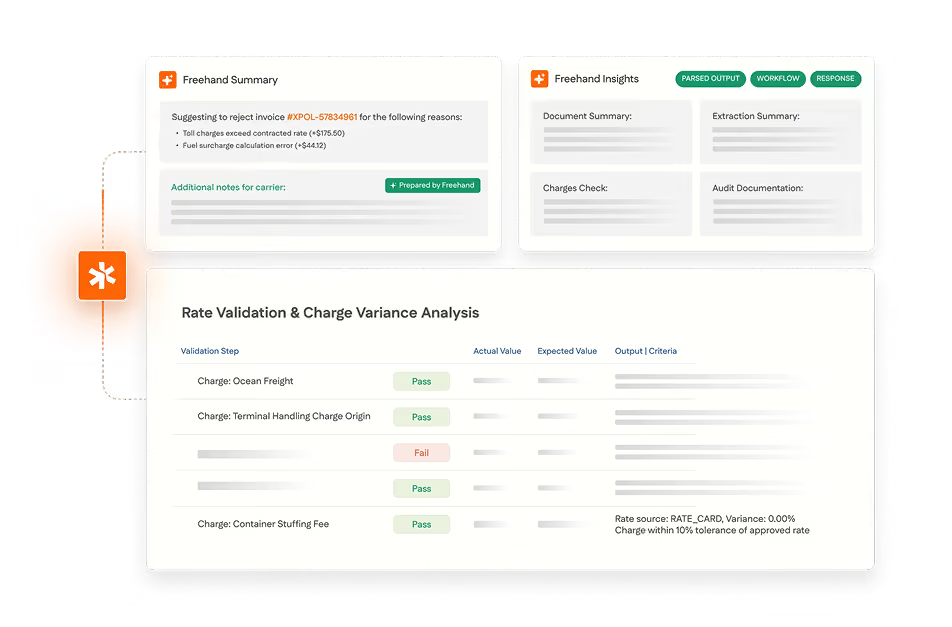
The duplicate detection layer runs alongside contract-rate validation and accessorial trigger verification as part of the same pre-payment audit pass. Every invoice processed through Freehand's AI invoice processing layer is checked for exact duplicates, near-duplicates, and cross-channel resubmissions before it reaches the payment queue.
For enterprises managing $15M or more in annual freight spend, Freehand recovers 1.5 to 2.5% of freight spend annually through systematic overcharge detection at full invoice coverage. Duplicate detection is one component of that recovery, alongside contract-rate validation and accessorial verification.
Request a demo to see how multi-field duplicate detection works across your carrier invoice population.
{{brown-cta}}
Frequently Asked Questions
What is a duplicate invoice?
Any invoice that appears more than once in accounts payable for the same underlying transaction. It may be an exact copy or a near-identical resubmission with minor variations in date, number, or formatting designed to evade standard matching controls.
What causes duplicate invoices?
Multi-channel submission (email and mail versions of the same invoice), manual re-entry errors, carrier billing system resubmissions when payment confirmation is delayed, and in some cases deliberate fraud with altered invoice details intended to clear AP matching controls.
How do you detect duplicate invoices?
Header-level matching catches exact duplicates. Multi-field matching across supplier, amount, shipment reference, origin, destination, and date catches near-duplicates. AI fuzzy matching and behavioral pattern analysis catches systematic fraud and structural billing anomalies that field-by-field matching misses.
Why are duplicate invoices harder to detect in freight?
Carrier invoices carry no PO reference, arrive through multiple channels, and are frequently resubmitted when payment confirmation is delayed. Carrier and broker double-billing for the same load and billing system resubmissions under new reference numbers both appear as legitimate new invoices under header-level matching.
What is the financial impact of duplicate invoices?
Duplicate and miscalculated spend accounts for 1 to 3% of total supplier payments annually. In high-volume freight environments, duplicate payment rates can reach 3% of total outgoing payments. Recovery from carriers after payment is slow and not guaranteed if the dispute window has closed.
Every Freight Invoice Matched to Its Shipment, Not Just Its Invoice Number.
Freehand catches duplicate freight billing by matching against the shipment record, not just invoice metadata.
A Duplicate Freight Invoice Doesn't Look Like a Duplicate.
Different invoice numbers, different dates, same shipment. Standard duplicate detection misses it.
Every warehouse. Every provider. Every mile.
Gartner's 2026 outlook on logistics outsourcing, and how AI Teams hold every contract to the terms you agreed.
- Where outsourced logistics quietly loses margin
- Why billed charges drift from the contract
- How AI Teams close the gap
.png)