

7 Best BILL.com Alternatives for 2026 (Compared)
.webp)
September 10, 2026
•
12
mins

The best BILL.com alternatives for 2026: 1. Freehand, 2. Stampli, 3. Medius, 4. Tipalti, 5. Ramp, 6. Vic.ai, 7. AvidXchange.
BILL runs AP, AR, and expense management for SMB and mid-market teams, with a proprietary vendor network connecting more than 500,000 businesses and easy day-to-day navigation.
If you are here, you are likely weighing whether its accounting-sync reliability and assistive, human-approved workflow are still the right fit as your invoice volume and integration needs grow.
This page compares the alternatives that do the same core job.
BILL.com Alternatives Comparison
Here is a detailed comparison of the best BILL.com alternatives for 2026.
TL;DR
- Freehand: AI Teams that audit invoices before payment and resolve exceptions autonomously, best for enterprises with material freight and logistics spend inside a broader AP program.
- Stampli: Invoice-centered collaboration with Billy AI assisting capture and coding, all entries reviewed and approved by a person.
- Medius: Touchless invoice matching with a high auto-route rate, still routed for human approval.
- Tipalti: Global mass payments and tax form validation across 190+ countries, stronger international reach than BILL.
- Ramp: Modern, intuitive spend management and bill pay, weaker on international operations.
- Vic.ai: Strong invoice-data capture accuracy, no direct vendor payment interface of its own.
- AvidXchange: Established supplier payment network with deep vertical fit, but payment timing draws consistent complaints.
Why teams look for BILL.com alternatives
BILL earns real credit. Its vendor network connects more than 500,000 businesses, reviewers consistently praise its ease of use and workflow automation, and it holds a strong G2 sample of more than 1,700 reviews at a 4.4 rating. The reasons buyers evaluate a switch are about integration reliability and reach, not core usability.
- Accounting-sync errors: Multiple reviewers report BILL failing to sync cleanly with QuickBooks Online, Sage Intacct, and NetSuite, with one describing sync issues that corrupted historical client data. (source)
- Surprise fees: Buyers report being charged for expedited or instant payment service without clear authorization or a guaranteed delivery time.
- Limited international payment capability: Reviewers cite BILL as weaker for cross-border vendor payments compared to platforms built for global reach.
- Customer service response time: A recurring complaint is slow or unhelpful support when sync or payment issues come up.
- Assistive, not autonomous: Like most AP automation tools, BILL routes matched invoices for human approval rather than resolving discrepancies on its own.
If those points match your evaluation, the alternatives below sort cleanly by how they answer them.
{{blue-cta}}
How did we evaluate these BILL.com alternatives?
We scored every provider on the same six criteria, weighted for a buyer replacing an assistive AP automation platform. Weights sum to 100%, and the Overall score in the table is the weighted result.
- Processing autonomy and straight-through processing (25%): Whether the system resolves matched invoices on its own or routes them for human approval.
- Exception and dispute resolution (20%): Whether discrepancies are opened, evidenced, and closed automatically or handed back to your team.
- Invoice coverage and capture accuracy (15%): How reliably the system captures and codes invoice data across formats.
- ERP integration (15%): Native connectors versus custom or file-based sync that can drift out of alignment.
- Payment execution and reach (15%): Breadth of currencies, geographies, and payment rails supported.
- Pricing transparency and governance (10%): Disclosed, predictable pricing versus per-transaction or quote-only tiers.
This is an independent editorial comparison, not a Gartner Magic Quadrant or a paid ranking.
A buyer whose priority is a large existing vendor network would weight payment reach and adoption highest; a finance team trying to stop sync drift and remove manual approval work would weight ERP integration and autonomy highest.
Freehand
Best for: Enterprises with material freight and logistics spend that want invoices audited before payment and exceptions resolved without adding staff, inside a broader AP program.

Freehand runs freight and logistics accounts payable as AI Teams that audit, resolve, and post to your ERP directly. It is built as services delivered as software: you buy completed audit and payment work, not another module to configure. Native connectors to major ERPs replace the fragile, sometimes error-prone sync that smaller AP tools depend on.
Key features
- Audits 100% of invoices before payment, not a sample reviewed after coding
- Fully agentic exception resolution that opens, evidences, and resolves disputes without waiting for a human to approve each one
- Multi-way matching across invoice, contracted rate, shipment, and PO for freight and logistics spend
- Context Graph that learns your carriers, vendors, contracts, and GL rules so decisions are explainable
- Real-time GL coding and cost-center allocation with automatic posting
- Native connectors for SAP ECC, S/4HANA, Oracle Cloud, Oracle JDE, and NetSuite
- Duplicate invoice detection at scale
- Client-exclusive model in a dedicated environment; the enterprise owns and can export its own data
Pricing
Volume-based and disclosed at scoping, quoted by invoice and freight volume. No surprise expedite fees and no undisclosed platform tier.
Pros
- Only option here that resolves exceptions autonomously instead of routing them for approval
- Native ERP connectors instead of accounting-software sync prone to drift
- Transparent volume pricing instead of per-transaction or expedite fees
Cons
- Not built for a broad SMB vendor network the way BILL is
- Enterprise-only; built for enterprises with material freight and logistics AP volume, not a general small-business payables need
What users say
Love: Audit executed, not just synced: Freehand audits every invoice and acts on the findings, closing the gap left by tools that depend on accounting-software sync to stay accurate. (source)
Complain: Best fit is freight-and-logistics-heavy AP, not a broad vendor network: Teams that specifically need BILL's SMB vendor-network scale may find Freehand's scope narrower and more enterprise-focused. (source)
Stampli
Best for: Teams that want invoice-centered collaboration with AI assisting capture and coding, and every entry reviewed by a person.
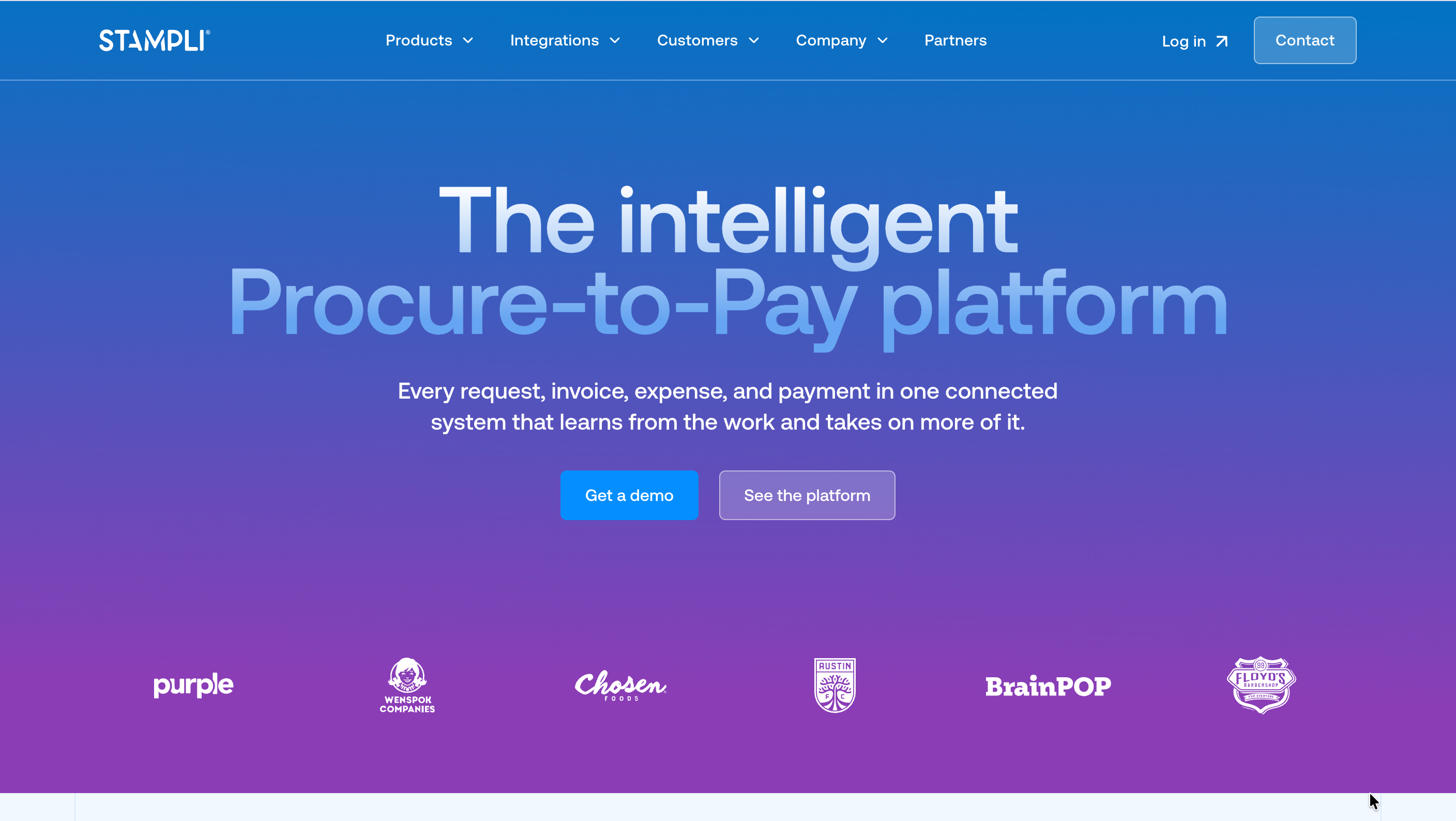
Stampli centers the whole approval process on the invoice itself, with its Billy AI assisting capture, coding, and routing. Stampli's own G2 profile states Billy performs on average 87% of finance work, with all suggested entries subject to human review and approval before posting, so it is assistive by design.
Key features
- Invoice-centered collaboration and approval workflow
- Billy AI-assisted capture, coding, and routing
- Broad ERP field coverage across 70+ systems
- Fast, roughly one-month implementation
- Vendor communication built into the invoice thread
- Custom approval workflows
- Mobile access for approvers
Pricing
Custom, quote-only pricing; mid-market deployments commonly run $500 to $2,000+ per month.
Pros
- Fast implementation relative to enterprise AP suites
- Strong invoice-level collaboration and visibility
- High volume of independent reviews
Cons
- AI assists but every entry still needs human approval
- Cannot limit GL accounts, a real control gap for larger finance teams
- Weaker mobile experience and support cited by reviewers
What users say
Love: Clear, remote-friendly approvals: A reviewer says the process for approving invoices is very clear and easy to do, supporting a fully remote finance team. (source)
Complain: Thinner analytics than some alternatives: The same review category notes Stampli is missing some of the analytics other AP platforms offer. (source)
Medius
Best for: Teams that want high-volume, touchless invoice matching with a strong auto-route rate.
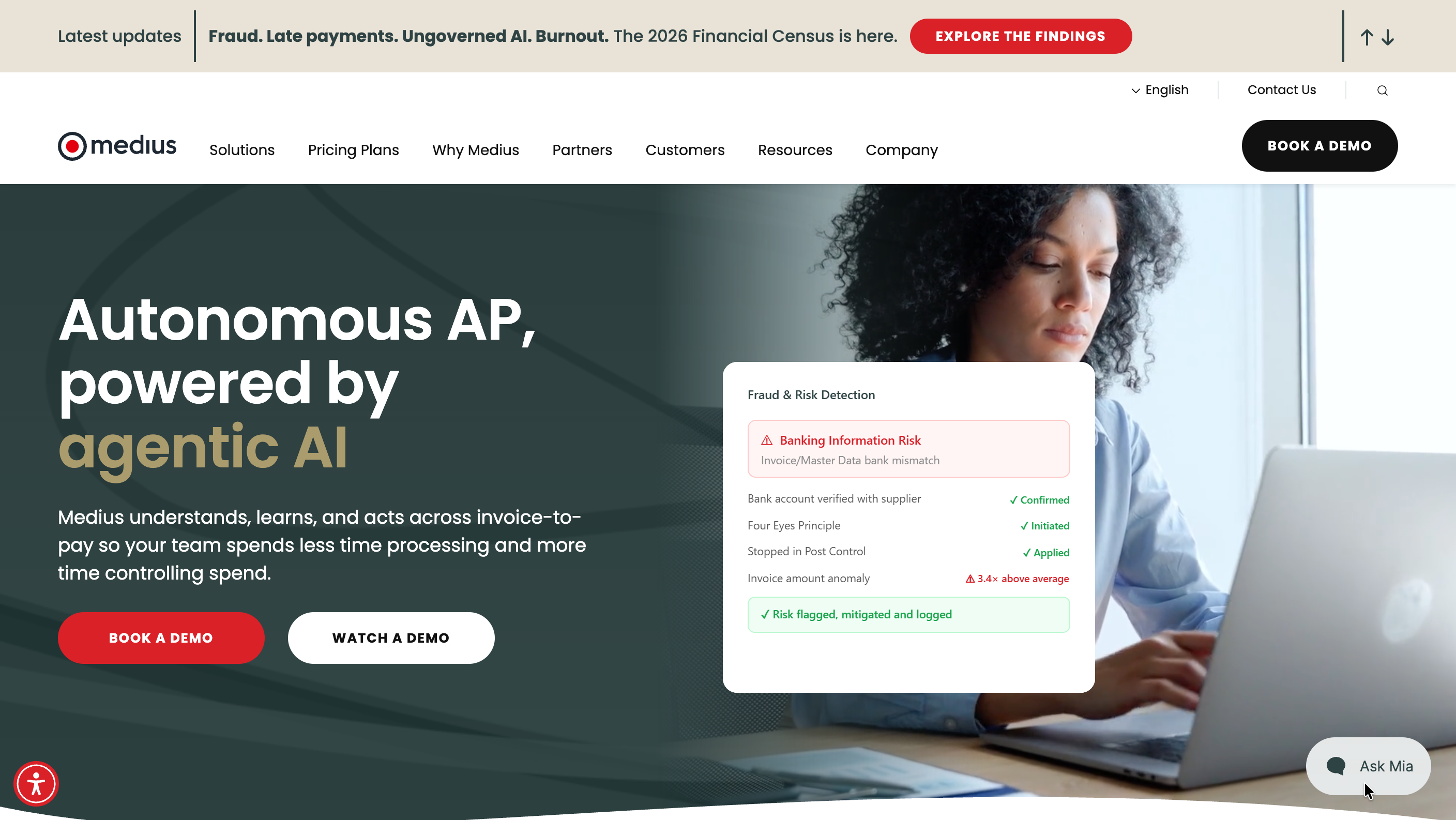
Medius focuses on procure-to-pay and invoice matching, with reviewers crediting its ability to auto-route the large majority of invoices for approval without manual sorting. It remains assistive: matched invoices still route to a person before posting.
Key features
- High-accuracy invoice data capture
- Automated routing of matched invoices for approval
- Procure-to-pay workflow coverage
- Configurable approval hierarchies
- Spend analytics and reporting
- ERP integrations across major systems
- Supplier management tools
Pricing
Custom, quote-only pricing; negotiated by invoice volume and modules.
Pros
- Strong invoice capture accuracy
- High auto-route rate for matched invoices
- Established procure-to-pay coverage
Cons
- Setup complexity, with reviewers noting many steps to configure and remember
- Assistive workflow still needs human approval
- Custom pricing makes upfront cost modeling harder
What users say
Love: Accurate capture and high auto-routing: A reviewer credits the accuracy of capturing invoice information and the ability to auto-route 99% of invoices for approval. (source)
Complain: Complex initial setup: The same reviewer cites the complexity of setting things up and difficulty remembering all the steps. (source)
Tipalti
Best for: Teams that need global mass payments and tax form validation across a large international vendor or partner base.

Tipalti runs global mass payments and AP automation, with multi-currency reach, tax form validation, and supplier self-onboarding across 190+ countries, a stronger international footprint than BILL supports natively.
Key features
- Mass payments across 190+ countries
- Tax form validation (W-9, W-8BEN, 1099)
- Supplier self-onboarding portal
- Multi-entity infrastructure
- Multi-currency conversion
- ERP integrations
- Approval workflow routing
Pricing
Platform fee starting at $99 per month plus additional fees for added modules and features.
Pros
- Strong global payment reach and currency support
- Tax compliance built into supplier onboarding
- Good value relative to some enterprise alternatives
Cons
- Reporting and invoice-activity visibility draw reviewer criticism
- Steep learning curve and slower implementation
- Assistive workflow, not autonomous resolution
What users say
Love: Reliable payment automation and remittance: A reviewer says the AP workflow is great, finally providing clear remittance information to the payee. (source)
Complain: Reporting visibility and tax-form support gaps: The same review category asks for improvement in reporting and visibility into invoice activity, and notes some tax form updates need additional support. (source)
Ramp
Best for: Teams that want modern, intuitive spend management with bill pay built in, mainly for domestic operations.
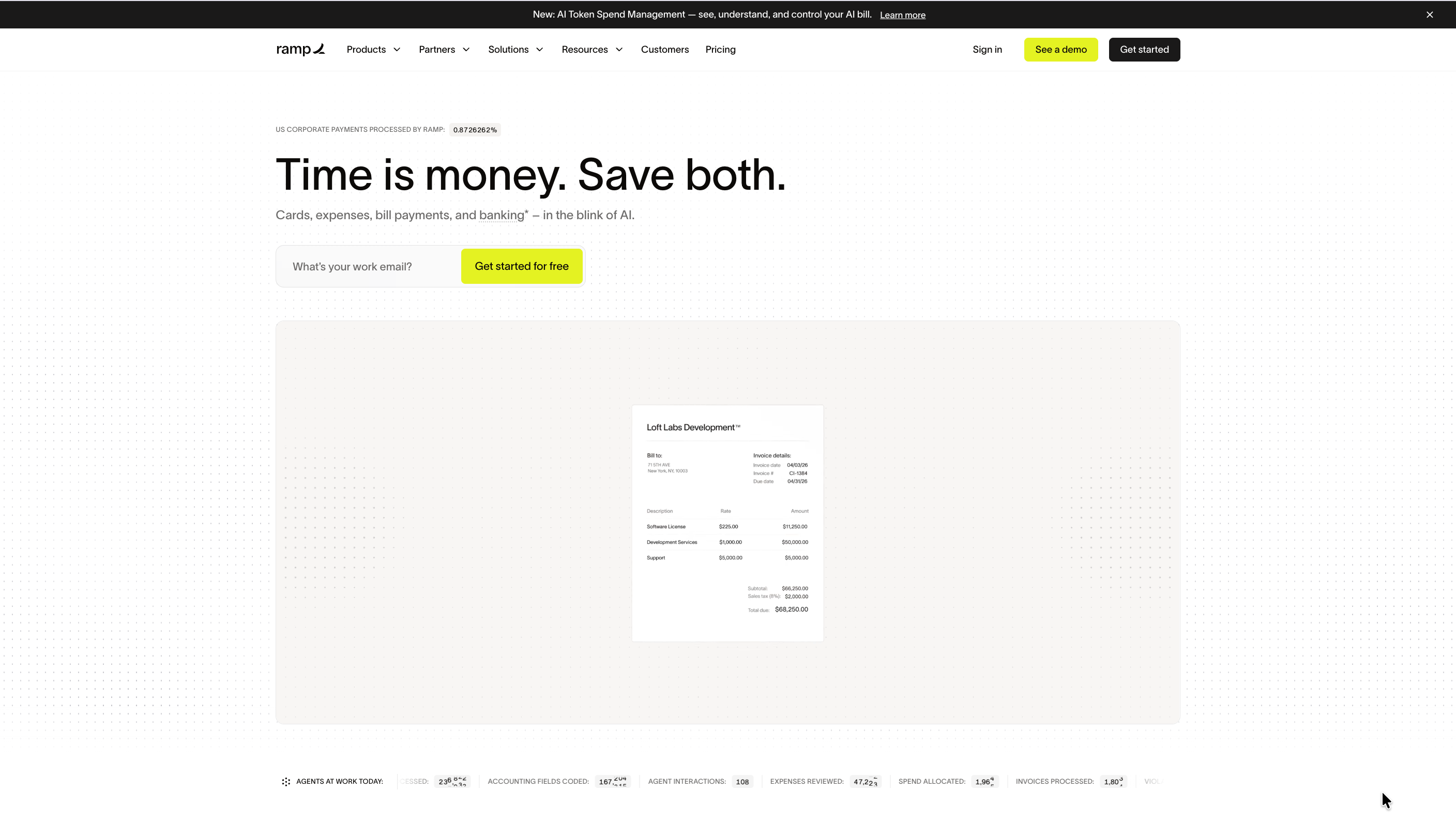
Ramp pairs corporate cards and expense management with a bill-pay module, and reviewers consistently praise its interface and ease of use. International operations are a weaker fit, with a currency-conversion fee on foreign purchases.
Key features
- Corporate card and expense management
- Bill pay with automated invoice capture
- Intuitive, modern interface
- Real-time spend visibility
- Automated approval workflows
- Accounting-system sync
- Travel and expense management add-ons
Pricing
Free core plan with paid tiers for advanced controls and higher usage.
Pros
- Highly intuitive, well-reviewed interface
- Strong expense and card management alongside bill pay
- Large volume of positive independent reviews
Cons
- 3% currency conversion fee on foreign-currency purchases
- International operations are not its strongest suit
- Assistive workflow, not autonomous resolution
What users say
Love: Intuitive across expenses and bill pay: A reviewer calls Ramp an excellent tool for managing both expenses and travel, highly intuitive and easy to use. (source)
Complain: Costly and weaker for international spend: The same review category flags the 3% foreign-currency conversion fee and notes international operations are not Ramp's strong suit. (source)
Vic.ai
Best for: Teams that want strong AI-driven invoice data capture with tight ERP integration.
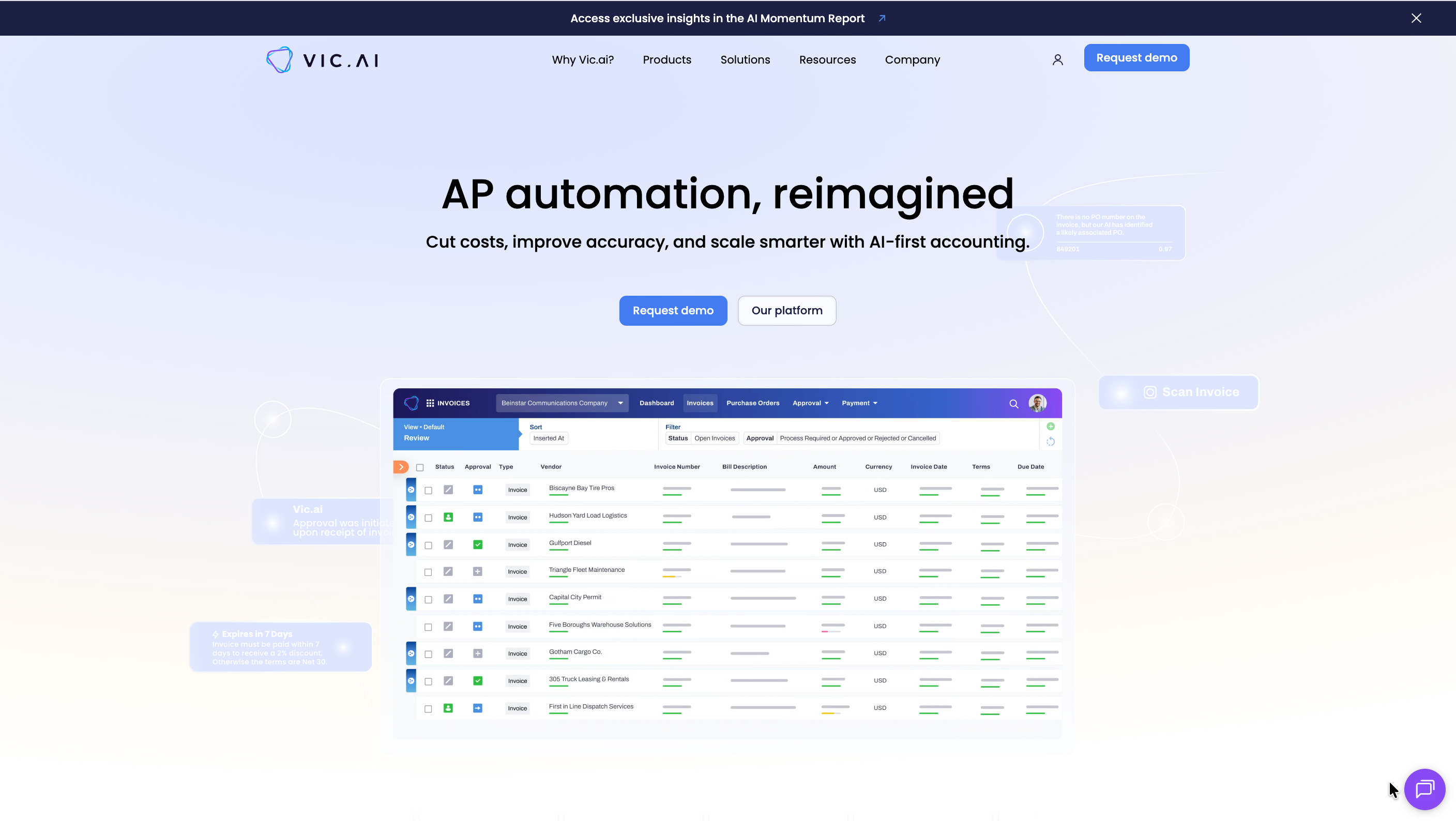
Vic.ai focuses on AI-native invoice capture and coding, with reviewers crediting its accuracy at reducing manual entry. It does not run its own vendor payment interface, so payment execution runs through a separate system.
Key features
- AI-native invoice data capture and coding
- Smooth ERP integration
- Continuous learning from historical coding decisions
- Duplicate invoice detection
- Approval workflow routing
- Spend visibility dashboards
- API access for custom workflows
Pricing
Custom, quote-only pricing; negotiated by invoice volume.
Pros
- Strong invoice-data capture accuracy
- Smooth ERP integration reported by users
- Reduces manual entry significantly
Cons
- No direct payment interface to vendors, so payment execution needs another system
- Customer support response time cited as a gap
- Assistive workflow, not autonomous resolution
What users say
Love: Accurate capture with smooth ERP integration: A reviewer says the AI accurately captures invoice data, significantly reducing manual entry, and integrates smoothly with their ERP system. (source)
Complain: No direct vendor payment interface: The same reviewer notes there is no direct payment interface to vendors in Vic.ai, and support can take extra time. (source)
AvidXchange
Best for: Mid-market teams in real estate, construction, or HOA management that want an established supplier payment network.
AvidXchange runs mid-market AP and payment automation with a large supplier payment network and deep vertical fit in real estate, construction, and HOA management. Payment timing is its most cited weakness, a real tension given payment reliability is core to its value proposition.
Key features
- Established mid-market AP automation
- Large supplier payment network
- Deep vertical fit in real estate, construction, and HOA
- Check-processing reduction
- Approval workflow routing
- ERP integrations
- Spend reporting
Pricing
Custom, per-transaction fees; terms negotiated by volume and vertical.
Pros
- Established network and vertical expertise
- Reduces manual check processing
- Broad ERP integration coverage
Cons
- Slow payments and holds reported by vendors and buyers
- High fees cited by reviewers
- Slower, less responsive support at scale
What users say
Love: Established network and vertical depth: Reviewers credit AvidXchange's large supplier payment network and its fit for real estate, construction, and HOA management. (source)
Complain: Slow payments and high fees: Buyers report payment delays, holds, and vendors calling to check status, along with fees some consider high for the value. (source)
BILL.com vs Freehand
Both automate accounts payable, but the core job each solves is different.
- BILL: Built for SMB and mid-market AP, AR, and expense management on a broad vendor network, with approval workflows synced to accounting software like QuickBooks and Sage Intacct.
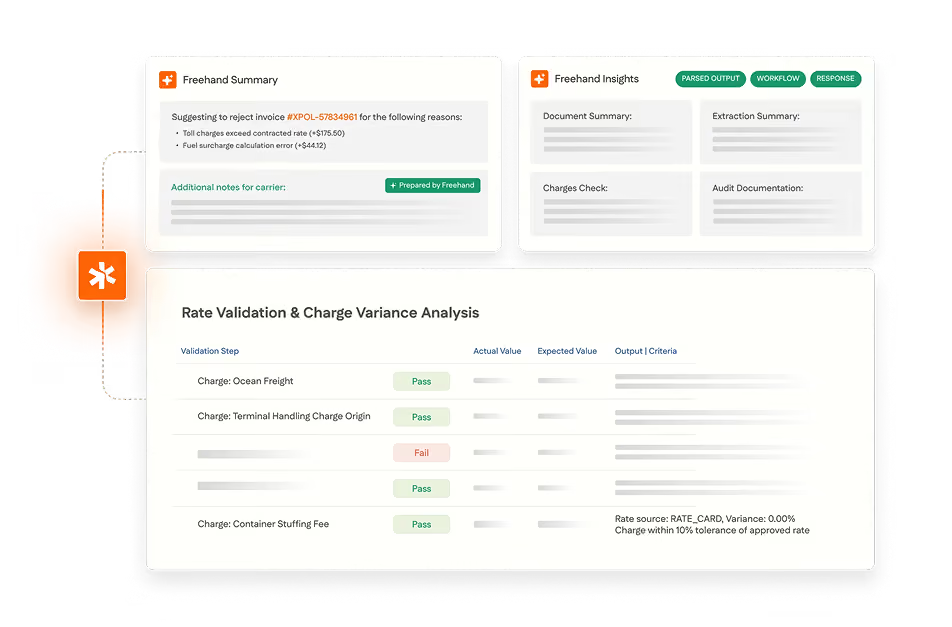
- Freehand: Built for freight and logistics AP, auditing every invoice against contracted rates before payment and resolving exceptions autonomously through native ERP connectors rather than accounting-software sync.
If your gap is a broad SMB vendor network and simple bill pay, BILL's reach is the deciding factor. If your gap is invoice audit depth, ERP sync reliability, and autonomous exception resolution for freight and logistics spend, Freehand is the direct replacement for that slice of your AP.
How to choose a BILL.com alternative
Match the replacement to the job you actually need done, not to the longest feature list. Run each option against these questions:
- Does it resolve matched invoices on its own, or route them for human approval?
- How reliable is the ERP or accounting-software sync, and how much manual reconciliation does it need?
- Is pricing fixed and disclosed, or does it include per-transaction or expedite fees?
- Do you need a broad SMB vendor network, or freight and logistics AP depth?
- How deep is the exception and dispute-resolution workflow?
Weight ERP integration and autonomy highest if sync drift and manual approval work are what is pushing you to switch; weight vendor-network reach highest if broad SMB payee coverage is the core job.
{{brown-cta}}
FAQ
Who are BILL.com's main competitors?
Its main AP automation competitors include Stampli, Medius, Tipalti, Ramp, Vic.ai, and AvidXchange. Freehand competes on freight and logistics invoice audit and payment.
What is the best BILL.com alternative?
For enterprises with material freight and logistics AP volume, Freehand ranks first because it audits invoices before payment and resolves exceptions autonomously.
Is there a cheaper alternative to BILL.com?
Ramp offers a free core plan, and Freehand's volume-based pricing avoids per-transaction or expedite fees, both easier to model than BILL's fee structure.
Why do companies switch from BILL.com?
Common reasons include accounting-sync errors with QuickBooks or NetSuite, surprise expedite fees, limited international payments, and an assistive workflow that still needs human approval.
Does BILL.com sync reliably with QuickBooks and NetSuite?
Reviewers report recurring sync issues with QuickBooks Online, Sage Intacct, and NetSuite, sometimes requiring manual reconciliation to fix corrupted or mismatched data.
What should I look for in a BILL.com replacement?
Prioritize processing autonomy, ERP sync reliability, exception resolution depth, payment reach for your geography, and whether pricing is disclosed upfront.
Is Freehand a full BILL.com replacement?
Not for broad SMB vendor payments. Freehand replaces the invoice audit and payment execution layer for freight and logistics AP, not BILL's general small-business bill-pay network.
Do any alternatives resolve exceptions automatically?
Freehand resolves exceptions autonomously and posts to the ERP. BILL and the other alternatives here route matched invoices to a person for approval.
Stop Reconciling Sync Drift.
Freehand's native ERP connectors replace the accounting-software sync that BILL and similar tools depend on.
A Sync Error Shouldn't Cost You a GL Line.
BILL's QuickBooks sync issues are a known pain point. Freehand connects natively to SAP, Oracle, and NetSuite instead.
Every warehouse. Every provider. Every mile.
Gartner's 2026 outlook on logistics outsourcing, and how AI Teams hold every contract to the terms you agreed.
- Where outsourced logistics quietly loses margin
- Why billed charges drift from the contract
- How AI Teams close the gap