
What Is Freehand Studio? Configuring AI Teams Without Code
Every AI agent runs on business rules someone has to set. See how Freehand Studio lets your team configure them in plain language, not a black box.
.webp)
September 2, 2026
•
7
mins
.webp)
Every AI agent runs on business rules someone has to set: what tolerance threshold flags an exception, which approval chain a large invoice routes through, what counts as a valid dispute. Most enterprise software makes those rules a developer's job, a ticket, a sprint, a deploy.
Freehand Studio is where your own team sets them directly, in plain language, without waiting on anyone to write code.
Key Takeaways
- Freehand Studio is the configuration layer where your team sets the business rules Freehand's AI Teams run on, tolerance thresholds, approval hierarchies, exception logic, in plain language rather than code.
- Every Freehand agent is built on Freehand Studio, meaning the same configuration layer governs freight audit rules, trade compliance thresholds, and AR collections logic alike.
- Configuration changes that would normally require a developer ticket and a deployment cycle happen directly, by the team that actually understands the business rule.
- Every decision an agent makes traces back to a visible reason, the exact contract clause or shipment fact behind it, not a black box output you have to take on faith.
- Freehand agents built on Studio are consistently described as deployable in days, not the months-long implementation timeline typical of traditional enterprise software configuration.
What is Freehand Studio?
Freehand Studio is the configuration layer where your team sets the business rules an AI Team runs on, in plain language, not code. All of these are business decisions, not technical ones:
- A tolerance threshold for a freight invoice exception
- An approval chain for payments over a certain size
- The criteria that make a dispute valid
Freehand Studio is built on the premise that the person who understands the business rule should be the one setting it.
That's a meaningful shift from how most enterprise software handles configuration. A rule change that would typically mean a support ticket, a developer sprint, and a deployment window instead happens directly, by the AP manager, trade compliance lead, or AR director who actually owns that decision.
{{blue-cta}}
Why does every Freehand agent run on the same configuration layer?
Every Freehand agent, across freight audit, trade compliance, and AR, is built on Freehand Studio, which means the same plain-language configuration approach governs all of them, not a different interface or a different learning curve per module.
Learning to configure one agent's rules translates directly to configuring the next one.
That consistency matters at implementation. It's part of why agents built on Freehand Studio are consistently deployable in days rather than the months a typical rollout takes. The configuration burden isn't a new system to learn for every module, it's the same interface applied to a different business rule.
For how the data layer underneath those decisions actually gets grounded to verified facts, see our guide to Freehand's Context Graph.
What does configuring an AI Team in Studio actually look like?
- Tolerance thresholds: Set the dollar or percentage variance that separates a routine match from a flagged exception, without a developer translating that number into a rule engine.
- Approval hierarchies: Define which payment sizes or invoice types route to which approver, matching your actual organizational structure rather than a generic default.
- Exception logic: Specify what makes a discrepancy dispute-worthy versus a routine variance, the judgment call that usually lives in one experienced person's head, made explicit and consistent instead.
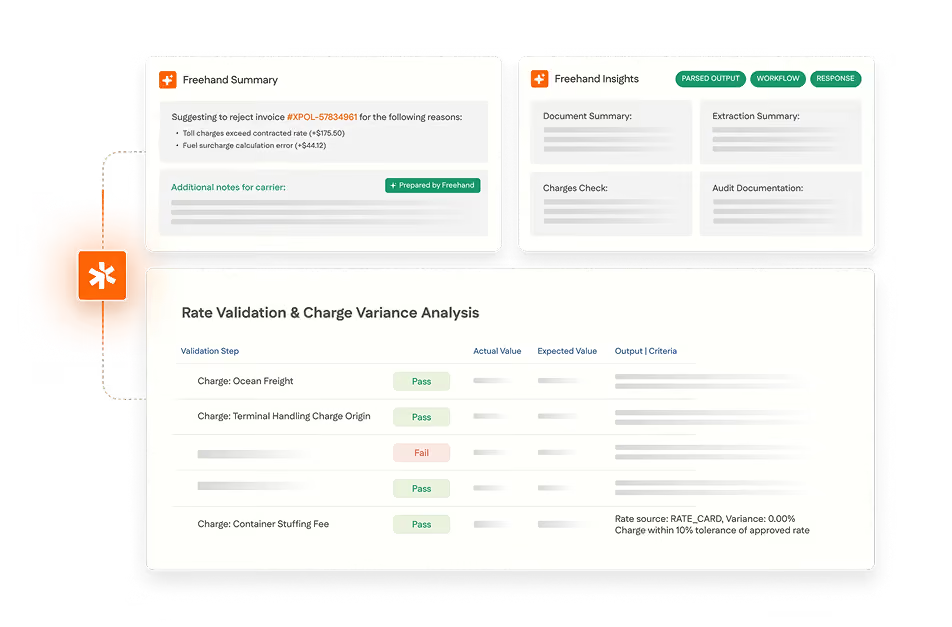
- Visibility into every decision: See the exact contract clause, shipment fact, or rate record behind any agent's decision, so a flagged exception or a cleared invoice both come with a reason, not just an outcome.
Why does plain-language configuration matter for trusting an AI decision?
A rule your own team set, in language they wrote themselves, is a rule they can audit and adjust without asking anyone to explain the underlying code.
- A black-box AI system: a decision comes out and the reasoning behind it is opaque, something you either trust blindly or can't meaningfully question.
- Freehand Studio: the logic an agent is running is the same logic your team can read back and confirm is still correct.
That transparency compounds over time. As tariff rules, contract terms, or approval structures change, the team that owns those changes can update the configuration directly, instead of a stale rule quietly running against conditions that no longer apply.
{{brown-cta}}
Frequently Asked Questions
What is Freehand Studio?
Freehand Studio is the configuration layer where your team sets the business rules Freehand's AI Teams run on, tolerance thresholds, approval hierarchies, exception logic, in plain language rather than code.
Do I need a developer to change a rule in Freehand Studio?
No. Rules are set by the team that owns the business decision, an AP manager, trade compliance lead, or AR director, directly in plain language, without a development or deployment cycle.
Does every Freehand agent use Freehand Studio?
Yes. Freight audit, trade compliance, and AR agents are all built on the same Freehand Studio configuration layer, so the same plain-language approach applies across every module.
How fast can an agent built on Freehand Studio be deployed?
Freehand agents built on Studio are consistently described as deployable in days, faster than the months-long implementation cycle typical of traditional enterprise software configuration.
How does Freehand Studio make AI decisions less of a black box?
Every decision an agent makes traces back to a visible reason, the exact contract clause, shipment fact, or rate record behind it, so a flagged exception or a cleared invoice comes with an explanation, not just an outcome.
Configuration Your Team Can Read, Not Just Trust.
Every rule in Freehand Studio is written in plain language your team can audit and adjust directly, across freight audit, trade compliance, and AR alike.
A Rule Change Shouldn't Need a Developer Ticket.
Most enterprise software makes a tolerance threshold or approval chain a sprint-cycle request. Freehand Studio lets the person who owns the rule set it directly.
Every warehouse. Every provider. Every mile.
Gartner's 2026 outlook on logistics outsourcing, and how AI Teams hold every contract to the terms you agreed.
- Where outsourced logistics quietly loses margin
- Why billed charges drift from the contract
- How AI Teams close the gap