
Freight Accounting: Freight-In, Freight-Out, and GL Treatment
Freight accounting depends on one distinction: freight-in gets capitalized, freight-out becomes a freight expense. See the journal entries and where each lands.
.webp)
August 13, 2026
•
9
mins
Freight, in accounting terms, is the cost of transporting goods by truck, rail, ship, or air. Freight accounting comes down to one distinction from there: freight-in, the cost to bring inventory into your business, gets capitalized into inventory cost. Freight-out, the cost to ship product to your customer, gets expensed as a selling cost. Getting that classification wrong distorts gross margin, not just the freight line.
Key Takeaways
- Freight-in is capitalized into inventory cost. It becomes part of cost of goods sold (COGS) when that inventory is eventually sold, not an expense in the period it was paid.
- Freight-out is expensed as a selling cost (SG&A), not included in COGS, though GAAP allows a company to include it in cost of sales if applied consistently.
- Misclassifying freight-in as an immediate expense understates inventory value and overstates the current period's expenses. Misclassifying freight-out as COGS distorts gross margin, since it's not a cost of producing or acquiring the goods.
- Freight accrual, estimating freight cost before the invoice arrives, is a separate question from freight-in vs. freight-out classification. Both have to be right for the number on the financial statements to be accurate.
- Correct classification only holds if the underlying freight invoice is accurate. A misclassified accessorial charge or a reclassed shipment can end up capitalized or expensed incorrectly right alongside the freight charge itself.
What is freight accounting?
Freight accounting is the practice of classifying and recording the cost of transporting goods correctly, so it shows up in the right place on the financial statements. That means getting three things right: whether a freight cost is capitalized into inventory or expensed as a selling cost, when it's recorded relative to the invoice arriving, and which GL account it's coded to.
It's not one accounting rule. It's three separate questions, direction (freight-in vs. freight-out), timing (accrual vs. actual), and coding, that all have to be answered correctly for the freight line on a financial statement to actually mean something.
What is freight-in, and how is it recorded?
Freight-in is the cost of shipping goods into your business, typically from a supplier, and it's capitalized into the cost of the inventory rather than expensed immediately. Under GAAP, freight-in adds to what the inventory is recorded at on the balance sheet, not to the expense line for the current period.
The journal entry: if you buy $10,000 of inventory and pay $2,000 in freight to receive it, you debit Inventory for $12,000 and credit Cash (or Accounts Payable) for $12,000. The freight cost doesn't hit the income statement until that inventory sells, at which point it flows through as part of COGS.
{{blue-cta}}
What is freight-out, and how is it recorded?
Freight-out is the cost of shipping product to your customer, and it's expensed as a selling cost, not added to inventory value. This is what most companies book to a freight expense account: GAAP treats freight-out as an SG&A expense (selling, general, and administrative), separate from the cost of producing or acquiring the goods themselves.
The journal entry: you debit Freight-Out Expense (or Selling Expense) and credit Cash for the shipping cost. GAAP does allow a company to include freight-out in cost of sales instead, but only if that treatment is applied consistently, not selectively by shipment or period.
Why does the freight-in vs. freight-out distinction actually matter?
Misclassifying freight-in as an immediate expense understates inventory value and overstates the current period's costs. Misclassifying freight-out as COGS distorts gross margin. Neither error is a rounding issue at enterprise freight volume.
| Error | What it distorts |
|---|---|
| Freight-in expensed instead of capitalized | Inventory value understated, current-period expenses overstated |
| Freight-out included in COGS instead of SG&A | Gross margin overstated, since it's not a production or acquisition cost |
| Inconsistent treatment across periods | Financial statements not comparable period over period |
How does freight accrual fit into freight accounting?
Freight accrual and freight-in/freight-out classification are two separate questions that both have to be right. Accrual is about timing: recording an estimated freight cost before the actual invoice arrives, so the expense lands in the correct period. Classification is about category: whether that cost, once known, gets capitalized or expensed.
For how to build and automate the accrual side specifically, see our guide to closing the books faster with automated freight accruals.
What makes freight accounting hard at enterprise volume, and how do you do it well?
Freight accounting gets difficult when freight data is scattered across carriers, modes, and systems, since classification and accrual both depend on having a complete, consistent view of that data. A handful of shipments a month is manageable by hand. Thousands of invoices across multiple carriers and modes isn't.
- Centralize freight data across carriers and modes: freight-in and freight-out both need to be tracked consistently, and that's hard when invoices arrive in different formats from different carriers with no common structure.
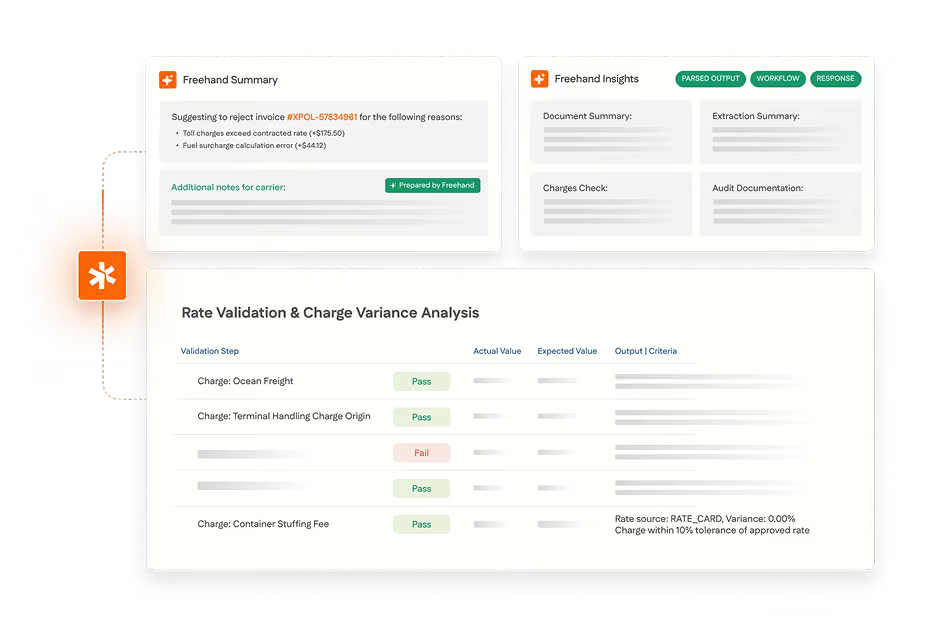
- Validate the invoice before classifying it: a reclass, a duplicate, or an unearned accessorial produces the wrong number to capitalize or expense in the first place, no matter how correct the accounting rule is.
- Keep accrual and classification as separate steps: timing (when to record it) and category (capitalized or expensed) are two different questions, and conflating them makes both harder to get right.
- Apply GL coding rules consistently: freight-in and freight-out need to route to the correct accounts every time, not case by case, or the financial statements stop being comparable period over period.
What happens when the underlying freight invoice itself is wrong?
Correct freight accounting treatment doesn't fix an inaccurate invoice underneath it. A reclassed shipment, a duplicate charge, or an accessorial billed without a valid trigger event still gets capitalized or expensed, it just gets capitalized or expensed incorrectly, carrying the error into inventory value or SG&A instead of catching it at the source.
Freehand's GL coding agent routes freight charges to the correct account and cost center automatically, working from invoices that have already been validated against the contracted rate. Getting the classification right only matters if the number being classified is accurate in the first place.
{{brown-cta}}
Frequently Asked Questions
What is freight accounting?
Freight accounting is the practice of classifying and recording freight costs correctly: freight-in capitalized into inventory, freight-out expensed as a selling cost, with accruals recorded before invoices arrive so expenses land in the right period.
What is freight expense?
Freight expense is the GL account where freight costs that get expensed, rather than capitalized, are recorded. It's most commonly freight-out, the cost of shipping product to a customer, booked as an SG&A selling expense in the period it's incurred.
What is freight considered in accounting?
Freight is considered a transportation cost, and which category it falls into depends on direction. Freight-in is treated as part of inventory cost. Freight-out is treated as a selling expense (SG&A). It's never its own separate financial statement category.
Is freight-in capitalized or expensed?
Freight-in is capitalized into inventory cost under GAAP. It becomes part of cost of goods sold only when that inventory is eventually sold, not an immediate expense when the freight is paid.
Is freight-out part of COGS?
No. Freight-out is typically recorded as an SG&A (selling) expense, separate from cost of goods sold, since it's not a cost of producing or acquiring the goods. GAAP allows including it in cost of sales instead, but only if applied consistently.
What is the journal entry for freight-in?
Debit Inventory (increasing its recorded cost) and credit Cash or Accounts Payable for the freight amount, the same treatment as the inventory purchase itself.
What is the journal entry for freight-out?
Debit Freight-Out Expense (or Selling Expense) and credit Cash for the shipping cost, recorded as a period expense rather than added to inventory.
Close the Books on Freight Costs You Already Know.
Freehand's AI Teams calculate freight accruals at tender, reconcile them automatically against audited invoices, and code them to the right GL account the first time.
Your Freight Accrual Is a Guess Until the Invoice Arrives.
Most teams estimate freight cost at month-end and true it up weeks later. That gap is where budget surprises hide.
Every warehouse. Every provider. Every mile.
Gartner's 2026 outlook on logistics outsourcing, and how AI Teams hold every contract to the terms you agreed.
- Where outsourced logistics quietly loses margin
- Why billed charges drift from the contract
- How AI Teams close the gap