
At Manifest, I Asked a Room Full of Supply Chain Leaders One Question. The Answers Were Honest.

February 12, 2026
•
6
mins

When every vendor is pitching AI agents, the real question is simpler — and harder — than the pitch.
I walked into Manifest on February 10th and counted the AI companies. I stopped counting at fifty. By 10am, if you had not been out-caffeinated and out-pitched, you were probably doing something wrong.
Before I got into what Freehand is doing, I asked the plenary audience one question. Can any AI system in your organization today truly automate an end-to-end process — including the exceptions, including all the unhappy cases, everything that falls off and needs to be dealt with? Not a recommendation. Not a detected anomaly. An actual decision. Executed. Where AI owns the outcome and every step is traceable.
I have asked this question to hundreds of supply chain leaders. The answer is always the same. The data is messy. The technology is not quite there. We will get there someday.
“AI is everywhere. So why can't it make one end-to-end decision?”
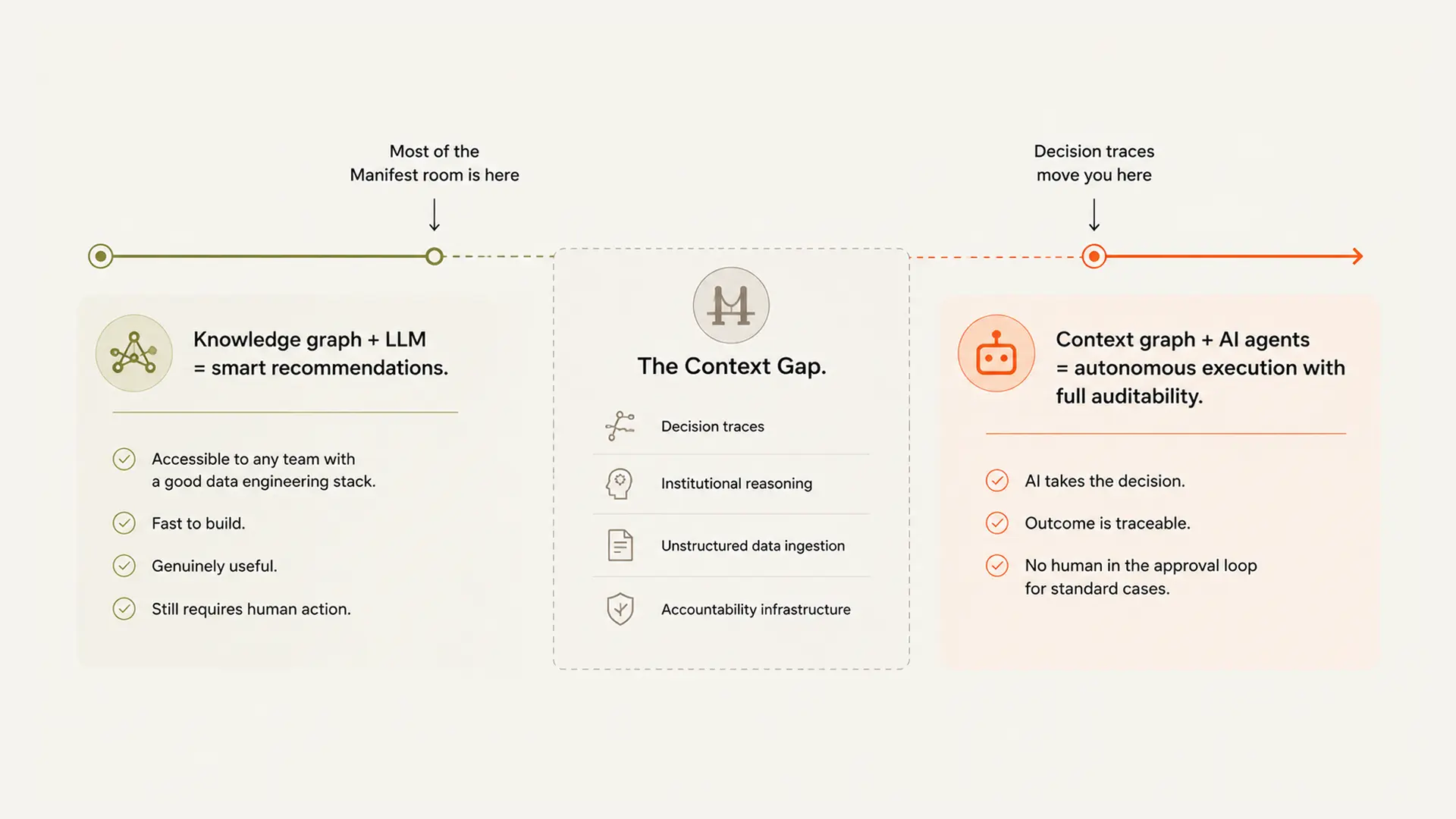
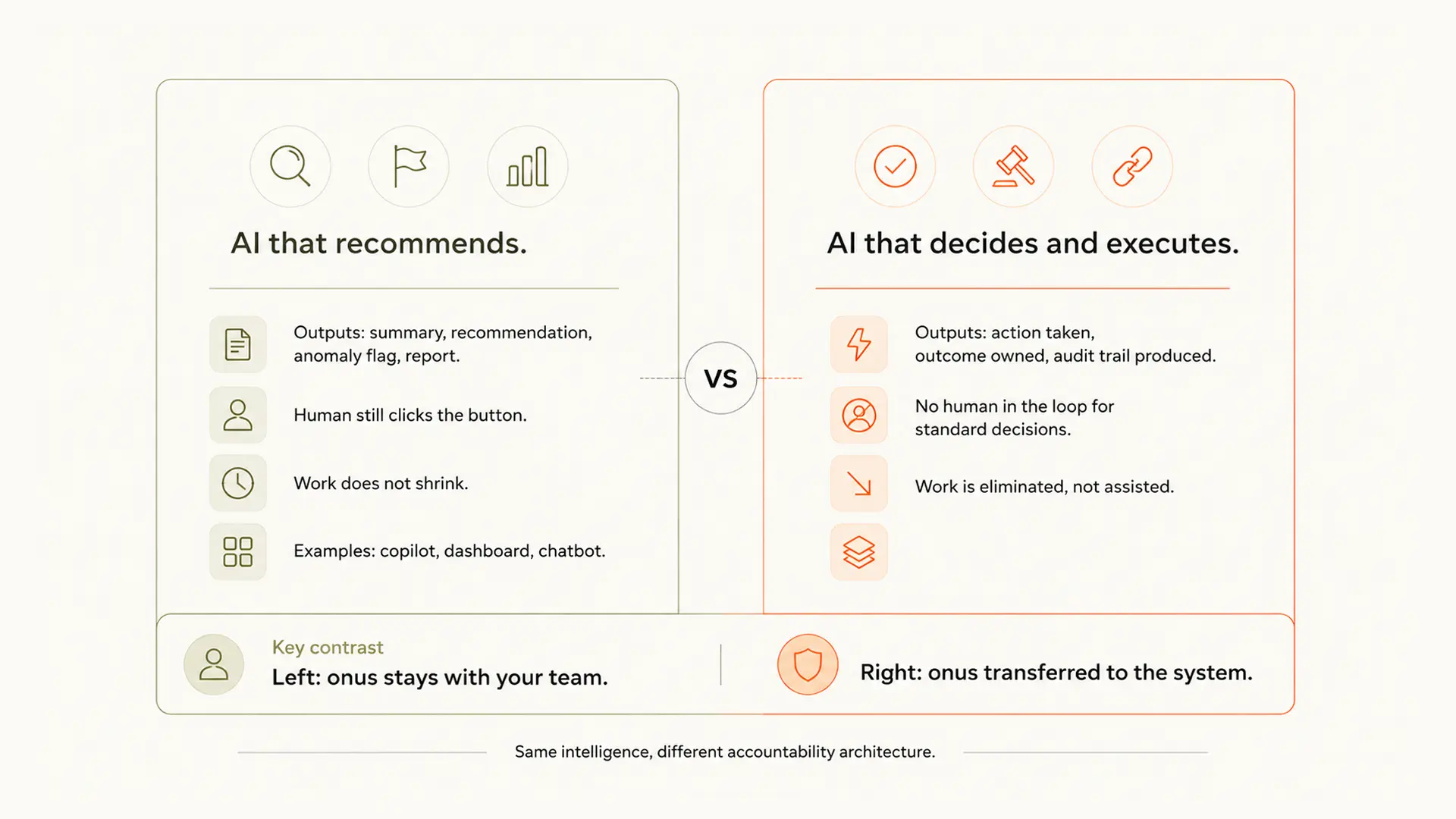
Two kinds of AI. Not the same thing.
The first gives you great answers — summaries, anomalies flagged, recommendations surfaced. Most AI copilots, intelligent dashboards, anomaly detectors: that is what they do. Genuinely useful. But the onus still sits with your team. They make the call. They own the decision. The work does not shrink. If anything it expands, because you just added a very expensive, very chatty advisor to a process that is still manual.
The second actually takes decisions and executes them. It acts. It is accountable for the outcome. Every decision is traceable and auditable — the why, the trade-off, the precedent that informed it. The gap between these two is not intelligence. Claude or ChatGPT will not close it. The gap is accountability. And accountability requires context.
What context means in practice
Your logistics carrier bills a 14% accessorial charge not on the contract. AP rejects it. Except operations negotiated a verbal exception for overweight shipments during port congestion season, confirmed on a call, and finance sitting in shared services has no idea. The invoice bounces. The carrier threatens to stop shipping. It is holiday season. Two weeks to resolve what should have been a non-issue. And it happens again next month.
Every person in that room had that story. The record says one thing. The software says one thing. The reality is something else. No ERP, no TMS, no procurement system captures the why, the how, and the so what of your decisions. Your systems know the what. That is necessary. It is not sufficient.
Decision traces: the infrastructure nobody built
The context that drives your supply chain decisions is not missing. It exists. It is trapped in email threads where negotiation rationale lives, in documents nobody reads after signing, in Slack messages and 11pm calls, in the collective memory of people who have been on the account for years.
We call all of this decision traces: the why, the how, and the so what of every decision. Without them, AI can summarize your data. It can never own a decision, let alone execute it. Context graphs are the infrastructure that captures decision traces at scale — four layers connecting every ERP, TMS, WMS, email, document, and call to a queryable record of your institutional reasoning. That is what makes the difference between a chatbot and an AI team that actually eliminates work.

The litmus test
Suja Chandrasekaran — Cardinal Health board, American Eagle board, and a Freehand customer — joined me on stage. She asked the right question: if everyone starts talking about context graphs, how do you know who actually has them?
The answer: throw a million shipments at the vendor. Give them 300 suppliers, four gigabytes of emails and documents, and a week to turn around a proof of concept with your actual data. See if it works. Do not buy a demo.
That is the test we applied to ourselves before we launched. The companies where Freehand is running today are not running pilots. They are running operations — 80 to 90 percent reductions in AP cycle times, 30 to 50 percent reduction in manual procurement effort. What Manifest confirmed is that the industry has moved past the question of whether agentic AI is real, into the harder question of which implementations are doing the work versus which ones are doing a good demo. That distinction shows up in cycle times, in headcount, and in the invoices that stop bouncing.