
The Pharma Cold Chain Has a Billing Accuracy Problem That Compliance Teams Don't Own

May 4, 2026
•
6
mins
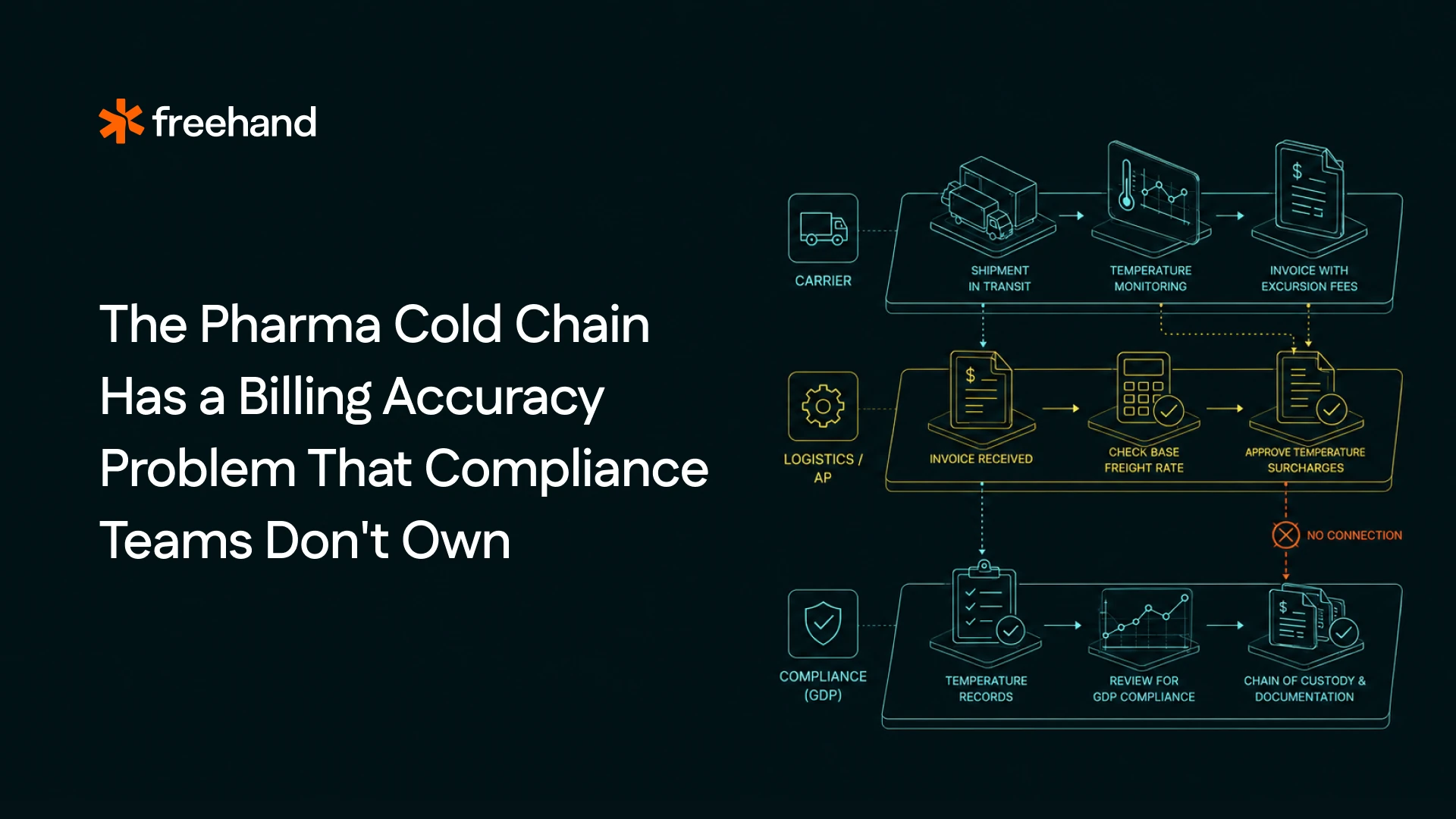
Temperature-sensitive freight charges live between logistics and compliance. That gap is where the billing errors go unnoticed.
In pharmaceutical logistics, compliance means something specific: chain of custody documentation, temperature excursion records, serialization compliance, and GDP regulations. The compliance team owns these. They audit the cold chain documentation. They validate that temperature was maintained. They ensure that the chain of custody is complete for every serialized product.
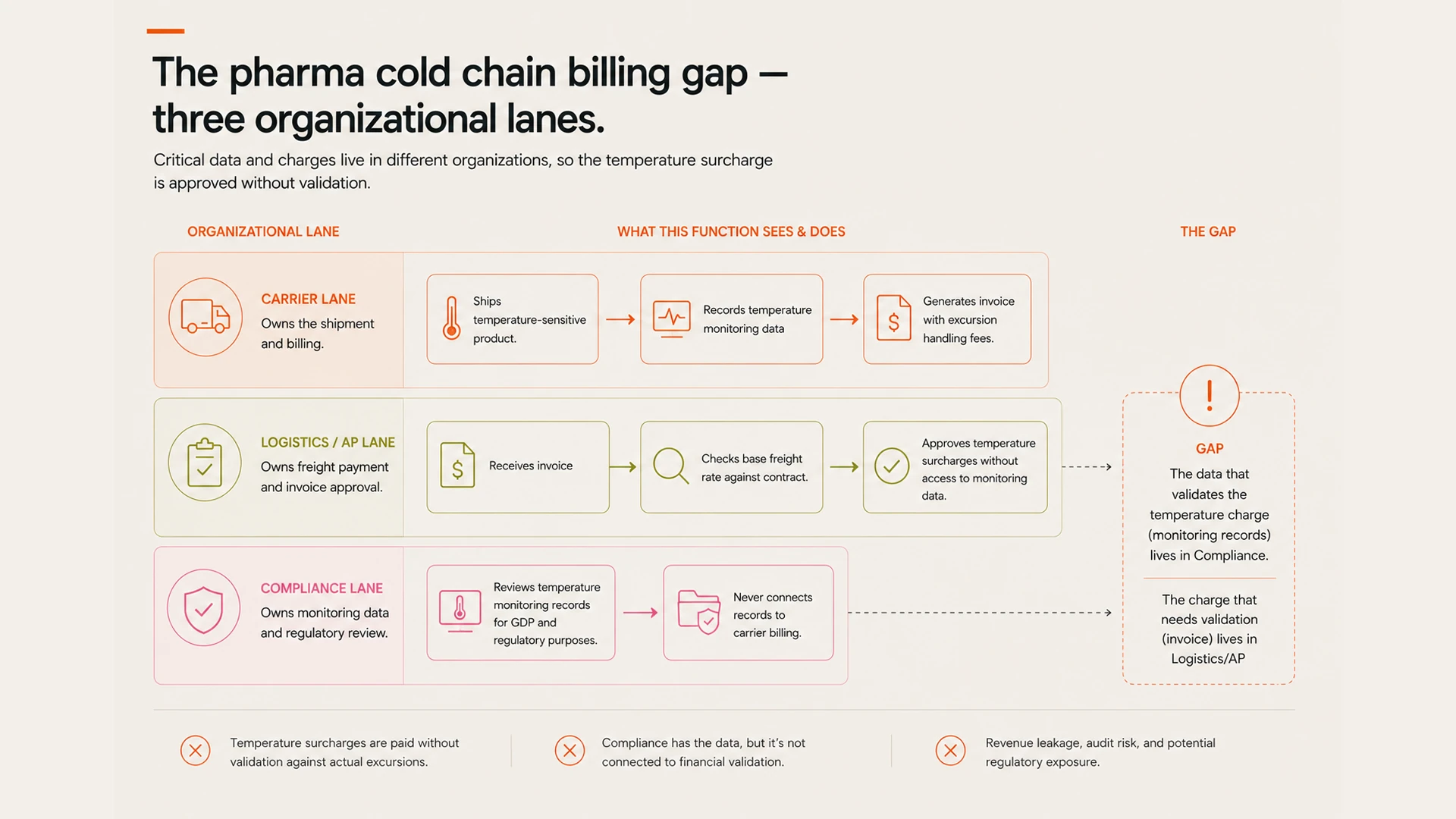
Nobody owns the billing for those same events. The temperature excursion handling fee that the carrier charges when a shipment deviates outside the contracted temperature range — the documentation fee for generating a GDP-compliant temperature log — the cryogenic handling surcharge for ultra-cold shipments — these charges arrive on invoices that logistics processes and finance approves, and neither function has the technical background to validate whether the charge reflects an actual temperature event or whether the carrier applied the fee regardless of what the monitoring data showed.
The gap between logistics and compliance
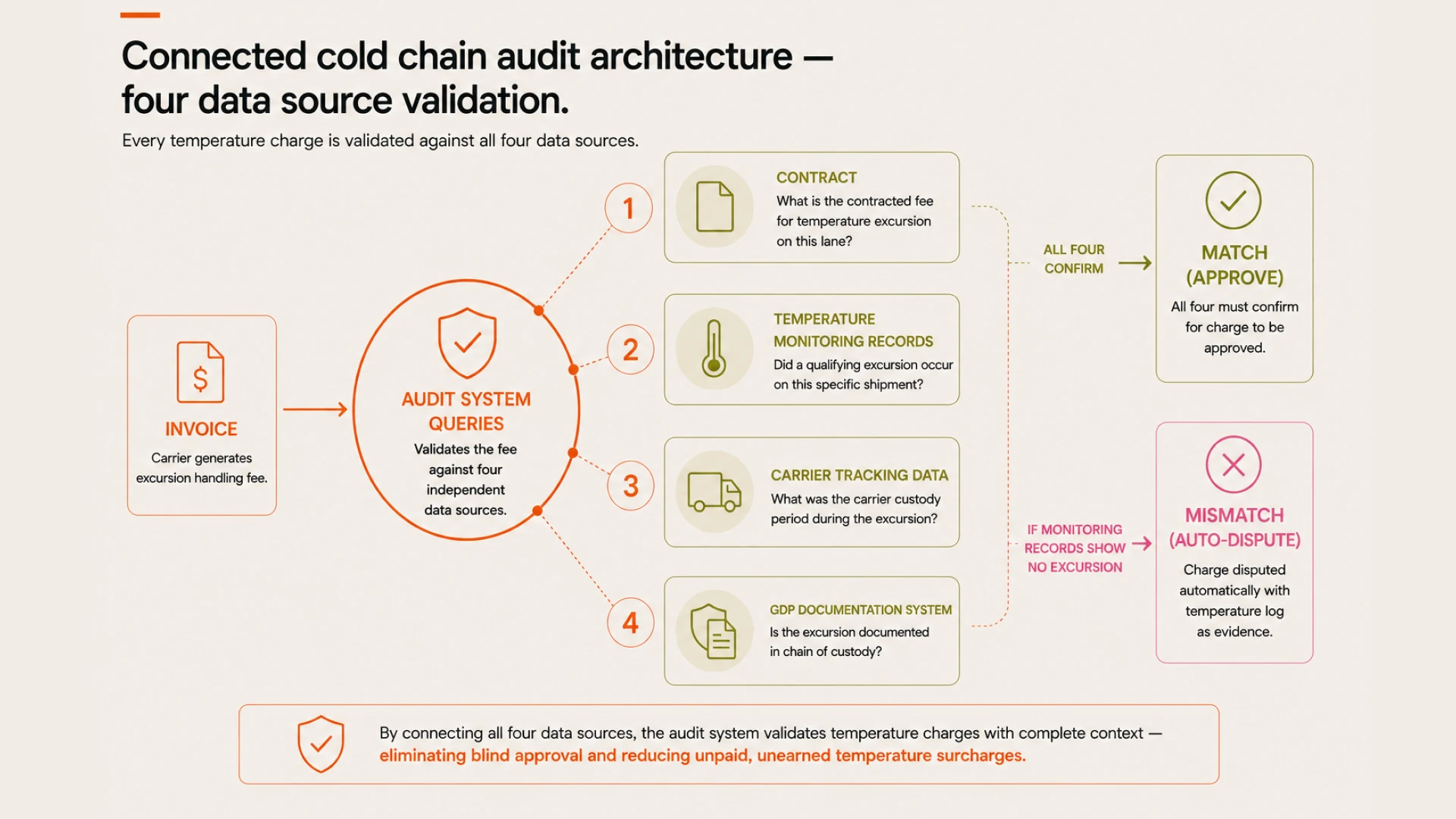
The specific problem in pharma cold chain billing is that the charge validation requires connecting two data sets that live in different organizational functions and different systems. The billing trigger — was there a temperature excursion? — lives in the compliance function's temperature monitoring records. The billing invoice — what did the carrier charge for that excursion? — lives in the logistics function's AP workflow. Validating the charge requires joining the two data sets, which requires someone to coordinate across the organizational boundary.
In practice, that coordination does not happen systematically. The invoice moves through AP on the logistics side without the compliance team's temperature records being consulted. The compliance team reviews the temperature records for regulatory purposes without connecting them to the carrier's billing. The charges are paid. Whether they are valid is unknown.
What 15 ERP instances and 80 carriers produce
A large pharmaceutical company with global manufacturing and distribution operations might run 15 ERP instances across regions, each with partial freight data. The cold chain carrier base might include 80 or more specialized carriers — temperature-controlled trucking, cryogenic air freight, last-mile pharmaceutical distributors — each with their own billing format and their own temperature surcharge logic.
The audit gap at this scale is not accidental. It is the structural output of an audit program that was designed for standard freight modes and has been extended to temperature-sensitive freight without the data architecture required to validate temperature-dependent charges. The audit system checks the base freight rate. It checks the standard accessorials. The temperature handling fees pass through because the audit system does not have access to the temperature records that would make validation possible.
“The carrier is charging for an excursion. The audit system is checking the excursion fee against the contracted rate. Nobody is checking whether the excursion actually happened.”
What connecting the data sources enables
Connecting the audit system to the temperature monitoring data — through the IoT devices that track shipment conditions, the carrier's temperature log API, or the GDP documentation system — enables a category of validation that has not previously been part of freight audit. The temperature excursion fee is checked not just against the contracted fee schedule but against the monitoring record for this specific shipment. If the carrier's records show a temperature deviation that triggered the fee, the charge is valid. If the monitoring data shows continuous in-range temperature for the duration of transit, the fee is not valid regardless of what the carrier's billing system generated.
This validation requires an audit architecture that connects to data sources outside the standard freight audit scope — which is precisely the capability that separates a context graph approach from a conventional audit platform. The conventional platform audits the invoice against the contract. The context graph connects the invoice to every data source that is relevant to validating it, including the compliance systems that hold the temperature records that most freight audit implementations have never accessed.