
What Carrier-Specific Audit Logic Looks Like When It's Pre-Built

March 23, 2026
•
6
mins
Custom parsers and manual carrier onboarding are a tax on audit coverage. They are not a requirement.
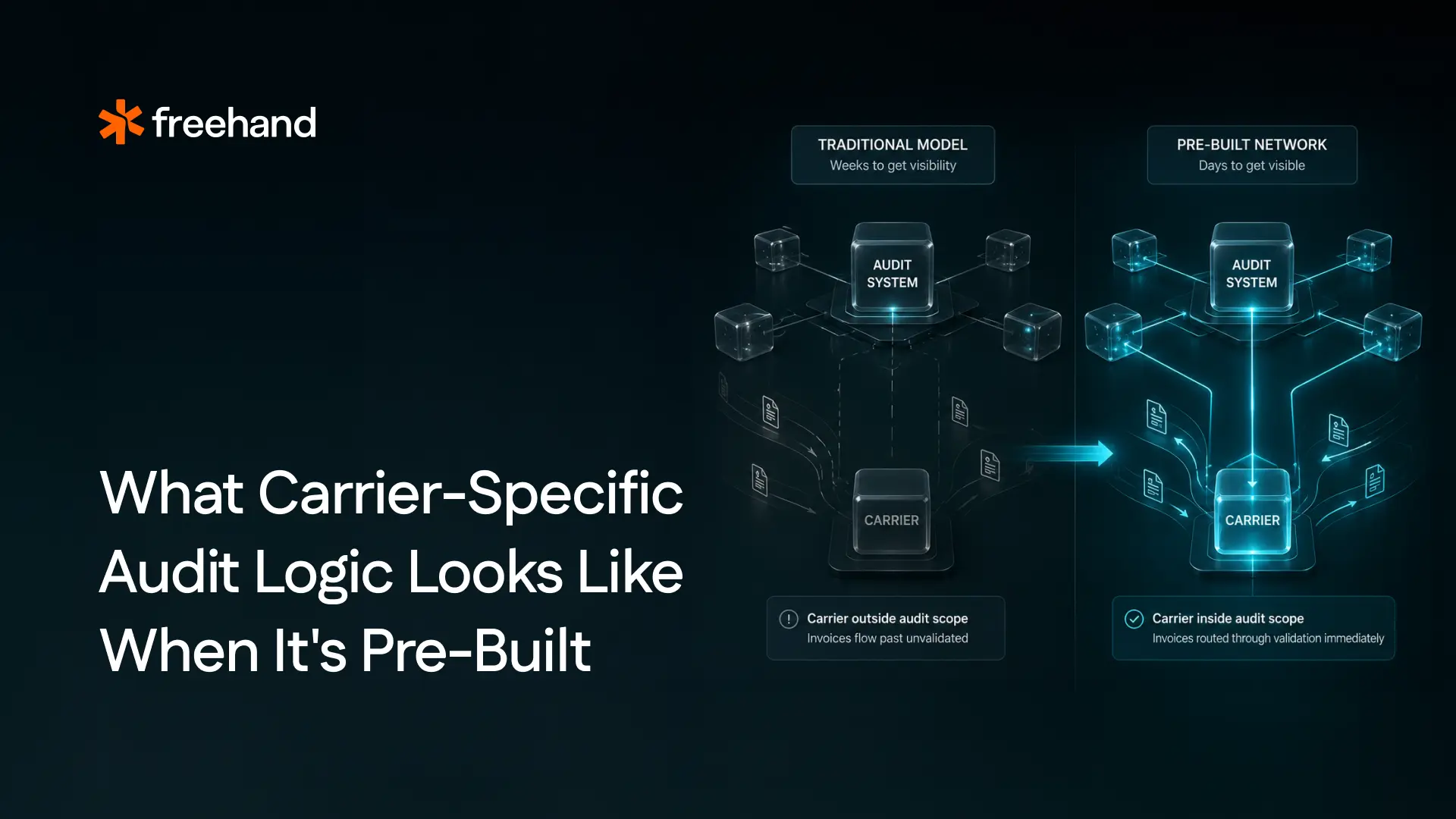
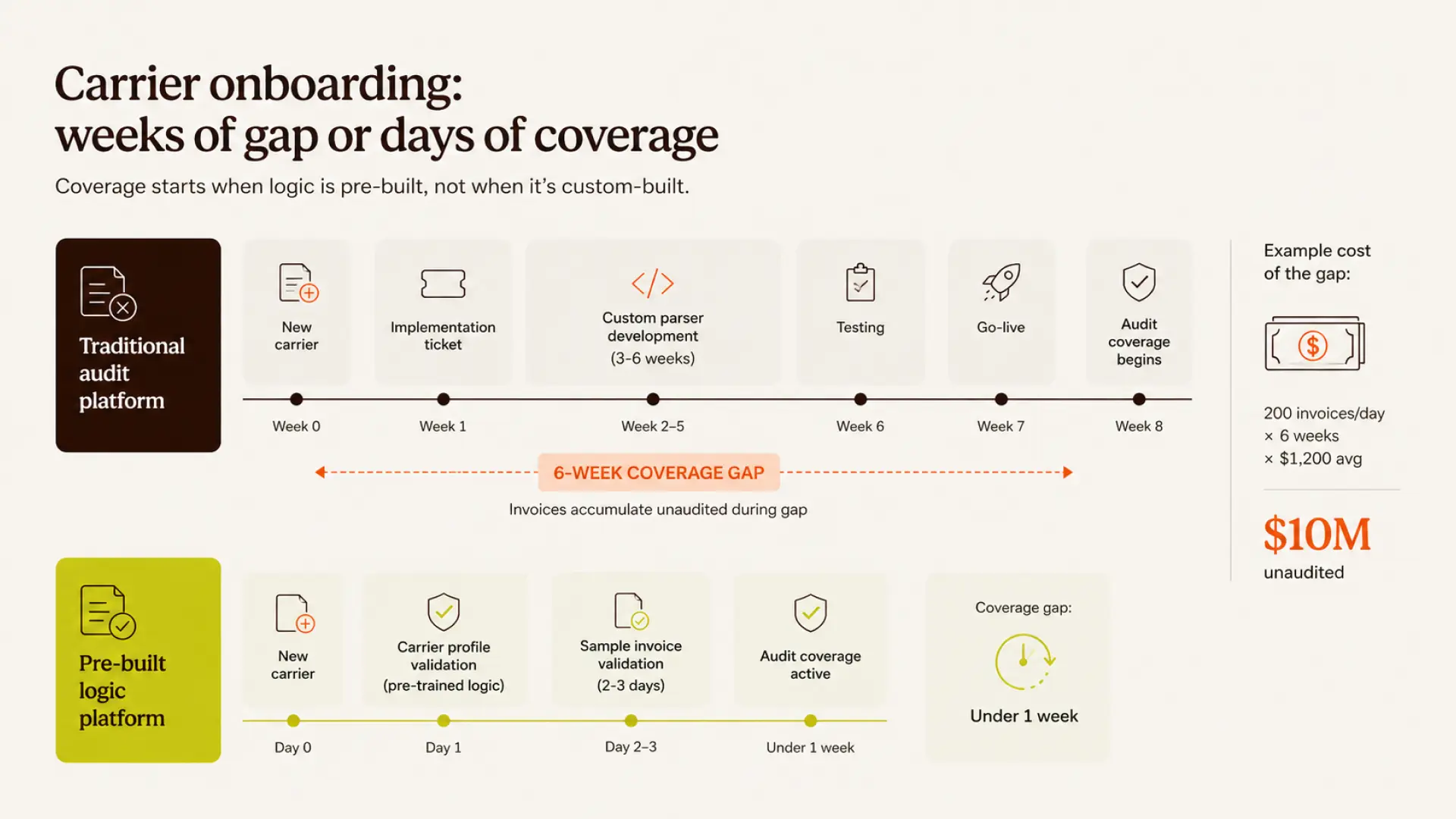
When a freight audit platform requires a custom parser for each new carrier, the audit program never quite catches up to the carrier base. A new carrier joins the network. The implementation team logs a ticket. The parser takes three to six weeks to build and test. During that window, every invoice from that carrier enters without validation — approved, queued, paid. If the carrier has billing errors in their configuration, those errors accumulate undetected for the duration of the onboarding delay.
At enterprise invoice volumes, this is not a minor gap. A mid-tier carrier processing 3,000 invoices monthly at an average value of $1,200 will submit $3.6 million in invoices during a six-week onboarding window. If their DIM weight divisor is misconfigured — a common setup error — the resulting overcharge runs undetected through every one of those invoices.
What pre-built carrier logic actually means
A platform that arrives pre-trained on carrier billing structures has a fundamentally different relationship with carrier onboarding. The NMFC classification rules for LTL. The fuel surcharge table format and index source for each major carrier. The DIM weight divisors by service type and contract vintage. The accessorial trigger conditions — how detention is calculated, what the free-time rules are, how zone-based surcharges apply to specific residential zip codes. These are not generic rules. They are carrier-specific, and they differ enough between carriers that getting them wrong produces systematic errors.
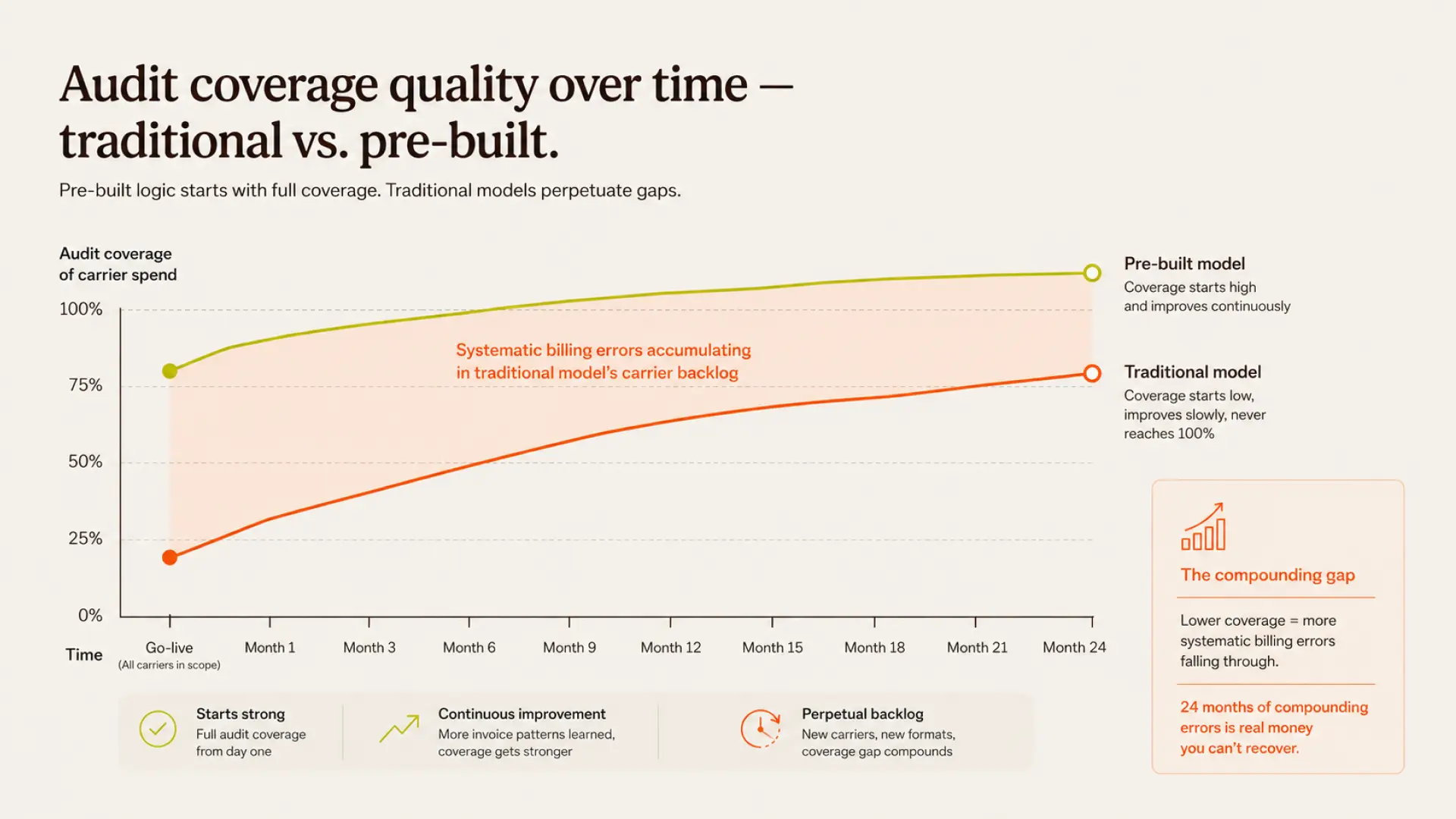
Building this knowledge from scratch for each carrier during implementation is the reason most freight audit platforms have perpetual coverage gaps in their carrier base. The large national carriers get built first and get the most maintenance. Regional carriers, international carriers, and specialized carriers get built later and get less maintenance. The billing errors that accumulate in the undertended coverage zones are precisely the ones most likely to go undetected — because the carriers with the most idiosyncratic billing logic are the ones whose parsers are least current.
The pre-invoice validation difference
When carrier billing logic is pre-built and maintained continuously, pre-invoice validation becomes possible. Rather than checking an invoice after it arrives against a rate card that was configured at implementation, the system can validate the invoice before approval against the carrier's current billing rules — including rules that changed since the original configuration. A carrier that updated their fuel surcharge table in January and did not notify the shipper will have their invoices cross-checked against the updated table, not the stale one.
“Carrier onboarding should be a validation exercise, not a development project. The question is whether the platform was built to make that possible.”
The operational shift this produces is significant. Carriers that are currently onboarded to an audit program are typically the ones whose invoices have been reviewed long enough for the implementation team to have caught the major error patterns. Carriers that are in the backlog are typically the ones whose errors are still accumulating. A pre-built approach eliminates the backlog by making the audit program's coverage continuous rather than staged.
Day one coverage versus end-of-project coverage
The specific value of pre-built carrier logic is that it changes when audit coverage actually begins. In a custom-parser model, coverage begins at the end of implementation — after the parsers are built, tested, and validated. In a pre-built model, coverage begins on day one — with the first invoice processed, the system is applying the same logic it will apply on day 365. The learning curve is in the system before deployment, not after it.
At Freehand, the pre-trained Logistics Language Model arrives with billing logic for thousands of global carrier rate structures, built from the invoice patterns across the deployed customer base. A new carrier is onboarded by validating their invoices against the existing logic, not by writing new logic. When the validation confirms accuracy, the carrier is in scope. The window between a carrier joining the network and their invoices being audited compresses from weeks to days.