
What 'Production-Ready' Actually Means in Enterprise AI

April 29, 2026
•
6
mins
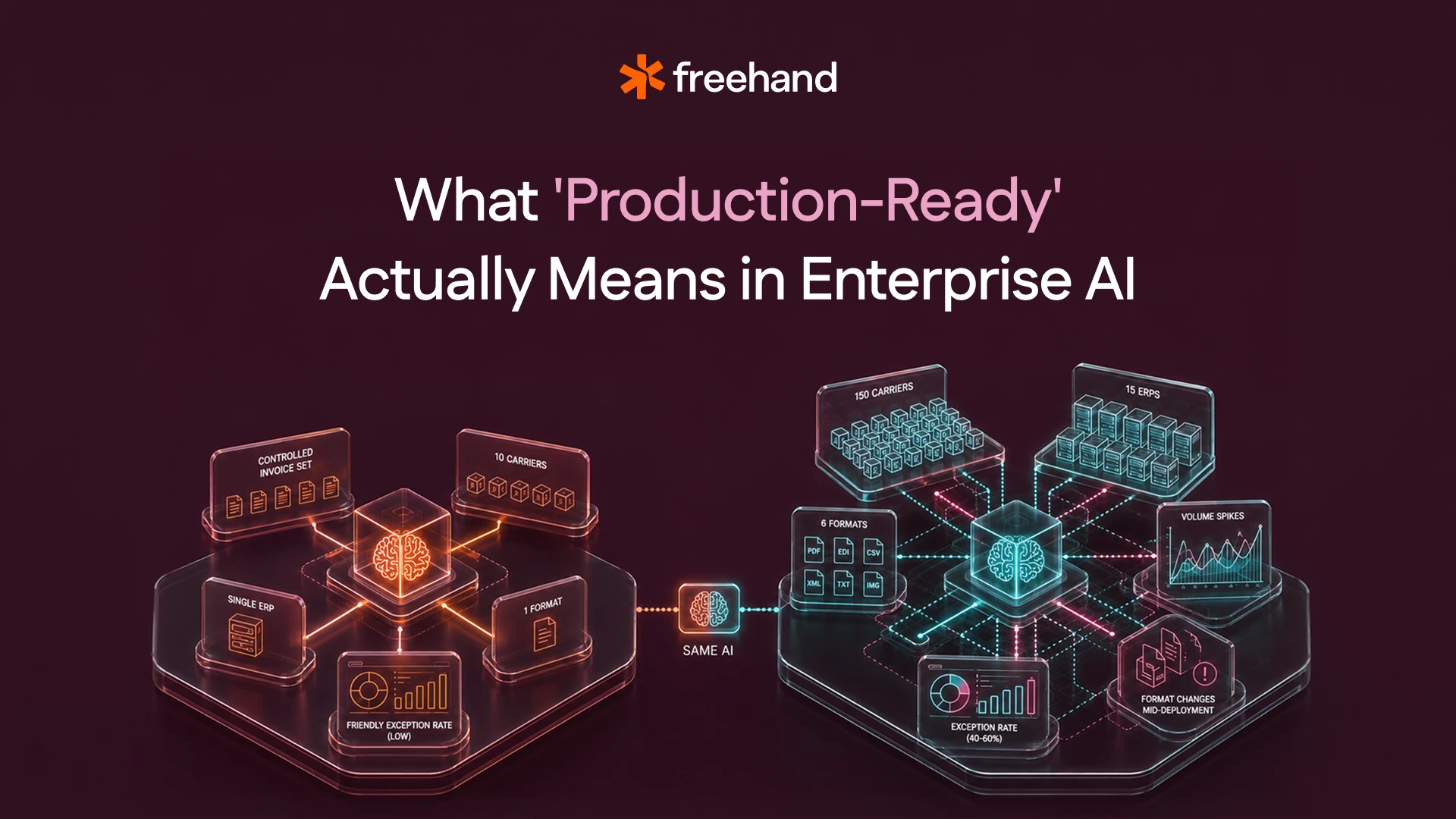
A proof of concept that works in a demo is not production-ready. The distance between them is where most enterprise AI deployments stall.
Every enterprise AI vendor has a demo that works. The demo is controlled. The data is clean. The edge cases are pre-handled. The result looks like the future. The gap between that demo and a production system processing real invoices from 150 carriers in six formats across fifteen ERP instances is the gap where most enterprise AI deployments spend their first 18 months. Some close it. Many do not.
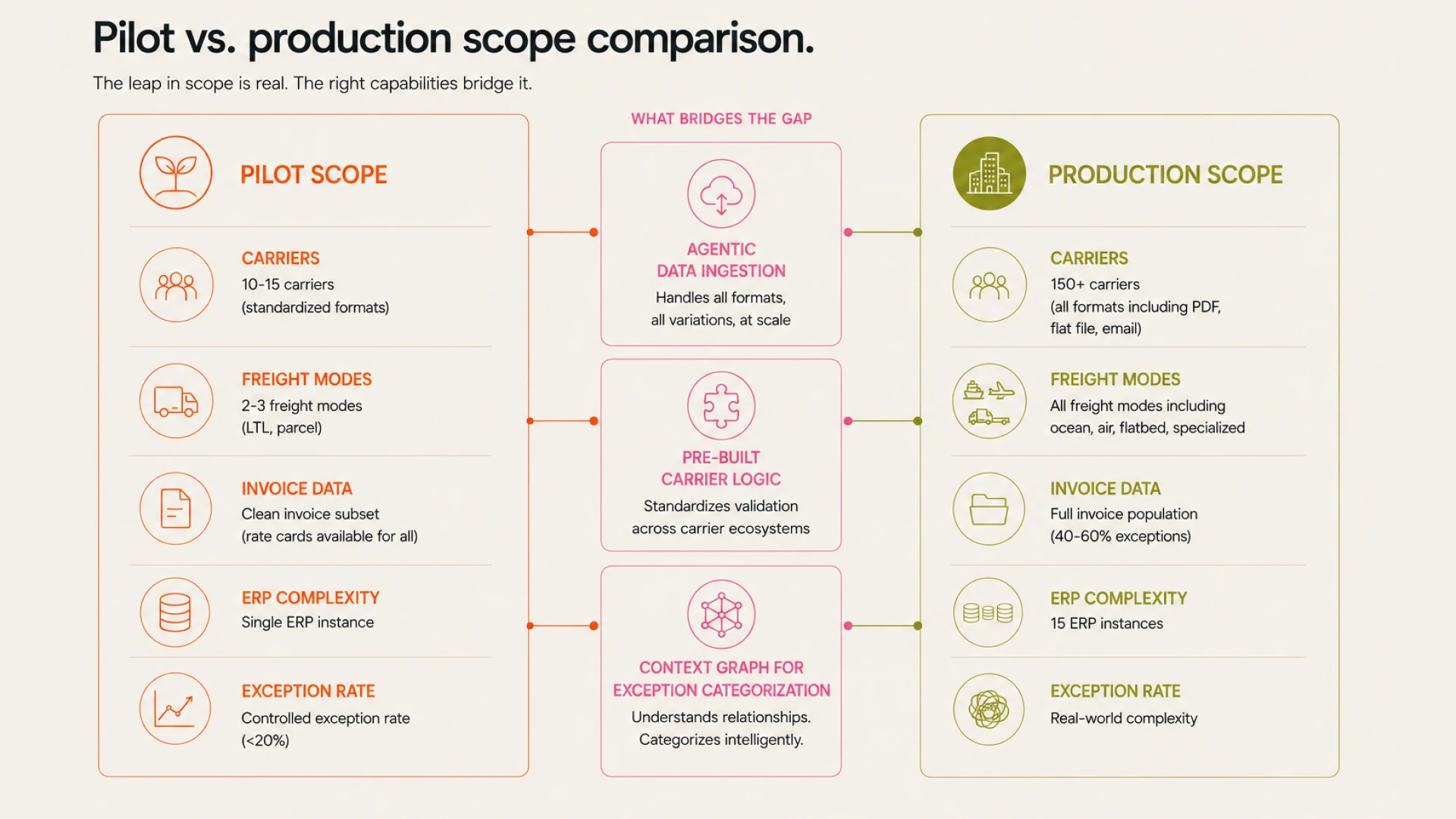
Production-ready in enterprise AI has a specific meaning that is worth being precise about. It means the system performs at the specified accuracy rate on the actual invoice population, not the curated test set. It means the data architecture handles the full carrier base, not the ten carriers that were onboarded during the pilot. It means the exception management logic handles the 60% of invoices that are not clean, not just the 40% that match the contracted rate on the first check. And it means the system runs continuously without degrading when volume spikes, formats change, or a carrier updates their billing logic mid-cycle.
Where pilots fail at production
The most common failure mode in the pilot-to-production transition is data complexity. A pilot is typically run against a curated subset of invoices — the carriers with standardized formats, the modes with the clearest rate structures, the lanes with the most complete contract documentation. The AI performs well on this subset because the subset was chosen partly for performance. Production means running against the full population, which includes the carriers with non-standard invoice formats, the modes with complex accessorial structures, and the lanes with rate amendments that were never formally documented.
The second failure mode is exception coverage. In a pilot, the exception rate is often managed by scoping out the invoice types that generate most of the exceptions. Production means handling all of them — the ocean freight exceptions with port-specific demurrage rules, the flatbed exceptions with multi-stop pricing, the parcel exceptions with zone-based surcharges that reset quarterly. Each exception type requires carrier-specific resolution logic. Building that logic at production scale is a different problem than demonstrating the concept in a controlled environment.
The continuity requirement
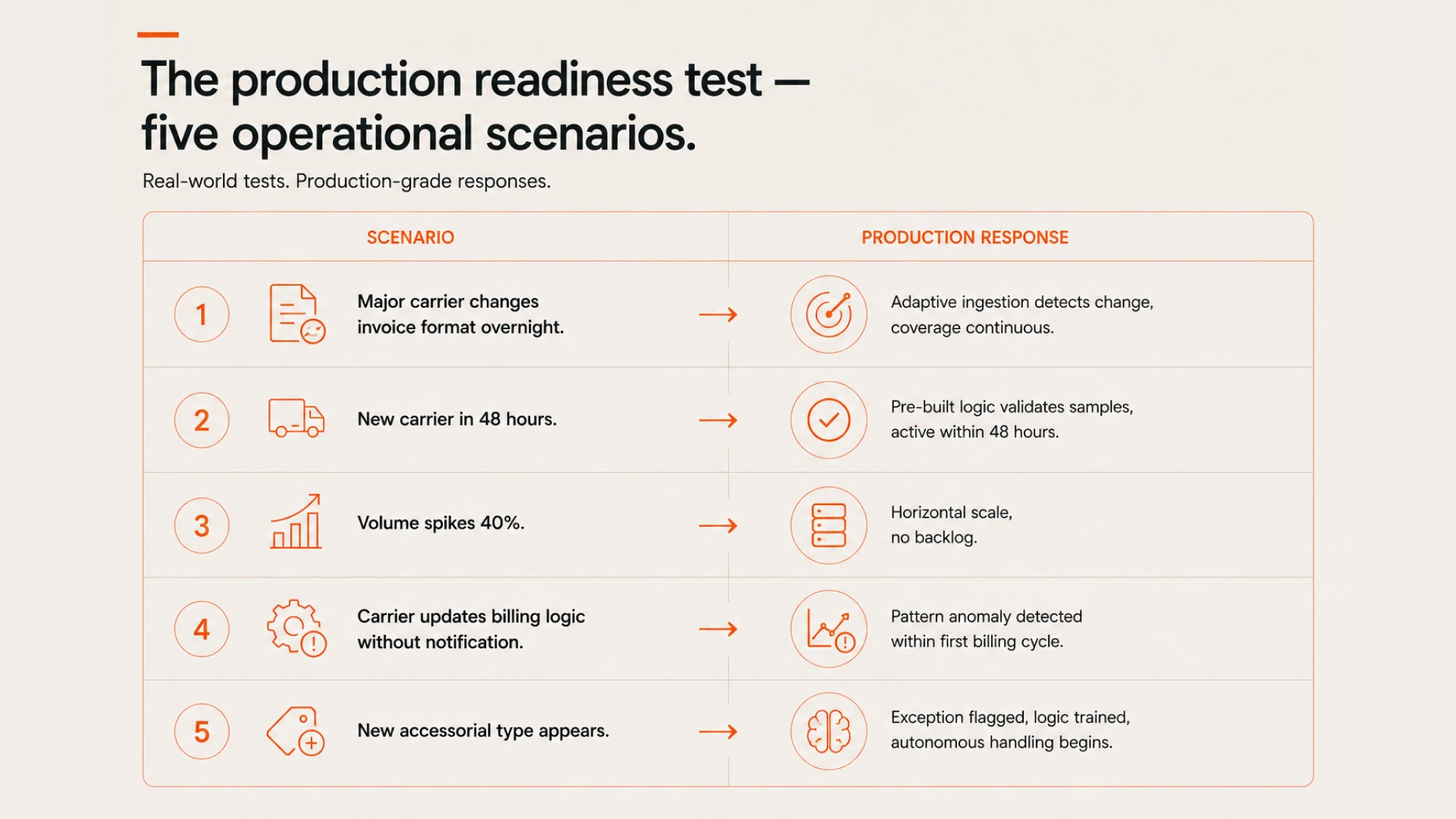
Production-ready also means the system is resilient to the ongoing changes that are a normal feature of enterprise freight operations. Carrier billing systems get updated — which means invoice formats change without notice. Rate cards get amended mid-cycle. Carriers with previously clean billing develop new error patterns after personnel changes in their billing department. New carriers join the network with formats the system has not previously seen. A production system handles all of these continuously without requiring implementation work for each change.
This is the operational test that most AI deployments encounter between months six and eighteen: the first time a major carrier changes their invoice format and the system has to adapt, the first time a new carrier needs to be onboarded in less than a week because of an urgent capacity need, the first time the freight market spikes and the audit needs to handle a 40% volume increase without a corresponding increase in exception review backlog. How the system performs in these moments determines whether it is genuinely production-grade or still operating in an extended pilot state.
“Production-ready is not a state you reach at go-live. It is the operational standard the system maintains through its 100th carrier format change and its first capacity spike.”
The deployment metric that matters
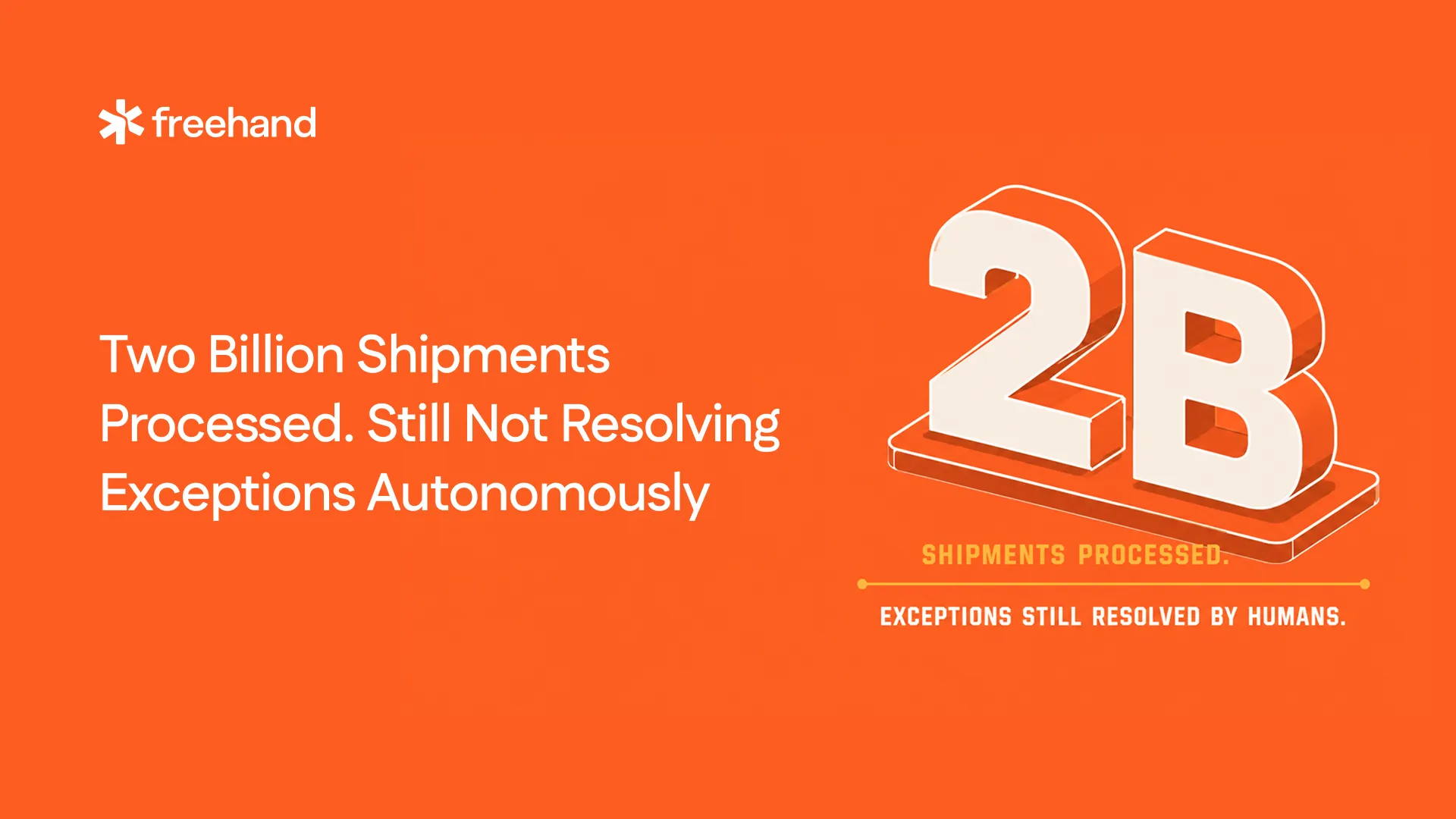
The deployment metric that distinguishes production-grade from pilot-grade is not first-pass accuracy on the clean invoice population. It is the autonomous resolution rate on the full exception population — what percentage of all exceptions (not just L1 exceptions) does the system resolve without human intervention, and how does that rate hold as volume and complexity scale?
At the companies where Freehand has been running at production scale, the autonomous resolution rate on the full exception population — including the complex modes and the non-standard carriers — runs above 90% within 90 days. That number is not the pilot accuracy rate. It is the production rate, on real invoices, including the exceptions that the pilot scoped out. The difference is what production-ready means.