
Best Procurement Management Software for Supply Chain Teams (2026)
.webp)
June 30, 2026
•
12
mins
Comparing the best freight procurement management software for 2026: 1. Keelvar, 2. Transporeon, 3. Freehand, 4. GEP SMART, 5. Coupa, 6. SAP Ariba, 7. GoComet, 8. Oracle Fusion Cloud Procurement, 9. Jaggaer, and 10. Freightos.
Transportation is the largest controllable cost in most supply chains, and a structured RFP process alone saves 20% on average freight spend. The platforms below capture that in very different ways. Most run the sourcing side: RFPs, bids, awards. Freehand runs what happens after the award: the audit and payment of the freight spend you just contracted, the step where those sourcing savings are actually kept.
This is a buyer's guide for supply chain teams at enterprise and mid-market shippers. If you carry serious freight spend and you sit in supply chain, procurement, finance, or IT leadership, the comparison below is built to help you shortlist and book the right demos.
Below, we are going to see a detailed comparison of the best freight procurement management software for 2026, one line per platform, before the full breakdown.
TL;DR: The best procurement management software at a glance
- Keelvar: AI-native agentic sourcing with the strongest autonomous evidence here, 150+ live bots managing $90B+ in spend.
- Transporeon: the largest freight carrier network at 180,000+, with Autonomous Procurement AI on top of structured RFPs.
- Freehand: not a sourcing tool. AI agents that audit and pay the freight invoices after award, replacing the BPO or in-house AP team on that spend.
- GEP SMART: unified source-to-pay with MINERVA agentic AI and broad category coverage.
- Coupa: business spend management with strong RFQ and supplier collaboration across enterprise transportation.
- SAP Ariba: the deepest ERP-native fit for SAP shops, with the Joule AI copilot and the largest supplier network.
- GoComet: freight-native automated negotiation and vendor performance analytics for global shippers.
- Oracle Fusion Cloud Procurement: 50+ generative AI capabilities and a Gartner Magic Quadrant Leader position for source-to-pay.
- Jaggaer: strong procure-to-pay execution for direct materials and freight sourcing in manufacturing.
- Freightos: the only platform here with public pricing, a transparent spot and contract freight marketplace.
Comparison table: top procurement management software for 2026
Overall is our weighted editorial score on the criteria below, not a third-party rating.
What is freight procurement management software?
Freight procurement management software helps supply chain teams source carriers, run RFPs and spot bids, compare rates, award freight contracts, and track carrier performance in one place. It typically:
- Collects carrier bids across modes
- Normalizes rates against lane and accessorial structures
- Runs scenario optimization across thousands of award combinations
- Benchmarks quotes against market indices
- Writes awarded rates into the TMS and ERP
- Adds autonomous event execution on AI-native platforms
It replaces spreadsheets and email threads and typically lowers freight spend by a structured 20% on average. One point buyers miss: sourcing sets the rate, but the savings only land if every invoice is later paid at that rate, a separate audit-and-pay job handled by procurement software that automates AP. For a CPO, that means lower freight cost and a defensible award trail.
How We Evaluated Procurement Management Software
We weighted six criteria by what decides a procurement platform choice for supply chain, procurement, and finance leaders, then judged every platform on the same basis using vendor documentation, G2, Gartner Peer Insights, and the 2026 Gartner Magic Quadrant for Source-to-Pay Suites. Sourcing autonomy and ERP or TMS fit carry the most weight, because how much of the tender a platform runs without an analyst and how cleanly it plugs into existing systems decide most shortlist outcomes.
Freehand publishes this guide and is included in it. Freehand is an AP and payment automation platform, not a sourcing tool, so we did not benchmark it against the sourcing suites feature for feature. We rank it third as the execution layer that closes the loop on freight spend after award, and rank the sourcing tools among themselves on their own merits.
- Sourcing autonomy and AI maturity (25%). How much of the tender, negotiation, and award runs without an analyst, versus AI-assisted or fully manual.
- ERP and TMS integration (20%). Native connectors into SAP, Oracle, NetSuite, and major TMS platforms versus custom-built middleware.
- Category and lifecycle scope (15%). Sourcing-only coverage versus full source-to-pay versus the post-award AP and payment step.
- Network scale and reach (15%). Carrier, supplier, or forwarder network size and geographic coverage.
- Independently verifiable evidence (15%). Named customers, G2 or Gartner Peer Insights reviews, and public data, weighted above claims made only by the vendor.
- Pricing transparency (10%). Published pricing versus a custom quote gated behind a sales call.
Freehand does not yet carry a G2 or Gartner Peer Insights profile, so we weight its placement on verifiable capability and named recognition rather than review volume, and we flag that gap openly in its section below. This is an independent editorial comparison referencing Gartner and G2 alongside vendor documentation; it is not a certified third-party ranking.
Best procurement management software, ranked for 2026
The AI-native platforms lead on autonomous sourcing; the established suites follow on network scale and source-to-pay breadth.
1. Keelvar
Best for:
Large enterprises running complex, multi-lane, multi-modal freight tenders that want sourcing events executed autonomously, with humans setting the rules and approving awards rather than building every event by hand.
Keelvar is an AI-native agentic sourcing platform built for large enterprises with complex supply chains. It pairs sourcing optimization, the ability to model billions of award scenarios, with autonomous sourcing bots that receive a request in plain language, build the event, engage suppliers, run the negotiation, and recommend an award. Across the platform, 85% of sourcing activity is automated (vendor-claimed).
Key features:
- Autonomous sourcing bots that run events end to end with human approval gates
- Combinatorial optimization across multi-lane, multi-modal freight scenarios
- Plain-language event setup that builds the RFP from a request
- Real-time scenario analysis, what-if modeling, and award recommendations
- Xeneta integration for real-time freight rate benchmarking
- 150+ live autonomous sourcing bots in production
- Rules-based escalation to humans when decisions fall outside set parameters
- API integration with ERP and TMS systems
Pricing:
Custom enterprise pricing, not published. Quotes scale with sourcing volume and the number of autonomous bots, so expect a sales conversation before you see numbers.
Pros:
- Strongest autonomous sourcing evidence in this comparison, with named global customers
- Optimization depth that handles freight scenarios suites cannot model
- High automation rate reduces analyst time per event
Cons:
- Sourcing-focused, so downstream procure-to-pay and audit need other tools
- Enterprise-only complexity that overshoots simpler RFP needs
What Users Say
- Love: Deep autonomous sourcing evidence. Keelvar holds a 4.5 rating across 28 G2 and Gartner reviews and shows the strongest track record here for running full tender events with minimal analyst involvement. (source)
- Complain: Sourcing-only scope, thin independent review base. Keelvar covers the tender and award only, so audit and payment need a separate tool, and its 28-review base is thinner than the larger source-to-pay suites. (source)
{{blue-cta}}
2. Freehand
Best for:
Supply chain teams where the goal is eliminating manual sourcing and downstream spend work, not just digitizing the RFP, and where SAP or Oracle integration without custom EDI build is non-negotiable. A strong fit for CPO, CSCO, CFO, and CIO buyers on complex categories like logistics, direct materials, and MRO.

Freehand is an agentic AI platform for supply chain and spend management that came out of stealth at Manifest 2026. Its Autonomous AI Teams read unstructured documents, emails, and chats, reason across contracts and policies, make decisions, and execute them directly inside procurement, ERP, and finance systems. It is built by the team behind Pi, recognized as a TIME Best Invention of 2025 and a Gartner Visionary.
Key features:
- AI Teams execute decisions directly in your procurement and ERP systems, not just surface them
- Autonomous sourcing and supplier follow-up across complex categories
- Reasoning across contracts, policies, and unstructured documents
- Source-to-pay software coverage from sourcing through payment
- Procure-to-pay software automation with outcomes posted back to the ERP
- Built-in spend analytics software by category, supplier, and cost center
- Native connectors for SAP, Oracle, NetSuite, and Dynamics with no custom build
- Client-exclusive model in a dedicated environment, no pooled data
- An auditable trace finance can review for every decision
Pricing:
Custom, volume-based. No percentage-of-savings fees and no data connection fees, so you get a quote after a scoping call.
Pros:
- AI Teams resolve and execute, not just flag, across sourcing and spend
- One platform spanning sourcing, procure-to-pay, audit, and spend analytics
- Native ERP integration without EDI workarounds
Cons:
- Launched in early 2026, so the named customer reference pool is still growing
- Built for enterprise complexity, not single-carrier or SMB shippers
What Users Say
- Love: Real-time visibility and ease of use. Gartner Peer Insights reviewers (3.6 across 25 reviews) cite real-time updates and usability as strengths for logistics management. (source)
- Complain: Coverage and review signal skew regional. Reviewer feedback and network depth concentrate in Europe and North America, and its 3.6 average trails the top suites here, so shippers elsewhere have less independent evidence to lean on. (source)
3. Transporeon
Best for:
Shippers that want the largest freight carrier network for sourcing and spot procurement, with an optional autonomous AI layer, primarily across European and North American road freight.
Transporeon, now part of Trimble, is a cloud platform specializing in transportation sourcing and procurement. It connects shippers to a carrier network of 180,000+, the largest in this comparison, for digital tenders, spot bidding auctions, and rate benchmarking across road, rail, sea, and air. Its Autonomous Procurement AI runs sourcing events on top of structured RFP processes.
Key features:
- 180,000+ carrier network, the widest coverage here
- Digital freight tenders, spot auctions, and mini-bids across all modes
- Autonomous Procurement AI for hands-off event execution
- Rate management and a centralized rate database
- Benchmarking against market rates to secure competitive pricing
- Dock scheduling and real-time transport visibility alongside procurement
- SAP, Oracle, and major TMS integrations
- Recognized in Gartner Peer Insights for transportation management
Pricing:
Custom, not published, with limited transparency without direct sales engagement. Quotes scale with network access, modules, and freight volume.
Pros:
- Unmatched carrier network for sourcing depth and spot capacity
- Strong reported savings, 19% on top of the 20% RFP baseline (vendor-claimed)
Cons:
- Coverage is strongest in Europe and the US, thinner elsewhere
- UI complexity and a learning curve cited by casual users
"Real-time updates and ease of use enhance efficiency in logistics management." Reviewer sentiment on Gartner Peer Insights, 2026.
4. GEP SMART
Best for:
Enterprises that want unified source-to-pay across all spend categories, including freight, with agentic AI and managed-service depth available alongside the software.

GEP SMART is an AI-based unified source-to-pay platform built natively on Microsoft Azure with Azure OpenAI. Its MINERVA agentic AI assists across sourcing, contracting, and procurement execution. GEP pairs the software with managed services for strategic sourcing, which suits teams that want technology and advisory from one provider.
Key features:
- Unified source-to-pay across sourcing, contracts, and procurement
- MINERVA agentic AI for guided sourcing and execution
- Built natively on Azure with Azure OpenAI
- Category coverage spanning direct, indirect, and logistics spend
- Spend analytics and supplier management in one suite
- Managed services available for strategic sourcing
- ERP integrations for SAP and Oracle environments
- Mobile-first interface across the suite
Pricing:
Custom enterprise pricing, not published. Quotes depend on modules and managed-service scope, so expect a discovery call.
Pros:
- True end-to-end source-to-pay breadth in one platform
- Software plus managed services from a single provider
Cons:
- Breadth means freight sourcing is one module, not the core focus
- Enterprise implementation timelines are longer than point tools
"GEP SMART reports 25 to 40% typical cost savings and 92% user satisfaction." Vendor-claimed figures via GEP, 2026.
5. Coupa
Best for:
Enterprises that want business spend management breadth, where freight procurement sits inside a broader platform covering all categories of spend and supplier collaboration.
Coupa is an AI-driven business spend management platform with strong RFQ management, real-time quotes, and side-by-side comparison dashboards. Its supply chain design and planning capability, built on the LLamasoft acquisition, adds digital-twin modeling for strategic sourcing decisions. It holds a 4.2 out of 5 rating on G2 across 569 reviews.
Key features:
- RFQ management with real-time quotes and comparison dashboards
- Business spend management across all categories, including freight
- Supply chain design and digital-twin modeling for sourcing scenarios
- Supplier collaboration and onboarding tools
- Spend analytics across the full procurement lifecycle
- AI-driven recommendations and community-sourced benchmarks
- ERP integrations for SAP, Oracle, and NetSuite
- Strong enterprise governance and approval workflows
Pricing:
Custom enterprise pricing, not published. Quotes scale with spend under management and modules, so expect a sales process.
Pros:
- Breadth across every spend category, with strong G2 standing
- Digital-twin modeling few procurement suites offer
Cons:
- Freight is one use case inside a broad platform, not the focus
- Enterprise pricing and implementation overshoot freight-only needs
Coupa holds a 4.2 out of 5 rating across 569 enterprise reviews on G2, 2026.
6. SAP Ariba
Best for:
SAP shops that want procurement and freight sourcing inside their existing ERP ecosystem, with the deepest S/4HANA integration and the largest supplier network in the category.
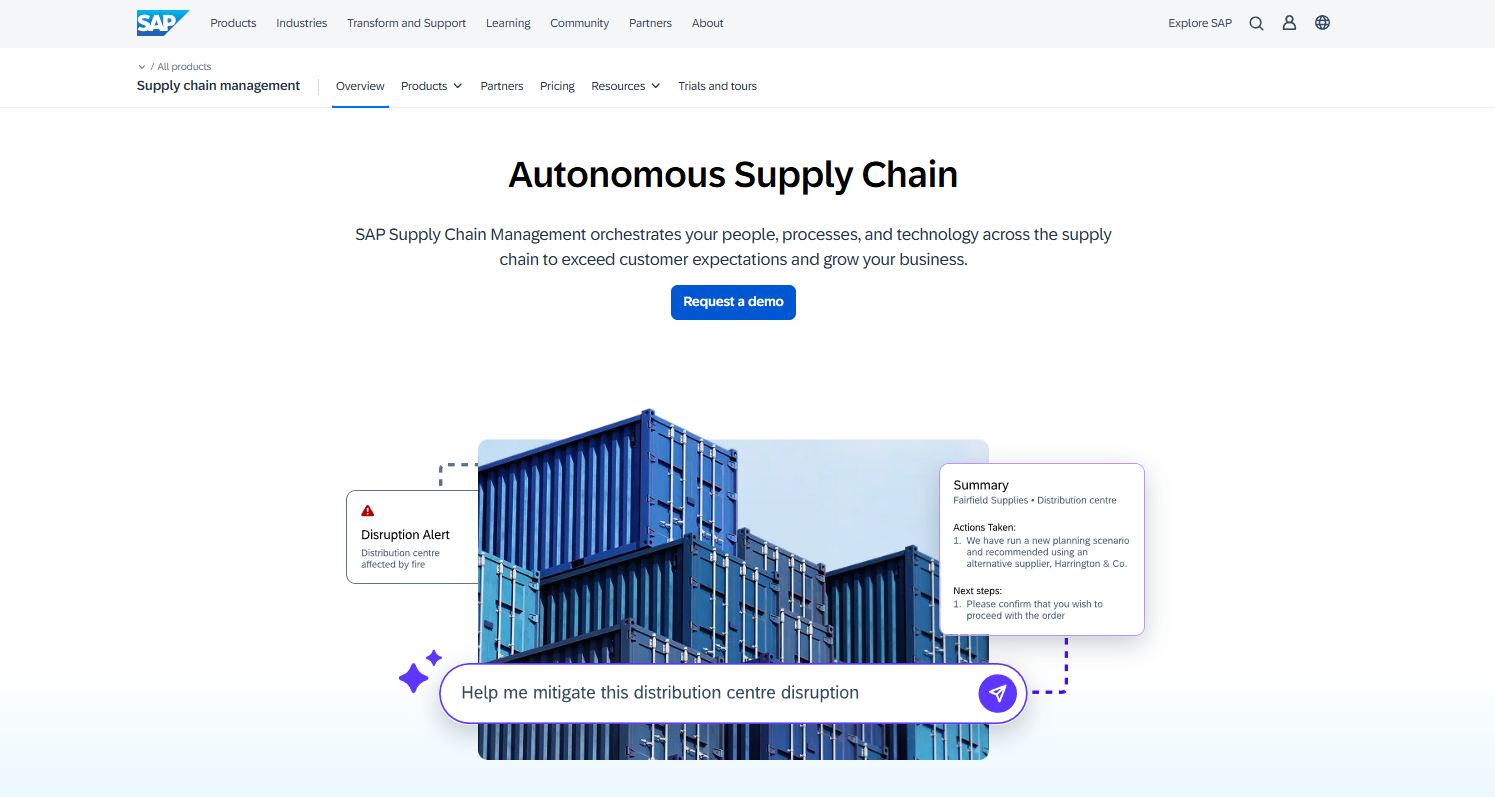
SAP Ariba is the market-share leader in procurement software at roughly 29% of the market. It enables sourcing with verified suppliers across bid events and connects to the SAP Business Network of 5M+ suppliers. Its Joule AI copilot answers natural-language procurement queries, and its tightest fit is for organizations already running SAP ERP and S/4HANA.
Key features:
- Sourcing and bid events with verified suppliers
- SAP Business Network with 5M+ connected suppliers
- Joule AI copilot for natural-language procurement queries
- Deep integration with SAP ERP and S/4HANA
- Contract management and compliance workflows
- Spend visibility across categories, including logistics
- Guided buying for requisition-to-order
- Global compliance and tax support
Pricing:
Custom enterprise pricing, not published. Quotes depend on the SAP landscape, modules, and network access.
Pros:
- Deepest ERP-native fit for SAP and S/4HANA environments
- Largest supplier network in the category
Cons:
- Best value only inside an existing SAP ecosystem
- 4.1 out of 5 on G2, with complexity cited by reviewers
SAP Ariba holds a 4.1 out of 5 rating across 791 enterprise reviews on G2, 2026.
7. GoComet
Best for:
Global shippers that want a freight-native procurement platform focused on automated rate negotiation and vendor performance, rather than a broad source-to-pay suite.
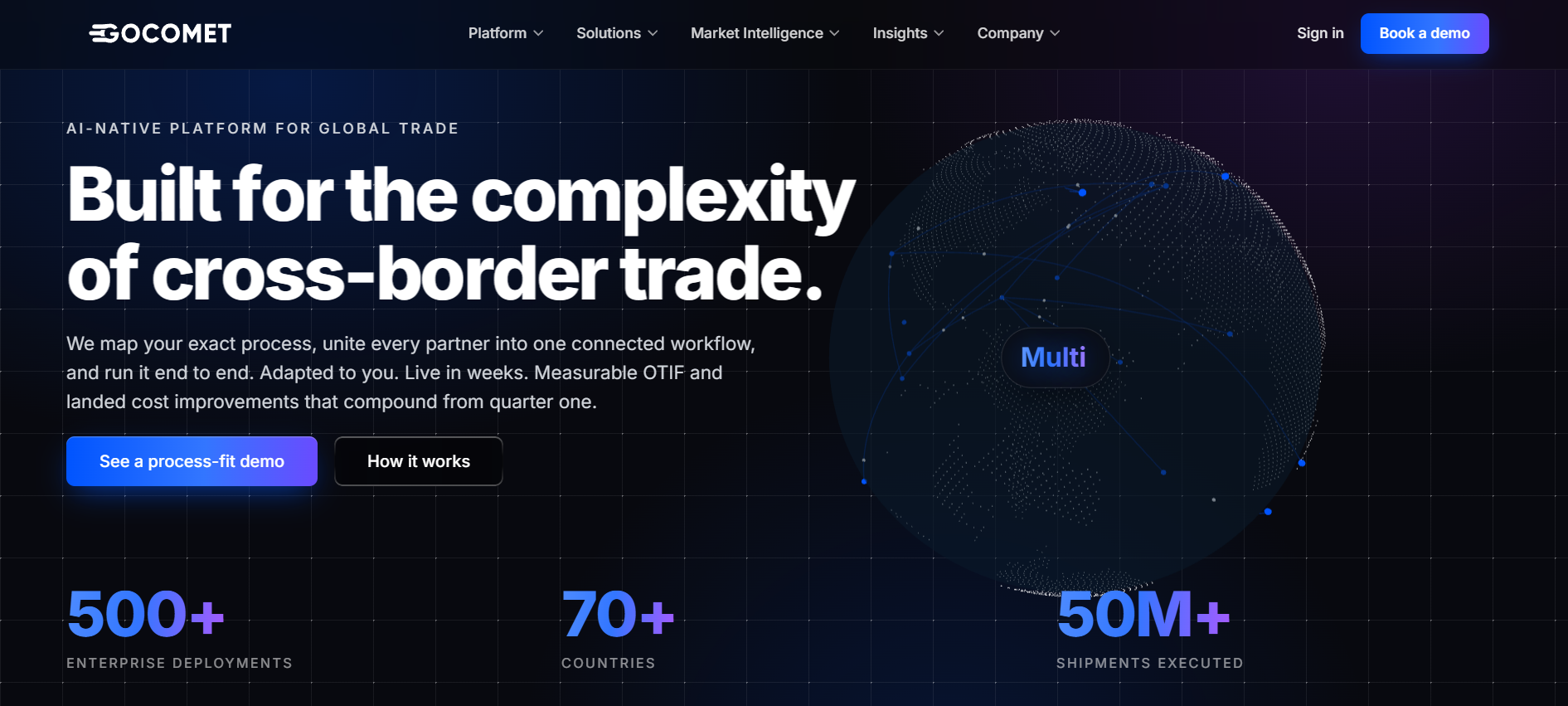
GoComet is a freight-native procurement platform with an automated negotiation engine and vendor performance analytics. It centralizes RFQs, runs recursive rate negotiation to drive carrier quotes down, and tracks vendor performance for transparent procurement. It is used by global enterprises across manufacturing, retail, and distribution.
Key features:
- Automated, recursive rate negotiation engine
- RFQ centralization and side-by-side quote comparison
- Vendor performance analytics and scorecards
- Multi-modal freight sourcing across ocean, air, and trucking
- Real-time freight rate visibility and benchmarking
- Shipment tracking and procurement in one platform
- API integration with ERP and TMS systems
- Analytics dashboards for freight spend
Pricing:
Custom, not published. Quotes scale with freight volume and modules, so contact the vendor directly.
Pros:
- Freight-native focus with a strong automated negotiation engine
- Combines sourcing, vendor analytics, and tracking in one tool
Cons:
- Narrower than full source-to-pay suites for indirect spend
- Less independent third-party review data than the enterprise suites
GoComet centralizes freight RFQs and runs automated negotiation for transparent procurement. Vendor overview via GoComet, 2026.
8. Oracle Fusion Cloud Procurement
Oracle shops that want source-to-pay inside Oracle Cloud ERP, with embedded agentic AI and lane analysis drawn from Oracle Transportation Management execution data.
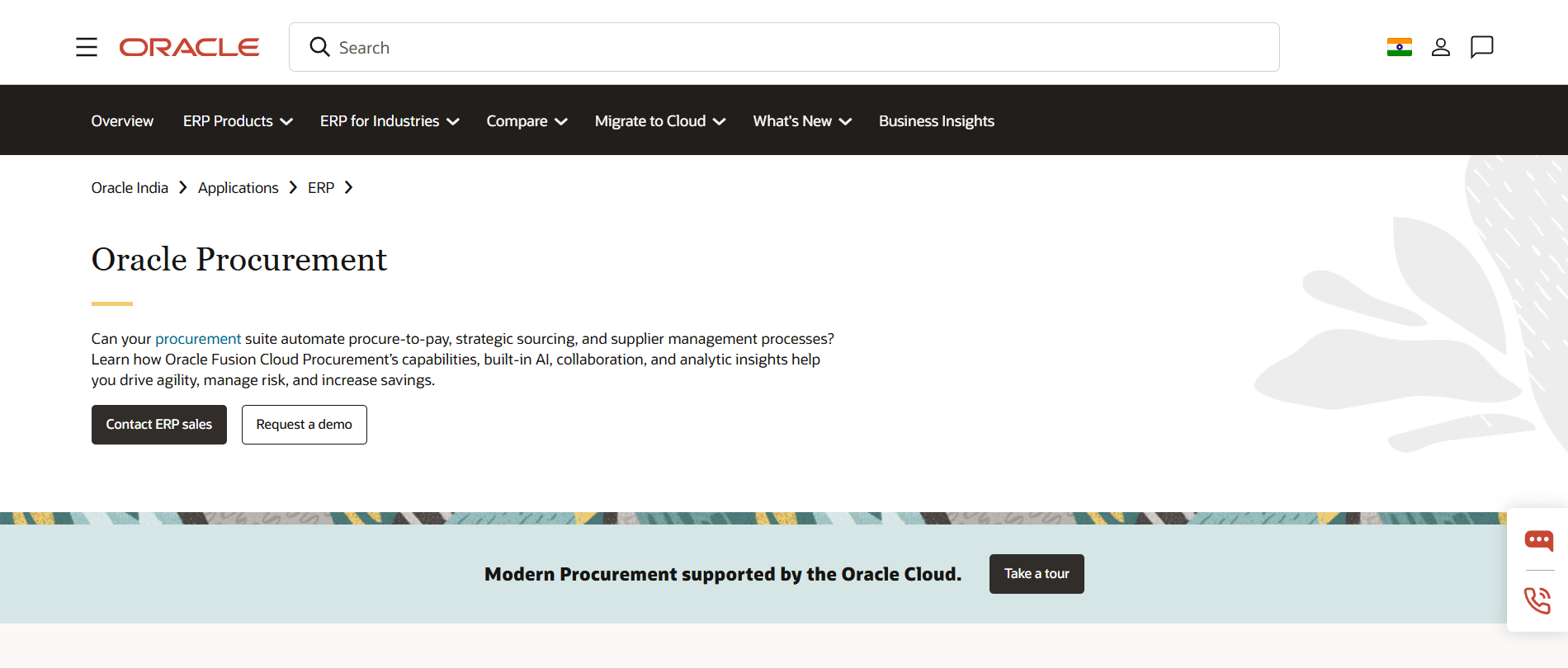
Oracle Fusion Cloud Procurement was named a Leader in the 2026 Gartner Magic Quadrant for Source-to-Pay Suites. It embeds agentic AI directly into procurement tools, with more than 50 generative AI capabilities across sourcing, contracting, and supplier management. Its tightest fit is for organizations already running Oracle Cloud ERP, where OTM execution data informs lane-level sourcing.
Key features:
- Embedded agentic AI across sourcing and procurement
- 50+ generative AI capabilities in the SCM Cloud
- Configurable sourcing and contracting workflows
- Lane analysis informed by OTM execution data
- Parallel approval for global payments
- Automated asset creation from supplier invoices
- Deep integration with Oracle Cloud ERP and JDE
- Supplier management and spend analytics
Pricing:
Custom enterprise pricing, not published. Quotes depend on the Oracle landscape and modules.
Pros:
- Gartner Magic Quadrant Leader for source-to-pay in 2026
- Deepest fit for Oracle Cloud ERP environments
Cons:
- Best value only inside an existing Oracle ecosystem
- Freight sourcing is one capability within a broad suite
Oracle Fusion Cloud Procurement is named a Leader in the 2026 Gartner Magic Quadrant for Source-to-Pay Suites, 2026.
9. Jaggaer
Best for:
Manufacturing and industrial shippers that want strong procure-to-pay execution across direct materials and freight sourcing, with deep supplier management.
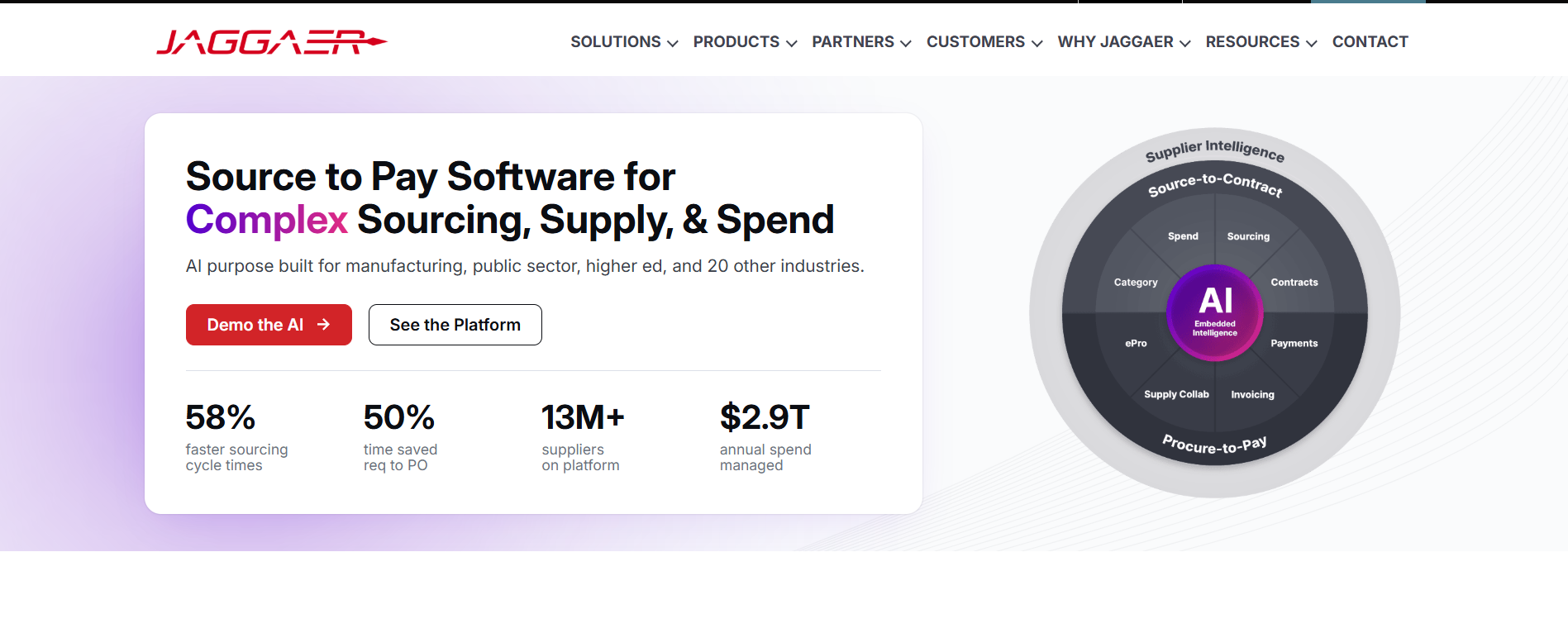
Jaggaer is a source-to-pay platform with particular strength in procure-to-pay execution, scoring 9.0 on G2 for that capability. It covers sourcing, contracts, supplier management, and spend analytics, and is well suited to direct-materials-heavy supply chains where freight is sourced alongside production inputs. It holds a 4.3 out of 5 rating on G2.
Key features:
- Strong procure-to-pay execution, scoring 9.0 on G2
- Sourcing and contract management across categories
- Supplier discovery and lifecycle management
- Spend analytics and category management
- Direct-materials depth for manufacturing supply chains
- Configurable sourcing events and award workflows
- ERP integrations for SAP and Oracle
- Global supplier network access
Pricing:
Custom enterprise pricing, not published. Quotes scale with modules and spend, so expect a sales process.
Pros:
- Best-in-class procure-to-pay execution score among suites here
- Direct-materials depth for manufacturing-led supply chains
Cons:
- Freight is sourced as one category, not a dedicated focus
- Less freight-specific network and benchmarking than freight-native tools
Jaggaer holds a 4.3 out of 5 rating on G2, with a 9.0 procure-to-pay execution score, 2026.
10. Freightos
Best for:
Shippers and forwarders that want transparent, marketplace-style freight procurement with public pricing, comparing and booking ocean, air, and trucking rates in one place.
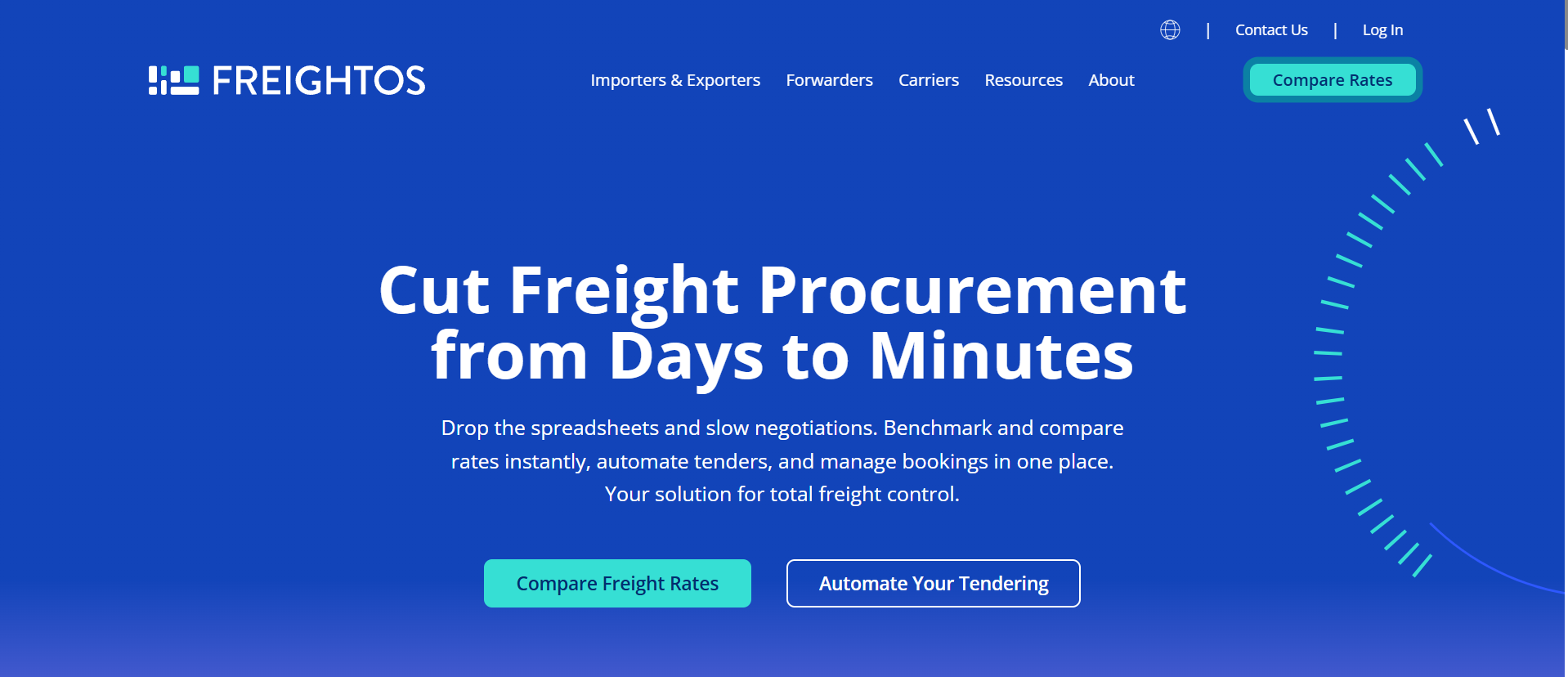
Freightos is a digital freight marketplace and procurement platform that lets shippers compare and book rates from 75+ forwarders and carriers worldwide. Freightos Procure automates RFQs and tendering, with rate benchmarking via the Freightos Baltic Index. It is the only platform here with published pricing, which suits teams that want transparency before a sales call.
Key features:
- Marketplace comparison across ocean, air, and trucking rates
- Automated RFQs and tendering through Freightos Procure
- Rate benchmarking via the Freightos Baltic Index
- End-to-end booking with tracking and payments
- 75+ forwarders and carriers in the network
- Transparent, published pricing tiers
- API integration with shipper systems
- Supplier selection optimization across modes
Pricing:
Public pricing, roughly $40 per month for contract management plus $49 per user per month. Verify current tiers directly before shortlisting.
Pros:
- The only platform here with transparent published pricing
- Marketplace model gives instant rate comparison across forwarders
Cons:
- Marketplace focus is lighter on enterprise source-to-pay governance
- Best for freight booking, not broad category procurement
Freightos Procure automates RFQs and tendering across all transport modes. Vendor overview via Freightos, 2026.
Best Coupa and SAP Ariba alternatives for supply chain procurement
If you are replacing a broad spend-management suite that treats freight as one category, or a legacy RFP tool that only digitizes the tender, the modern alternatives are the AI-native sourcing and automation platforms. Here is how to route the decision by what your ICP evaluates.
Freehand
Choose Freehand if your pain is manual sourcing and downstream spend work that scales with headcount.
- For a CPO, the draw is autonomous sourcing and supplier follow-up across complex categories.
- For a CFO, it is controlled spend with outcomes posted back to the ERP and an auditable trace.
- For a CIO, it is native SAP and Oracle integration without a custom build.
- For a CSCO, it is one platform connecting sourcing to procure-to-pay and spend analytics.
See Freehand's procurement software page for the full scope.
Keelvar
Choose Keelvar if your primary problem is complex, high-volume freight sourcing events and you want autonomous bots running them with optimization depth. It is the closest AI-native alternative for sourcing specifically. The difference is scope: Keelvar runs the sourcing event autonomously, while Freehand extends autonomy downstream through procure-to-pay and audit.
{{brown-cta}}
How to choose the right procurement management software
The decision comes down to three things: what your organization can evaluate, what the primary pain is, and how broad a process you need to cover.
- If autonomous sourcing is the goal, Keelvar and Freehand are the two with documented evidence of events and decisions executing without analyst-by-analyst effort.
- If your procurement requires the largest carrier network and spot capacity, Transporeon leads.
- If you can evaluate on architecture and want autonomy that extends past sourcing into procure-to-pay, Freehand removes the manual queue downstream too.
- If your ERP dictates the choice, SAP Ariba is the deepest fit for SAP and Oracle Fusion for Oracle.
- If you want unified source-to-pay breadth across every category, GEP SMART and Coupa cover the widest scope.
- If manufacturing direct materials sit alongside freight, Jaggaer brings procure-to-pay execution depth.
- For freight-native focus, GoComet brings automated negotiation and vendor performance analytics, while Freightos offers transparent marketplace pricing and instant rate comparison.
One question to settle first: how much of the process do you need to automate? A structured RFP alone saves 20% on average freight spend, but the difference between digitizing the tender and running it autonomously is measured in analyst headcount you no longer have to add as volume grows. Treat sourcing labor as a cost variable, not a fixed overhead.
Frequently asked questions
What is freight procurement management software?
It is a platform that helps supply chain teams source carriers, run RFPs and spot bids, compare rates, award freight contracts, and track carrier performance in one centralized, digital environment.
How does freight procurement software work?
Shippers publish lane requests, carriers submit bids, and the platform compares rates, runs scenario optimization across award combinations, and writes the chosen rates into the TMS and ERP.
What is the difference between freight procurement and transportation procurement?
The terms are used interchangeably. Both cover sourcing and buying transportation capacity. Freight procurement often emphasizes the rate and contract sourcing step specifically.
How much does freight procurement management software cost?
Most enterprise platforms use custom quotes that scale with freight volume and modules. Freightos is an exception, with public pricing near $40 per month plus $49 per user.
What features should I look for in freight procurement software?
Prioritize multi-modal sourcing, scenario optimization, rate benchmarking, carrier performance tracking, ERP and TMS integration, and the level of autonomy in running events.
Can freight procurement software integrate with ERP and TMS systems?
Yes. Leading platforms offer native connectors or APIs for SAP, Oracle, NetSuite, and major TMS systems, so awarded rates flow into execution without manual re-entry.
What is autonomous freight sourcing?
It is sourcing where AI agents build the event, engage suppliers, run the negotiation, analyze bids, and recommend an award, with humans setting the rules and approving outcomes.
Which freight procurement platform is best for mid-market shippers?
Freightos suits teams wanting transparent pricing and marketplace booking. GoComet fits freight-native needs. Larger suites like Coupa and GEP fit broader category coverage.
The bottom line for 2026
If you want autonomous sourcing, start with Keelvar and Freehand. If carrier network reach is the priority, Transporeon leads. If your ERP ecosystem dictates the choice, SAP Ariba and Oracle Fusion are the natural fits, while GEP SMART and Coupa win on source-to-pay breadth. Map the shortlist to your spend, your stack, and the sourcing team you do not want to keep growing, then book the right demos.
Want to see autonomous supply chain procurement on your own categories? Book a Freehand demo.
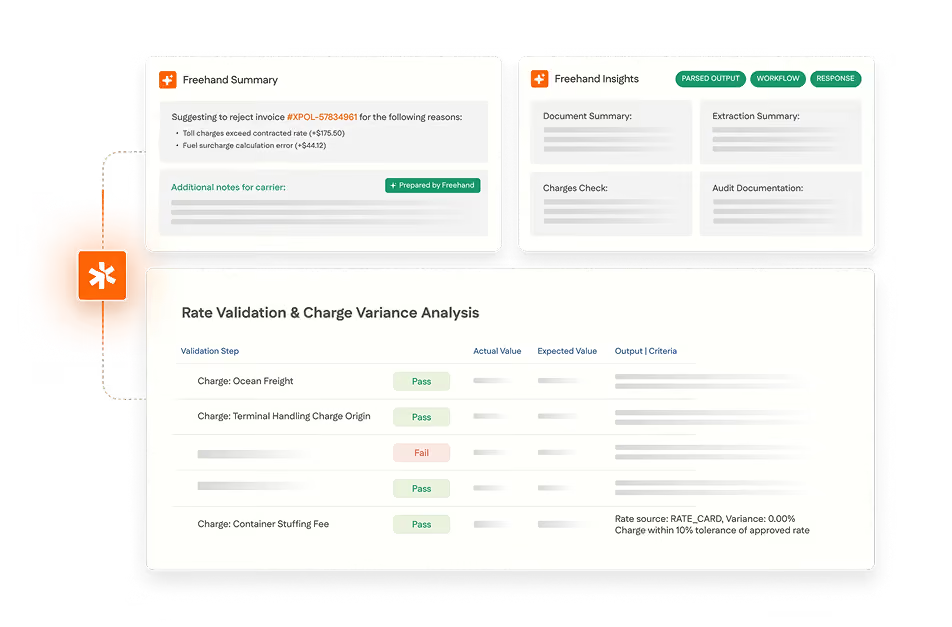
Every Invoice Audited Against the Rate You Sourced.
Freehand checks 100% of freight invoices against the contracted rate, closing the gap between what you sourced and what you actually get billed.
Procurement Software Gets You the Rate. It Doesn't Check the Carrier Billed It.
Sourcing tools award the contract. Nothing in the sourcing process verifies the invoice matches what was awarded.
Every warehouse. Every provider. Every mile.
Gartner's 2026 outlook on logistics outsourcing, and how AI Teams hold every contract to the terms you agreed.
- Where outsourced logistics quietly loses margin
- Why billed charges drift from the contract
- How AI Teams close the gap