
Freight Tendering: How the Load Tender Process Works
Freight tendering is how a shipper offers a load to a carrier and how that carrier accepts, rejects, or gets bypassed. See how the process works, and where cost hides in it.
.webp)
August 19, 2026
•
9
mins
Freight tendering is how a shipper offers a specific load to a specific carrier and gets an answer back before it ships. A shipper's TMS sends the load details to the next carrier in the routing guide. That carrier accepts, rejects, or modifies the offer. An unanswered or rejected tender falls to the next carrier in line. At enterprise volume, this runs on structured data, not a phone call.
Key Takeaways
- Freight tendering is the process of offering a specific load to a specific carrier for acceptance, distinct from freight procurement, which is the broader RFP process that sets the contracted rates a tender draws from.
- The load tender cycle runs on three EDI transactions: the 204 (the tender itself), the 990 (the carrier's accept or reject response), and the 214 (shipment status once accepted).
- A rejected or unanswered tender doesn't stop the shipment. It falls to the next carrier in the routing guide, and eventually to the spot market if every contracted carrier declines.
- Tender acceptance rate is a carrier performance metric that predicts routing guide reliability better than the contracted rate alone.
- Loads that fall to a backup carrier or the spot market often move outside the rate structure a shipment was originally planned against, which is exactly where invoice validation needs to catch up.
What is freight tendering, and how is it different from freight procurement?
Freight tendering is offering one specific load to one specific carrier for acceptance. Freight procurement is the broader process of running an RFP and negotiating the contracted rates a tender draws from. A tender happens every time a shipment moves. An RFP happens once or twice a year. It sets the rate structure every tender afterward gets priced against.
For the strategic, RFP-level process, see our guide to freight procurement, which covers carrier sourcing, contract negotiation, and rate card management.
What are the common types of freight tendering?
Freight tendering runs through four common methods, and most enterprise shippers use more than one depending on the lane and the carrier relationship. The method determines how a load gets offered and who sees it first.
| Type | How it works |
|---|---|
| Contract tenders | Loads on lanes covered by a negotiated rate agreement, offered to the contracted carrier first, for steady, repeating volume |
| Spot tenders | A single load bid out individually, usually through an RFQ to a handful of carriers, for immediate or one-off movement not covered by an existing contract |
| Waterfall (cascade) tendering | The load is offered to the primary carrier first, then automatically falls to the next backup carrier in the routing guide if declined, one carrier at a time |
| Broadcast tendering | The load is offered to multiple carriers at once, at a set rate, and awarded to whichever carrier accepts first |
Contract and waterfall tendering usually run together: the contracted carrier gets first offer, and a decline triggers the routing guide's waterfall sequence. Spot and broadcast tendering both bypass the routing guide entirely, trading a slower, more competitive process (spot) for speed at whatever rate a carrier will take (broadcast).
{{blue-cta}}
Why run tendering through EDI instead of a phone call?
Automating the load tender through EDI replaces a phone call to each carrier with a structured message every system in the chain can read, act on, and record. At low volume, calling a carrier works fine. At enterprise volume, it doesn't.
- Speed: a carrier can accept or reject in minutes through EDI, instead of waiting on a callback.
- Consistent sequencing: the routing guide's carrier order gets followed the same way every time, not whoever a dispatcher happens to reach first.
- A complete record: every offer, acceptance, and rejection is logged automatically, the same record an invoice audit needs to confirm which carrier actually should have hauled the load.
- Scale: a team running thousands of tenders a week can't make that many phone calls, but a TMS can send that many EDI transactions without added headcount.
How does the load tender process actually work?
Waterfall tendering, the most common method for contracted lanes, works by having a shipper's TMS send the load details to the next carrier in the routing guide. That carrier has a defined window to accept, reject, or modify the offer before it moves to the next carrier in line. The process runs on three EDI transactions.
| Transaction | What it does |
|---|---|
| EDI 204 (Motor Carrier Load Tender) | The tender itself: pickup and delivery locations, commodity, weight, equipment requirements, and requested dates |
| EDI 990 (Response to Load Tender) | The carrier's answer: accept, accept with modifications, or decline |
| EDI 214 (Shipment Status) | Ongoing status updates once the carrier accepts and the load moves |
If a carrier doesn't respond by the deadline in the tender, or responds late, the load typically gets retendered to the next carrier in the routing guide automatically.
What happens when a tender gets rejected?
A rejected or unanswered tender falls to the next carrier in the routing guide. If every contracted carrier declines, it moves to the spot market at whatever rate is available. That fallback keeps the shipment moving. It also moves the cost outside the rate structure the load was originally planned against.
- First rejection: the load falls to the next contracted carrier in the routing guide, still at a negotiated rate.
- Repeated rejections: the load works down the routing guide until contracted capacity runs out.
- No contracted capacity left: the load moves to the spot market, priced at whatever rate is available that day, not the rate negotiated at RFP.
Why does tender acceptance rate matter more than the contracted rate alone?
Tender acceptance rate measures how often a carrier actually takes the loads it's offered. A carrier with a great contracted rate but a low acceptance rate costs more in practice than the rate sheet shows. A low acceptance rate means more loads fall to backup carriers or spot market pricing. That erodes the savings a procurement cycle negotiated.
This is why carrier scorecards that only track rate miss the bigger cost driver. Freight procurement's carrier selection criteria already treats tender acceptance rate as a service-level input for exactly this reason, alongside on-time delivery and claims frequency.
How does a rejected tender turn into an audit problem?
A load that falls to a backup carrier or the spot market moves outside the rate structure it was planned against. That's exactly the invoice a manual or sampled audit process is most likely to miss. The shipment still gets invoiced. The invoice just doesn't match the contract most of your audit process is built to check against.
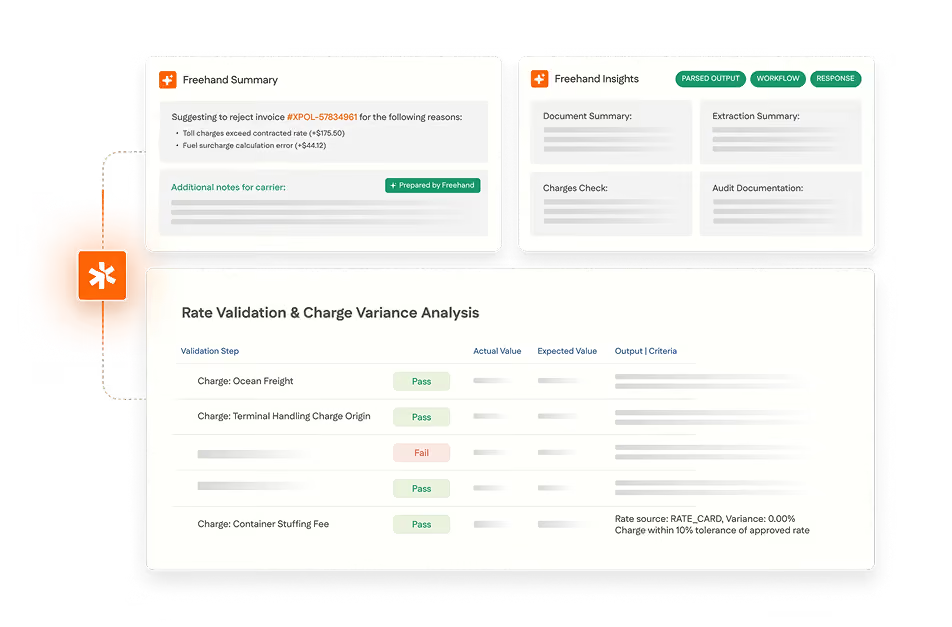
Freehand's invoice audit agent checks every invoice against the rate that actually applies. That could be the original contracted rate, a backup carrier's rate, or a spot quote. Coverage runs at 100%, not a sample built around the routing guide's primary carrier. A retendered load doesn't get a pass just because it didn't move under the rate your team expected.
{{brown-cta}}
Frequently Asked Questions
What is freight tendering?
Freight tendering is offering a specific load to a specific carrier for acceptance, typically through an EDI 204 transaction. It's distinct from freight procurement, which negotiates the underlying contracted rates.
What is the difference between a load tender and a freight tender?
The terms are used interchangeably in practice. Both mean a shipper offering a load to a carrier, usually electronically, for acceptance or rejection.
What is an EDI 204?
An EDI 204, or Motor Carrier Load Tender, is the electronic message a shipper or broker sends to offer a specific load. It includes pickup and delivery locations, commodity, weight, and equipment requirements.
What happens if a carrier rejects a load tender?
The load moves to the next carrier in the shipper's routing guide. If every contracted carrier declines, it moves to the spot market, at whatever rate is available that day.
Is freight tendering the same as freight procurement?
No. Tendering is the per-shipment act of offering a load to a carrier. Procurement is the broader RFP process that sets the rates a tender is priced against.
What is the difference between waterfall and broadcast tendering?
Waterfall tendering offers a load to one carrier at a time, in routing guide order, moving to the next only if the current one declines. Broadcast tendering offers the same load to multiple carriers simultaneously, awarding it to whichever accepts first.
Every Load, Checked Against the Rate That Actually Applied.
Freehand's invoice audit agent checks every invoice against the rate that applies, whether that's the original contract, a backup carrier, or a spot quote, at 100% coverage.
A Rejected Tender Doesn't Stop the Shipment. It Just Moves the Cost Off Your Radar.
A load that falls to a backup carrier or the spot market ships outside the rate structure it was planned against, exactly the invoice a sampled audit is most likely to miss.
Every warehouse. Every provider. Every mile.
Gartner's 2026 outlook on logistics outsourcing, and how AI Teams hold every contract to the terms you agreed.
- Where outsourced logistics quietly loses margin
- Why billed charges drift from the contract
- How AI Teams close the gap