

LTL vs FTL Rates: How Each Is Calculated
LTL vs FTL rates compared: how each is priced, where the breakeven point falls, what drives an LTL rate up or down, and when to switch shipping modes.
.webp)
August 13, 2026
•
10
mins
.png)
LTL rates are priced per hundredweight and freight class, with fuel surcharges and accessorials added on top. FTL rates are priced per mile for the whole trailer, regardless of how full it is. The two pricing models cross over somewhere between 8,000 and 12,000 lbs, and that crossover is where the cheaper mode actually flips.
Key Takeaways
- LTL (less-than-truckload) rates are priced per hundredweight and freight class, with fuel surcharges and accessorials layered on top. FTL (full-truckload) rates are priced per mile for the whole trailer, whether it's full or not.
- The two pricing models cross over somewhere between 8,000 and 12,000 lbs. The exact point varies by lane, carrier, and freight class, but below it, LTL usually wins; above it, FTL usually does.
- Freight class and density drive most of the swing in an LTL rate. The same weight can cost dramatically different amounts depending on how it gets classified.
- A shipment in the crossover zone, roughly 7 to 9 pallets, is worth quoting both ways, since carrier-specific pricing varies enough to flip which mode is actually cheaper.
- Knowing how the rate should be built only protects you if the invoice matches it. Auditing the invoice against that rate is a separate, necessary step.
What's the difference between LTL and FTL rates?
LTL and FTL rates are built on two different pricing units entirely, which is why they don't compare cleanly on a per-pound basis. LTL charges by hundredweight and freight class, so the rate depends on how much a shipment weighs and how it's classified. FTL charges by the mile for the entire trailer, so the rate depends on distance, not weight, since you're paying for the truck regardless of how much is in it.
That structural difference is the whole reason a crossover point exists. As an LTL shipment gets heavier, its per-pound rate advantage shrinks, until at some point paying for a dedicated truck costs less than paying LTL rates on that same weight.
How is an LTL rate calculated?
An LTL rate starts with three things: freight class, weight, and the carrier's rate per hundredweight (CWT). Fuel surcharges and accessorials get added on top of that base.
- Freight class. Set under the NMFC system, it reflects density, handling difficulty, and liability risk. It can move the rate a lot, even when the weight never changes.
- Weight. Combined with freight class, it sets the hundredweight rate the base charge is built from.
- Carrier's rate per hundredweight (CWT). The negotiated or published rate the carrier applies to that weight and class combination.
Three more charges typically layer on top of that base rate.
| Charge | What it is | How it's applied |
|---|---|---|
| Fuel surcharge | A percentage of the base rate | Tied to a published fuel index |
| Accessorials | Liftgate, inside delivery, residential address, and similar services | Flat fees or percentage bumps, depending on the carrier and what pickup or delivery actually required |
| Terminal handling fees | The cost of moving a shipment through cross-dock terminals | Often folded into the base rate, sometimes billed as its own line |
How is an FTL rate calculated?
An FTL rate is calculated primarily from distance, usually quoted per mile, with the total based on the lane between origin and destination. Dry van rates have run roughly $1.80 to $3.00 per mile in 2026, contract rates toward the lower end and spot rates toward the higher end, though the exact number moves with the lane and the region. Fuel surcharges get added on top, calculated the same way as in LTL, as a percentage tied to a fuel index, and accessorials like detention or extra stops layer on beyond that.
Market conditions swing FTL pricing more than they swing LTL. When capacity is tight, spot rates on a lane can climb well above the contracted rate for the same route. When capacity is loose, the reverse happens, and a spot quote can undercut a rate locked in months earlier.
Weight barely factors into an FTL rate at all, within the truck's legal capacity. A trailer at 5,000 lbs and the same trailer at 20,000 lbs cost close to the same to move, since the carrier is pricing the truck and the lane, not the cargo inside it.
{{blue-cta}}Where does the breakeven point between LTL and FTL actually fall?
The breakeven point between LTL and FTL rates typically falls between 8,000 and 12,000 lbs, though it shifts by lane, carrier, and freight class. Below roughly 6,000 lbs, LTL is almost always the cheaper option. Above about 12,000 lbs, a full-truckload quote is usually worth running.
Picture a 9,000-lb shipment moving 400 miles. At an LTL rate of $28 per hundredweight, that shipment runs close to $2,520 before fuel and accessorials. The same load, if it fills roughly a third of a 53-foot trailer, might get an FTL quote around $2,100 for the full truck on that lane. In that middle zone, the two numbers can land close enough that the cheaper option depends entirely on the specific carrier quote that day, not a general rule.
What drives an LTL rate up or down?
Freight class and density drive most of the movement in an LTL rate, more than weight alone. The NMFC classification system runs from class 50 (dense, easy to handle, low liability) to class 500 (light, bulky, or fragile), and a shift of even one class can move the rate noticeably.
Density matters because carriers price cubic space, not just pounds. A shipment that's light but takes up a lot of trailer space gets classified and priced accordingly, which is why the 2021 NMFC shift toward density-based classification changed billing outcomes for a lot of LTL shippers overnight.
When should you switch from LTL to FTL?
Switch from LTL to FTL when your shipment weight climbs past the breakeven zone, or when your pallet count hits roughly 7 to 9 and above. The table below breaks down the practical differences that matter for that call.
| Factor | LTL | FTL |
|---|---|---|
| Pricing unit | Hundredweight and freight class | Per mile, flat for the trailer |
| Typical weight range | Under 8,000 to 12,000 lbs | Above 8,000 to 12,000 lbs |
| Pallet count | 1 to 6 pallets, typically | 10 or more pallets |
| Transit time | Slower, multiple stops on the route | Faster, direct from origin to destination |
| Damage risk | Higher, more handling and transfers | Lower, one load, no transfers |
A shipment sitting right in the crossover zone is the one worth quoting both ways every time, since the cheaper mode there depends on the specific carrier and lane, not a fixed rule.
Knowing the right rate only matters if the invoice matches it
Working out whether a shipment should run LTL or FTL, and what that rate should look like, is only half the picture. The other half is confirming the carrier actually billed you that rate, since a reclassed pallet, a fuel surcharge off an outdated index, or an accessorial with no proof of service can erode a correctly chosen mode just as easily as picking the wrong one in the first place.
That verification step is a different problem than the rate-structure question this article covers, and it's the one that determines whether the mode you chose actually paid off. Freehand's guide to LTL freight invoices covers the specific errors, misclassification, phantom accessorials, discount-tier slippage, that inflate an LTL invoice past the rate you calculated going in.
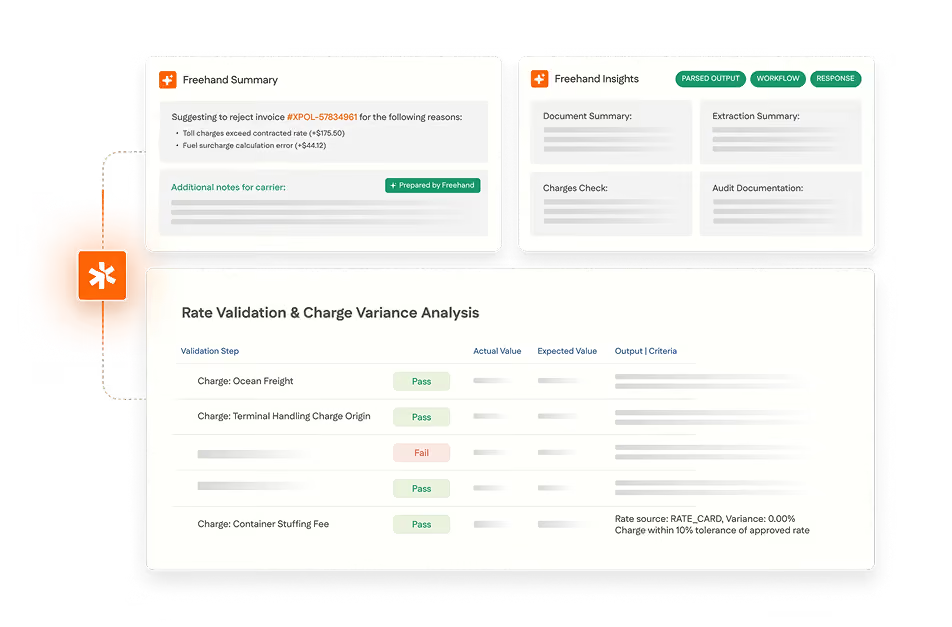
Freehand's freight audit and payment software provides that verification on every invoice, not a sample, across both modes, and helps your team catch the gap between the rate you chose and the rate you were actually billed.
{{brown-cta}}
Frequently Asked Questions
How is an LTL freight rate calculated?
An LTL freight rate is calculated from freight class, weight, and the carrier's rate per hundredweight, with fuel surcharges and accessorials added on top. Freight class, based on density and handling difficulty, can move the rate significantly even at the same weight.
What is the weight breakpoint between LTL and FTL?
The breakpoint typically falls between 8,000 and 12,000 lbs, though it shifts by lane, carrier, and freight class. Below about 6,000 lbs, LTL is almost always cheaper. Above about 12,000 lbs, a full-truckload quote is usually worth running.
Is LTL or FTL cheaper?
Neither is cheaper across the board. LTL wins on lighter, smaller shipments since you're only paying for the space you use. FTL wins on heavier, larger shipments since you're paying a flat rate for the truck regardless of how full it is.
What is freight class, and why does it matter for LTL pricing?
Freight class is a classification under the NMFC system, based on density, handling difficulty, and liability risk, running from class 50 to class 500. It matters because a shift of even one class can change an LTL rate significantly, independent of weight.
Does weight matter for FTL rates the way it does for LTL?
Not nearly as much. FTL rates are priced mainly on distance and the lane, within the truck's legal weight limit. A lighter load and a heavier load on the same lane cost close to the same, since the carrier is pricing the truck, not the cargo inside it.
Every Invoice Checked Against the Rate the Mode Should Have Cost.
Freehand validates LTL and FTL invoices alike against your contracted terms, so the mode you picked is the rate you actually get billed.
Picking the Right Mode Doesn't Protect the Rate You Calculated.
A reclassed pallet or a fuel surcharge off a stale index erodes the LTL-vs-FTL math just as fast as choosing the wrong mode in the first place.
Every warehouse. Every provider. Every mile.
Gartner's 2026 outlook on logistics outsourcing, and how AI Teams hold every contract to the terms you agreed.
- Where outsourced logistics quietly loses margin
- Why billed charges drift from the contract
- How AI Teams close the gap