
Detection Is Not Resolution. Your Freight Audit Dashboard Still Has a Human in the Loop.
The analytics are strong. The root cause is identified. The exception is in your queue. That is where the work begins.

July 20, 2026
•
4
mins
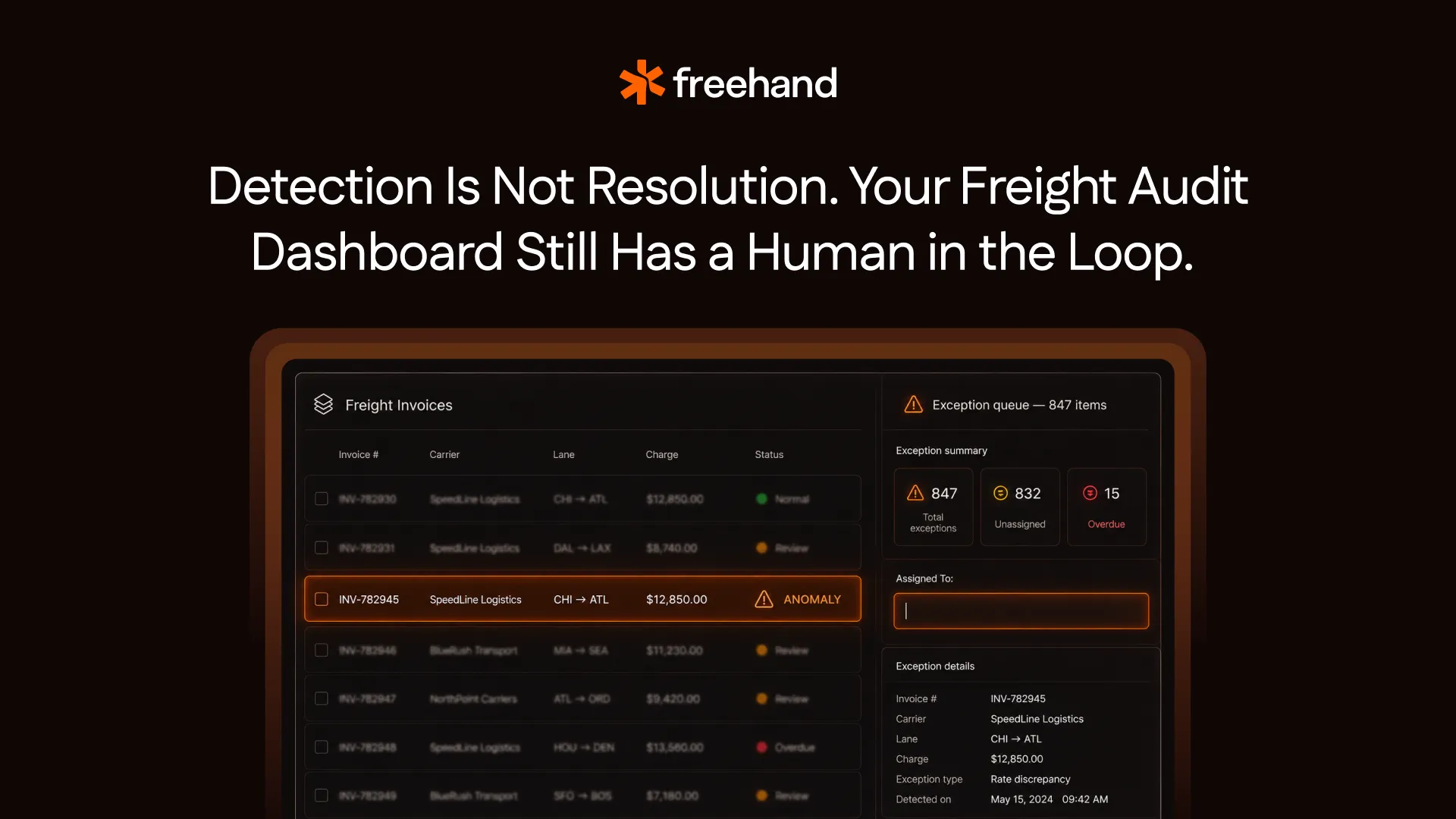
The analytics are strong. The root cause is identified. The exception is in your queue. That is where the work begins.
There is a category of freight audit product that has genuine technical merit. It detects anomalies across large invoice populations with accuracy. It applies machine learning to identify billing patterns that deviate from contracted terms. It produces dashboards showing exception root causes, carrier performance scores, and cost risk by lane. The analytics are real and the data science behind them is sophisticated.
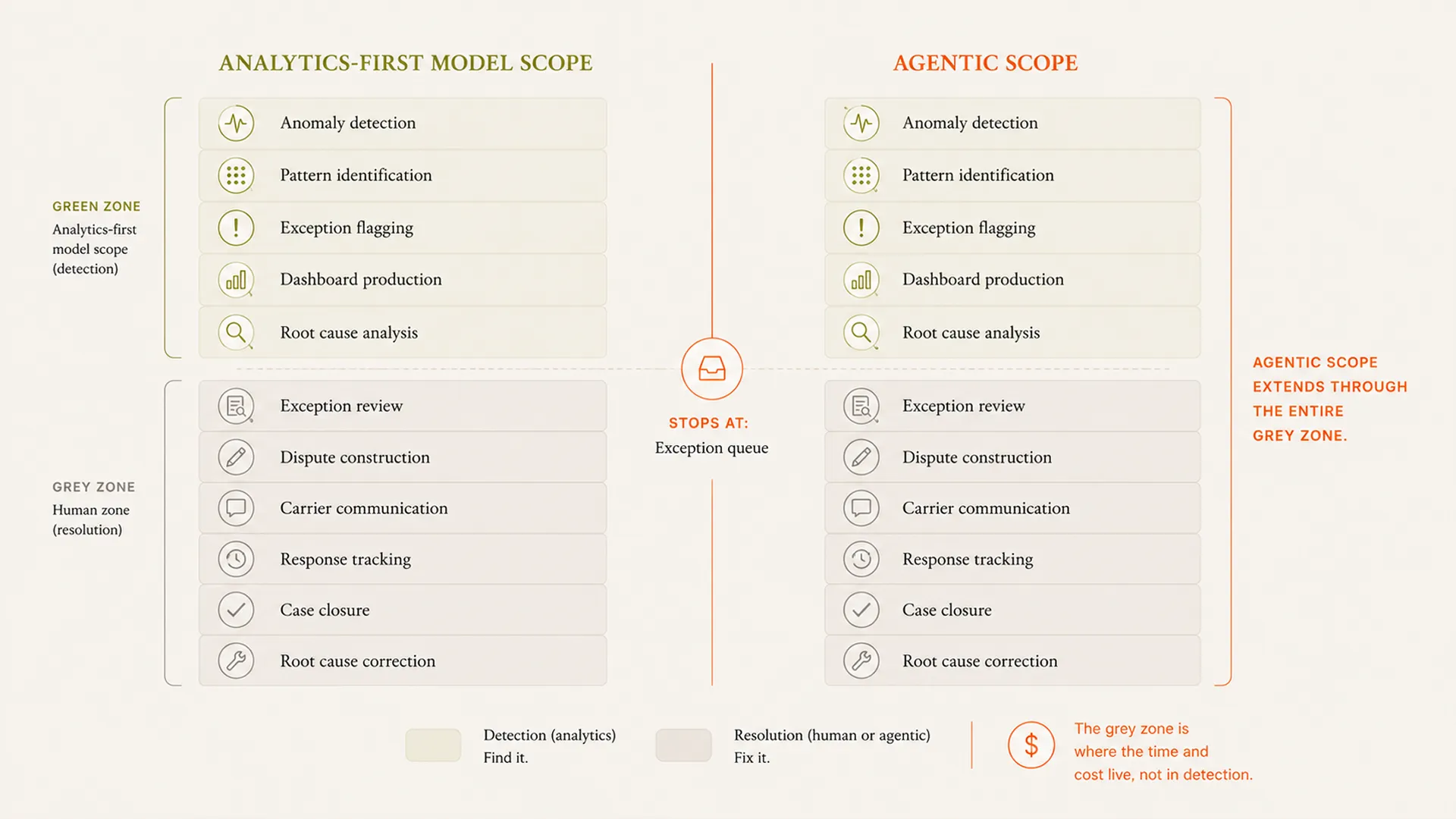
Then the exception lands in a queue. A human reviews it. The human decides whether to dispute it, accept it, or escalate it for clarification. The human drafts the dispute, attaches the supporting documentation, sends it to the carrier, tracks the response, and closes the case when the carrier replies. The analytics identified the problem in seconds. The resolution took 14 days. The work your team was supposed to be freed from is still the work they are doing.
What the detection-only model costs in practice
The detection-only model was a genuine advance over rules-based audit systems. It found exceptions that threshold-based systems missed. Its pattern recognition identified systematic overcharging that manual review could not detect at scale. Those capabilities are not in dispute. The dispute is about what happens after the flag.
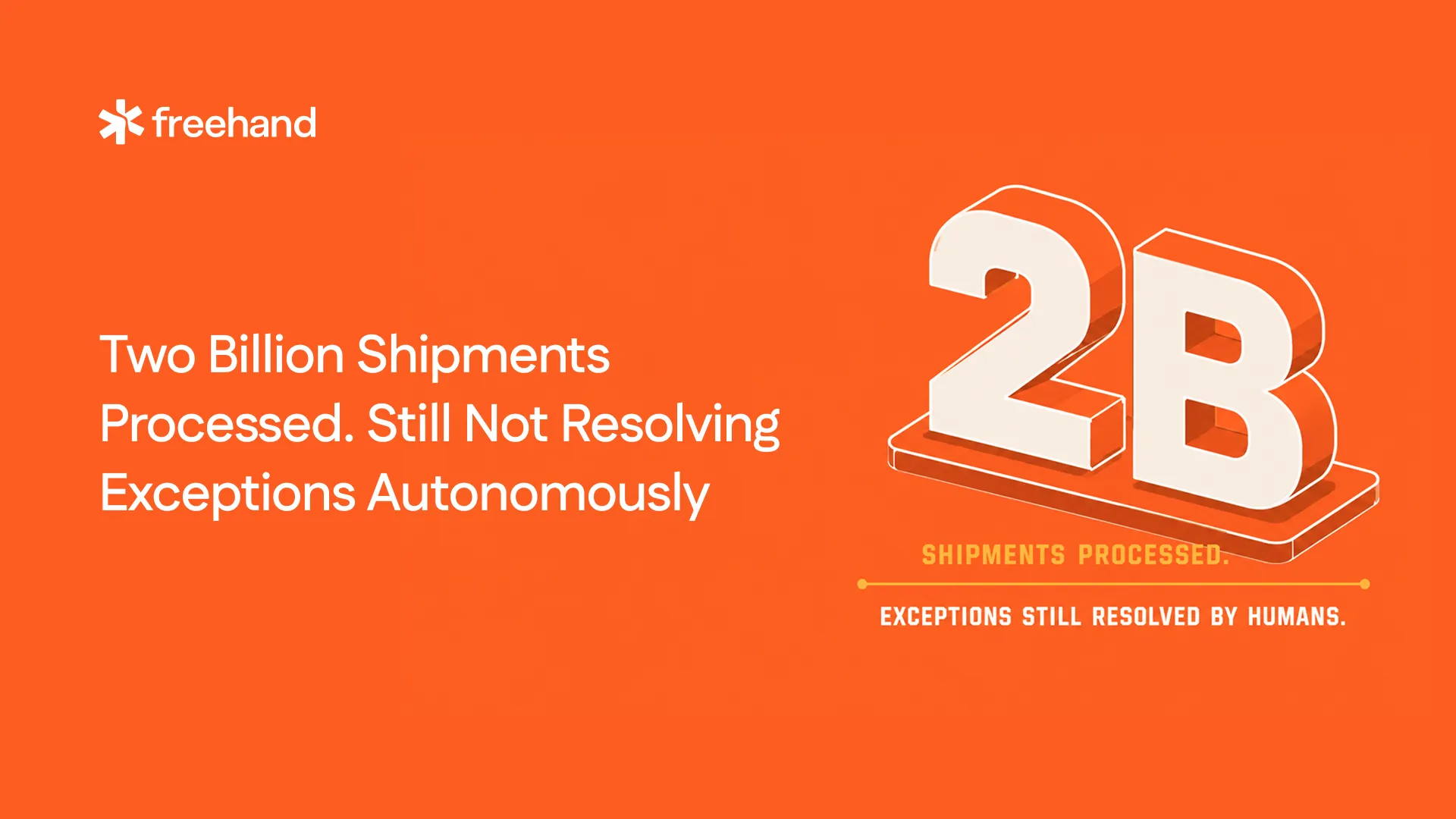
A freight audit vendor that has processed two billion shipments for more than 2,500 clients, including a significant fraction of the Fortune 50, is operating a technology-augmented services model. Human analysts remain in the resolution loop. A professional services retainer covers the strategic work that their team handles on behalf of the shipper. That team is skilled and their category knowledge is real. You are also paying a retainer for work that agentic AI handles autonomously in a Freehand deployment. The question is not whether the analytics work. The question is whether the execution is automated.
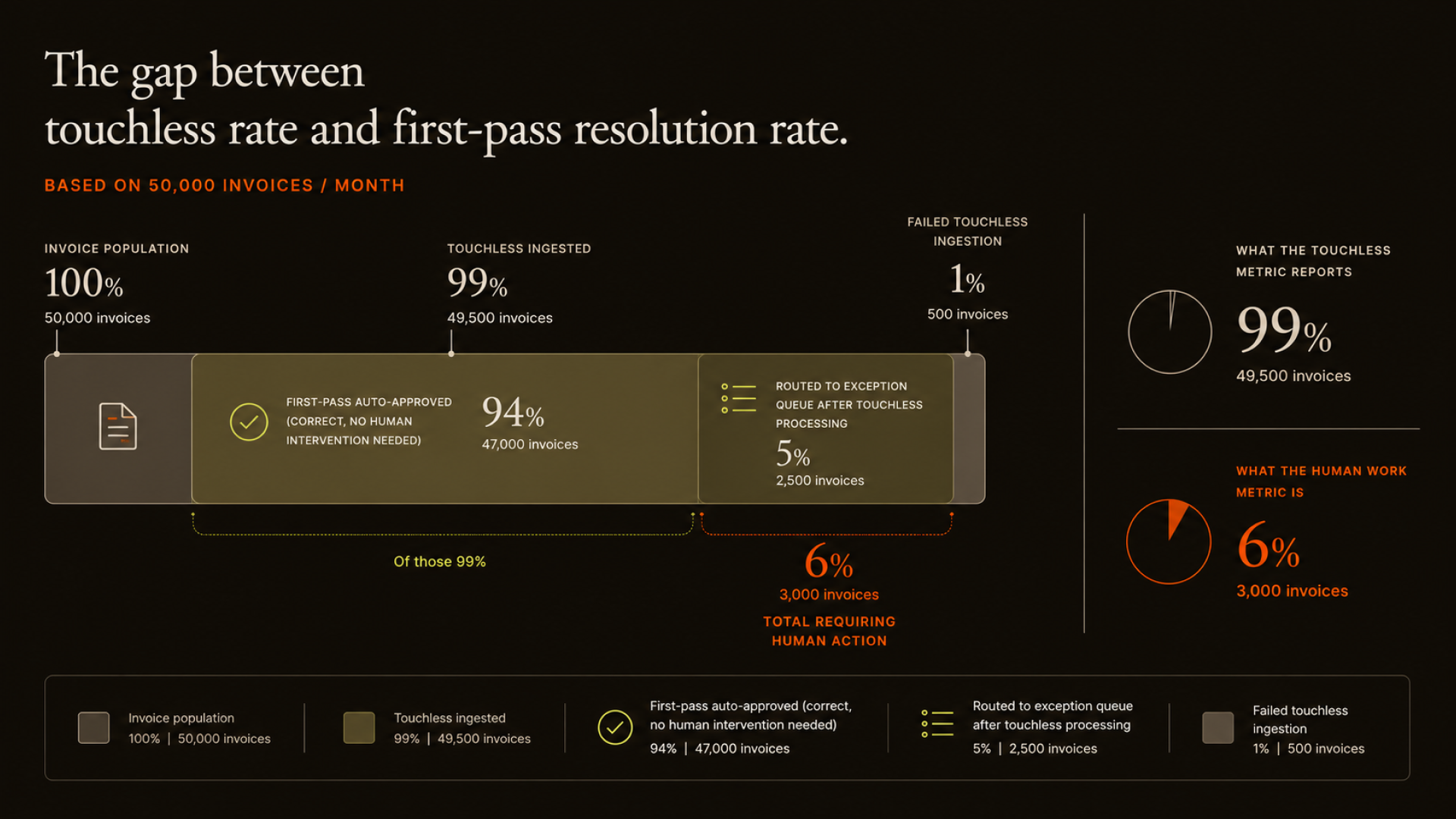
The execution gap and where it accumulates
In a detection-only model, each exception that requires human resolution represents time between identification and closure. In a freight operation processing 10,000 invoices per month with a 5% exception rate, that is 500 exceptions per month. If each exception takes an average of four hours of human time to research, document, dispute, and close, including the back-and-forth with the carrier, that is 2,000 hours per month. That is roughly the full-time equivalent of one person working exclusively on exception resolution, every month, indefinitely.
The compounding effect is what makes this particularly difficult to address through incremental improvement. A recurring exception, a carrier whose fuel surcharge calculation has been wrong for six consecutive billing cycles, appears in the queue six times. A detection-only system flags it six times. A human resolves it six times. An agentic system identifies the root cause in cycle one, communicates it to the carrier, and tracks the correction. The exception stops appearing. The queue does not just process faster, it permanently shrinks.
What autonomous resolution requires
The move from detection to resolution requires the AI system to categorize the exception by root cause, determine the correct resolution path, construct the dispute packet with supporting evidence from shipment data, send it to the carrier through the appropriate channel, track the response, and close the case. Each step requires capabilities that a pure analytics system was not designed for. The categorization requires understanding not just that the charge is wrong but why, which piece of the billing logic failed. The dispute packet requires pulling shipment execution data to support the claim. The carrier communication requires knowing the right contact, the right format, and the right escalation path if the first contact does not respond.
This is not an incremental extension of an analytics platform. It is a different architecture. The analytics platform was designed to produce insights. The agentic system was designed to produce outcomes. Those are different products that require different underlying infrastructure, and the distinction is now a formal Gartner category: AI assistance versus workflow agents. The freight audit market is at the point where the category distinction is visible in operational results, not just marketing claims.