
Two Billion Shipments Processed. Still Not Resolving Exceptions Autonomously.

August 18, 2026
•
4
mins

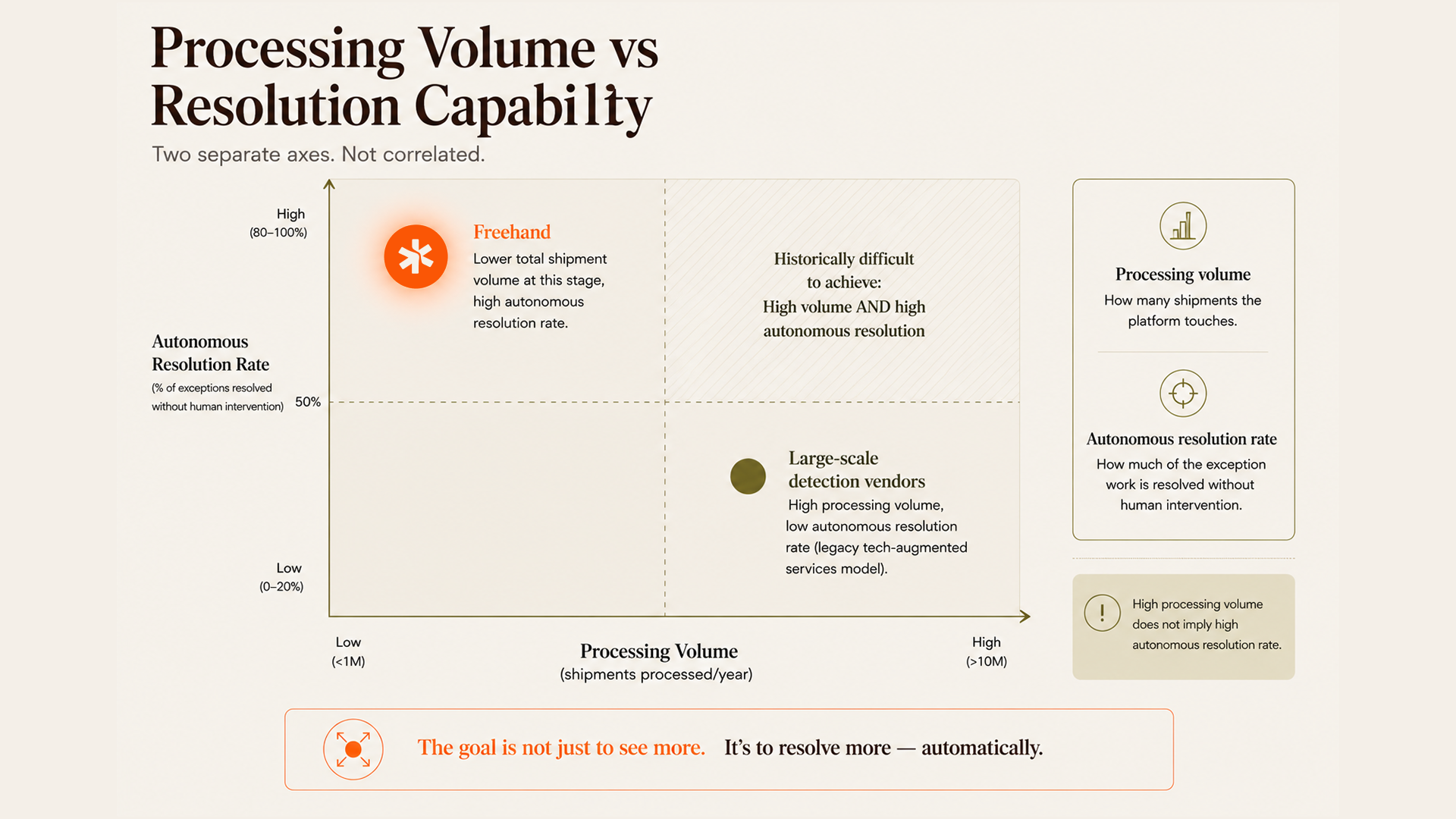
Scale of processing is not the same asautonomous resolution capability. Those are different achievements.
Scale of processing and resolution capabilityare different dimensions of a freight audit system, and conflating them is oneof the most consistent sources of confusion in evaluating audit technology. Asystem that has processed two billion shipments has accumulated significantdata. It has developed pattern recognition across a large carrier network. Ithas built benchmarks for what normal billing looks like at a population level.These are genuine capabilities with genuine value. None of them answer the questionthat matters most in an AP operation: when an exception is identified, whathappens to it?
A freight audit vendor that has processed twobillion shipments for 2,500-plus clients, including a significant percentage ofthe Fortune 50, is operating a technology-augmented services model. Thetechnology identifies anomalies. The service team resolves them. The twobillion shipments were processed by a combination of AI detection and humanresolution, where the resolution step remained in the human layer throughoutthe entire volume of those transactions. The scale is impressive. Thearchitecture is what it is.
Why thedistinction matters operationally
An exception that is detected and routed to ahuman queue at 2:00 PM will be resolved when a human picks it up, which may bethe same afternoon, the next morning, or later in the week depending on queuedepth. During that window, the payment is on hold, the carrier is waiting forpayment confirmation, and the dispute is not yet a dispute in the system. Thetime between exception identification and exception resolution is directlyconnected to Days-Payable-Outstanding variance, carrier payment relationship friction,and the operational cost of managing the exception team.
An exception that is detected and resolvedautonomously at 2:00 PM, dispute packet generated, carrier notified,documentation attached, case status updated, eliminates the queue entirely. Thedispute is initiated at the moment of detection. The carrier receivesnotification the same day. The supporting evidence is assembled automaticallyfrom the shipment data and the contract records rather than assembled manuallyby an analyst. The resolution timeline compresses from days or weeks to hours
The four-step gap and where processing scale helps
Detection systems that process at scaleaccumulate genuine value in two specific areas: baseline anomaly calibrationand carrier behavior modeling. Having processed thousands of invoices fromcarrier A across dozens of clients, a large-scale system can identify whencarrier A's billing behavior deviates from its established pattern with higherconfidence than a system that has seen only one client's invoices from carrierA. This network-level signal is real and should be valued.
The gap is in what happens after the signal.The four steps between exception detection and case closure, categorization byroot cause, resolution path determination, dispute execution with evidenceassembly, and case closure with carrier response tracking, require capabilitiesthat pattern detection systems were not designed to provide. Categorizationrequires understanding not just that the charge is wrong but why, which pieceof the billing logic failed, and which contract term governs the correct calculation.Execution requires constructing a dispute packet that is complete on firstsubmission rather than requiring back-and-forth with the carrier. Trackingrequires knowing the carrier's dispute process, their preferred communicationchannel, and the escalation path when first contact does not respond.
The first-submission advantage
The resolution time difference between manualand autonomous exception handling is concentrated in the documentation step. Adispute that arrives at a carrier with the contracted rate, the invoiced rate,the calculation showing the overcharge, and the shipment data confirming thecondition is resolved faster than a dispute that requires the carrier torequest supporting documentation after receiving an initial dispute letter. Thefirst-submission completeness that autonomous execution produces, by assemblingall evidence at the moment of detection from the decision trace, compresses thecarrier response cycle in the same way that pre-payment audit compresses thepayment approval cycle.
At a freight operation with thousands ofexceptions per month, the difference between a 14-day average resolution cycleand a 3-day average resolution cycle is a material operational cost. Thethree-day cycle is achievable when the dispute packet is complete on firstsubmission. The 14-day cycle is typical when disputes are initiated manuallyand documentation is assembled in response to carrier requests. The improvementdoes not require processing more shipments. It requires a differentarchitecture for what happens when an exception is found.