
What 99% Touchless Actually Measures, and What It Deliberately Omits
Touchless means the document moved without a human reading it. It does not mean the billing was correct.

July 21, 2026
•
3
mins
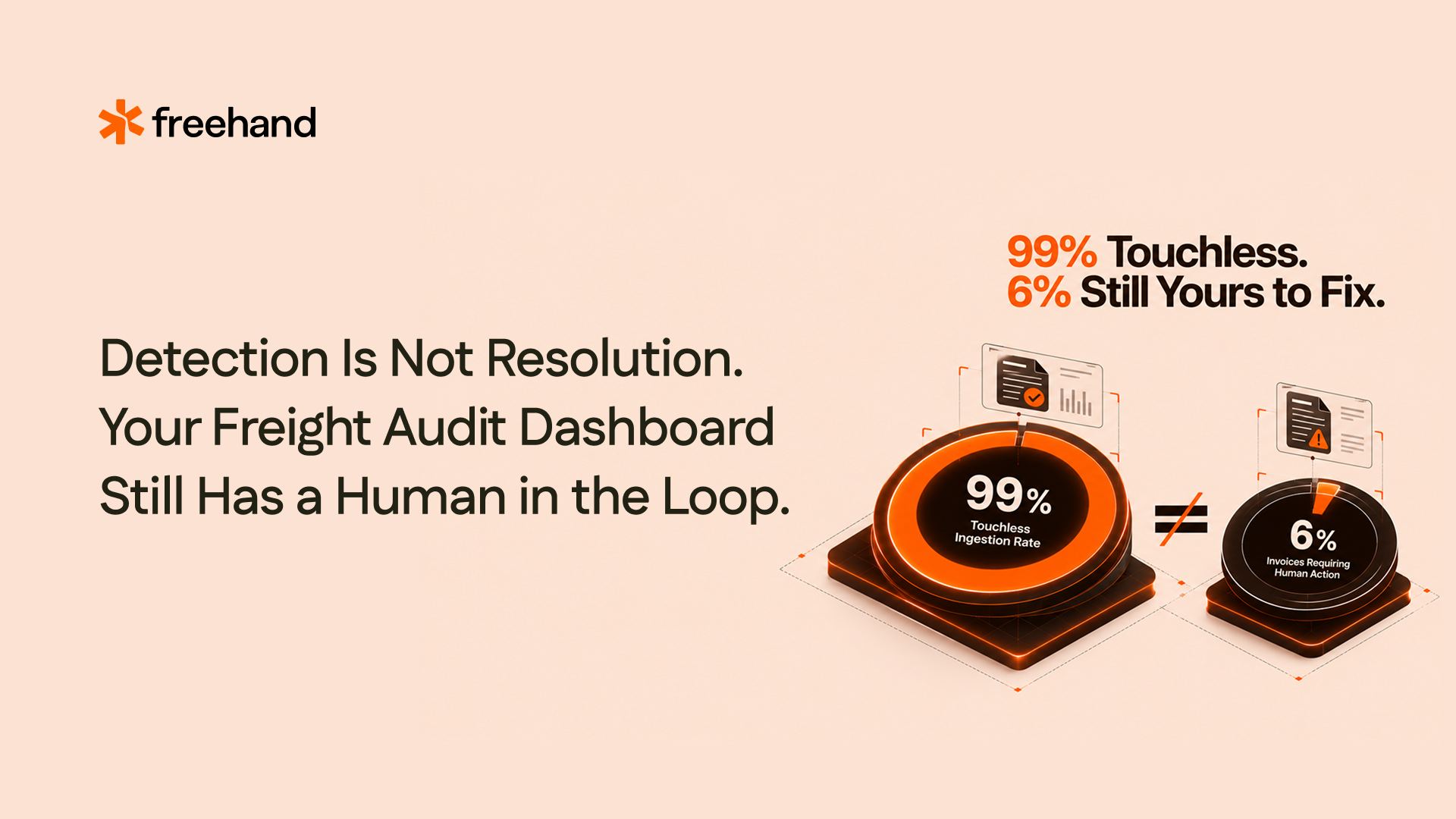
Touchless means the document moved without a human reading it. It does not mean the billing was correct.
The 99% touchless metric has become a standard claim in freight audit and AP automation marketing. It is a real and meaningful number. It means that 99% of invoices can be ingested, normalized, and moved through the workflow without a human reviewing the document itself. If the document arrives in PDF, the system extracts it. If it arrives in EDI, the system parses it. If it arrives in Excel, the system reads it. That ingestion capability is valuable and not trivially achieved.
What 99% touchless does not measure is whether the invoice was correct. It does not measure whether the rate on the invoice matched the contracted rate. It does not measure whether the accessorial charge was earned or fabricated. It does not measure whether the carrier was the one that actually moved the shipment. And it does not measure whether, when the invoice was incorrect, anyone fixed it. A touchless invoice can be an approved overpayment just as easily as a correctly processed invoice.
What touchless processing leaves unaddressed
The value of touchless processing is upstream: it eliminates the manual data entry step, the format conversion step, and the file management step. Those are real time savings. The problem is that they represent the least consequential part of the freight AP process. Moving a document from an email attachment into a workflow system does not require subject matter expertise. Resolving a dispute with a carrier over an accessorial charge that was not agreed in the contract does.
The work that remains after touchless processing is the work that requires judgment: identifying which invoices have billing errors, determining the correct resolution for each error type, constructing and sending the dispute with supporting evidence, managing the carrier relationship through the dispute process, and closing the case. A freight operation with 99% touchless invoice ingestion and a 5% billing error rate still has all of its exception resolution work fully intact. The 99% metric describes the front door. It says nothing about what happens inside.
“Touchless means the document moved without a human touching it. It does not mean the billing inside the document was correct. Those are different claims about different parts of the process.”
The metric that matters and how to read it
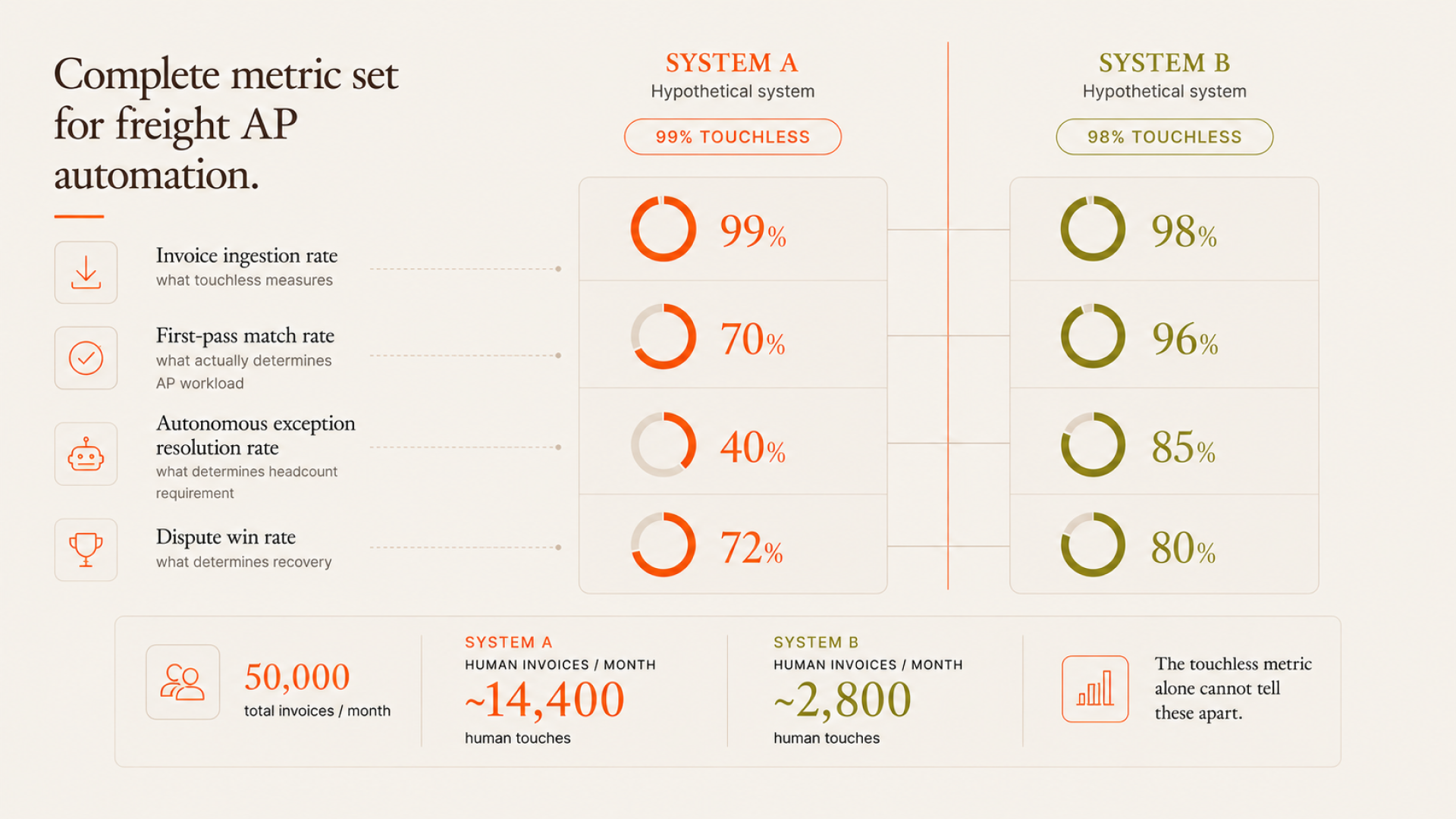
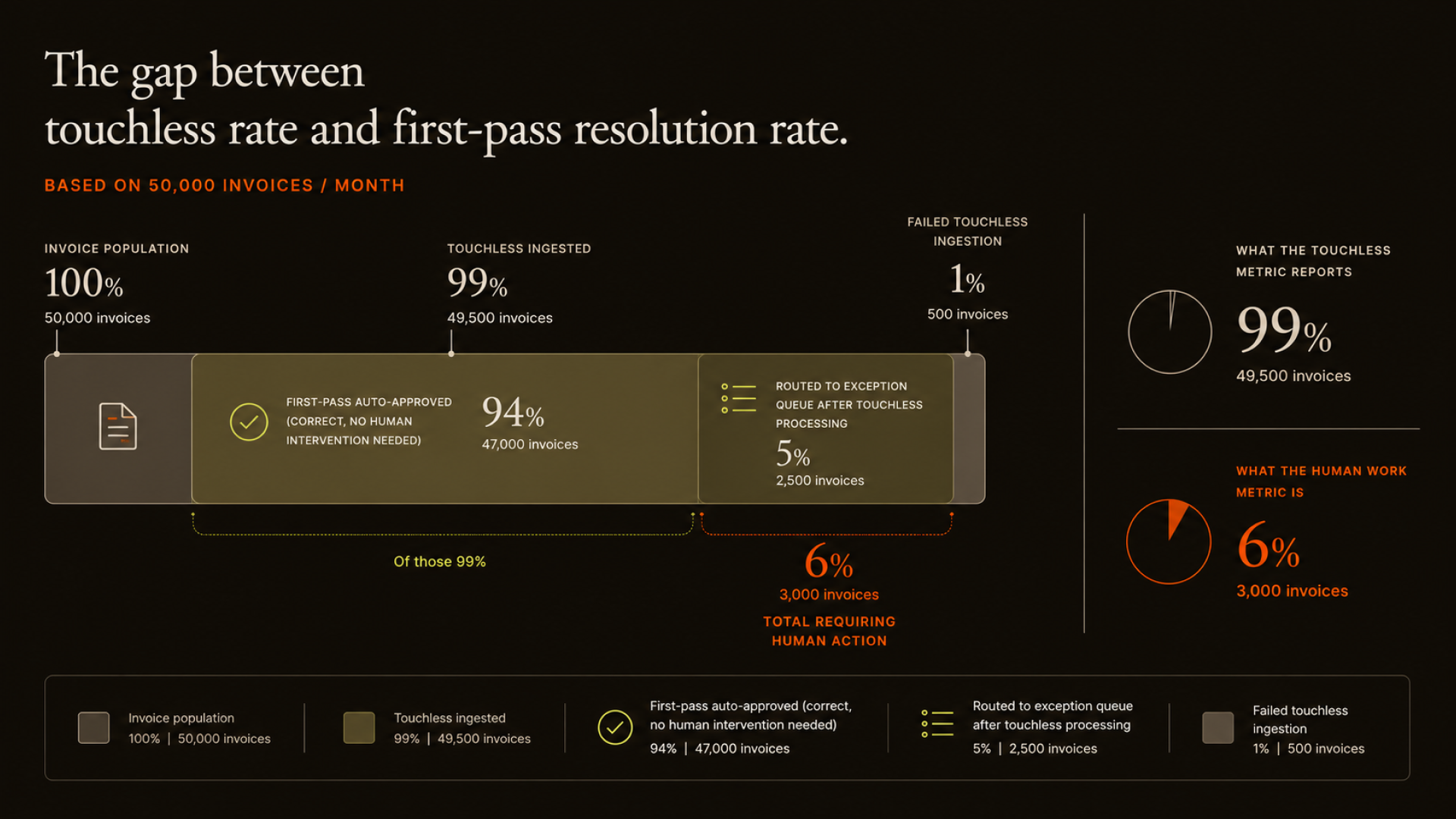
The difference between 99% touchless and 95% first-pass resolution rates is the 4% that were processed without a human touching the document but required human intervention somewhere downstream. In a freight operation processing 50,000 invoices per month, that 4% is 2,000 invoices per month requiring human action after the touchless ingestion step. That is not a small number. And the touchless metric, by design, does not capture it.
What a complete metric set looks like
A complete operational measurement of freight AP automation includes four numbers that together describe what the system is actually doing. First: invoice ingestion rate, the percentage that enter the system without manual intervention. Second: first-pass match rate, the percentage that validate correctly against contracts and shipment data without generating exceptions. Third: autonomous exception resolution rate, the percentage of generated exceptions that are resolved without human involvement. Fourth: dispute win rate, the percentage of disputes that result in recovery.