
Inbound Freight Management: Why It's the Freight You Don't Control
Inbound freight management controls the cost you pay on incoming supplier shipments, the freight line most companies manage least. See why, and how to fix it.
.webp)
August 24, 2026
•
8
mins
Inbound freight is the cost you pay to bring goods in from suppliers, and it's the freight line most companies manage least. Outbound freight to customers gets audited, negotiated, and tracked. Inbound freight, freight controlled by a purchase order instead of a sales order, often runs on whatever the supplier's routing decision happens to be.
Key Takeaways
- Inbound freight management is controlling carrier selection, routing, and cost for shipments coming in from suppliers, as distinct from outbound freight moving to customers.
- Only about 35% of companies use a formal routing guide for inbound freight, compared to near-universal routing guide use on the outbound side.
- Whether freight is billed prepaid (the supplier arranges and bills it) or collect (the buyer arranges and pays it directly) determines who actually controls the carrier and the rate, and prepaid terms often hide a markup inside the freight charge.
- Transportation costs run close to half of total logistics spend, so every inbound shipment where the supplier picks the carrier without oversight is a direct, uncontrolled hit to that number.
- Inbound freight invoices need the same audit discipline as outbound ones. A freight-in charge that's never validated against a contract still gets capitalized into inventory cost, carrying the error forward instead of catching it.
What is inbound freight management?
Inbound freight management is controlling which carrier moves a shipment, at what rate, and under what terms, for goods coming in from suppliers rather than going out to customers. It covers carrier selection, routing guide enforcement, and cost visibility on the purchase-order side of the business, the mirror image of outbound freight management on the sales-order side.
For how the freight cost on those inbound shipments gets recorded once it's known, see our guide to freight accounting.
Why does inbound freight get less attention than outbound?
Outbound freight is the lower-effort target: it's easier to control, so companies fix it first and often stop there. Inbound freight remains what one industry analysis called "an immature space," and the numbers back that up: only around 35% of companies have a formal routing guide governing inbound freight, compared to near-universal use on outbound shipments.
That gap exists because inbound freight sits on the purchase order, not the sales order, and the team that owns supplier relationships isn't always the same team that owns freight cost. Nobody's job is explicitly "control the freight the supplier picks."
{{blue-cta}}What is the difference between prepaid and collect freight, and why does it matter for inbound control?
Prepaid freight means the supplier arranges the carrier and bills the freight cost as part of the invoice. Collect freight means the buyer arranges the carrier and pays the freight charge directly. Whoever arranges the shipment controls the carrier selection, the rate, and the routing, not necessarily whoever ends up paying for it.
| Term | Who arranges the carrier | Where the risk sits |
|---|---|---|
| Prepaid | Supplier | Freight cost can be marked up and buried in the invoice, with no visibility into the actual rate |
| Collect | Buyer | Buyer controls carrier selection and rate, but has to manage the freight relationship directly |
Prepaid terms are convenient. They're also where inbound freight cost visibility usually disappears, since the freight charge shows up as one line inside a supplier invoice instead of a carrier invoice you can audit against a contract.
What does a vendor routing guide actually do for inbound freight?
A vendor routing guide tells suppliers which carrier to use, at what service level, for shipments they're sending to you. Without one, each supplier defaults to whatever carrier is convenient for them, not whatever's most cost-effective or contract-compliant for you.
- Specifies the required carrier and service level by lane, so suppliers aren't defaulting to their own preferred carrier.
- Ties the shipment back to the purchase order, so freight cost can actually be attributed and tracked against that PO.
- Sets the terms for non-compliance, so a supplier that ignores the routing guide bears the cost difference, not you.
A routing guide only works if compliance actually gets tracked. Vendor compliance means monitoring whether suppliers follow it, on carrier choice, packaging, and delivery windows, not just publishing the rules and hoping.
What other levers reduce inbound freight cost beyond the routing guide?
Two operational levers do most of the remaining work: consolidating small inbound shipments into fewer, fuller loads, and scheduling dock receiving times so inbound freight doesn't back up at the warehouse. Neither replaces a routing guide. Both compound on top of one.
- Load consolidation: combining multiple suppliers' small shipments into a single truckload lowers the per-unit freight cost, the same economics that make LTL-to-FTL consolidation work on the outbound side.
- Dock scheduling: coordinating receiving appointments so inbound trucks don't all arrive at once reduces detention charges and warehouse labor downtime, both of which show up as inbound freight cost even though they look like a warehouse problem.
Reliable inbound freight also has a benefit that shows up outside the freight line entirely: predictable delivery windows reduce how much safety stock you need to carry against supplier delays, tying inbound freight control directly to working capital, not just transportation spend.
How do you know if your inbound freight is actually under control?
You know inbound freight is under control when routing guide compliance is tracked as a real metric, and every inbound freight invoice gets audited the same way an outbound one would. Most companies can answer this for outbound freight immediately. Far fewer can answer it for inbound.
- Routing guide compliance rate: the share of inbound shipments that actually moved on the required carrier and service level.
- Inbound audit coverage: the share of inbound freight invoices checked against a contracted rate, not just paid as billed.
- Freight cost as a share of the purchase price: tracked by supplier and lane, so a supplier quietly padding freight into prepaid terms actually shows up somewhere.
That last point matters at the accounting layer too. Freight-in gets capitalized into inventory cost, which means an unaudited inbound freight charge doesn't just overpay a carrier, it overstates inventory value on the balance sheet.
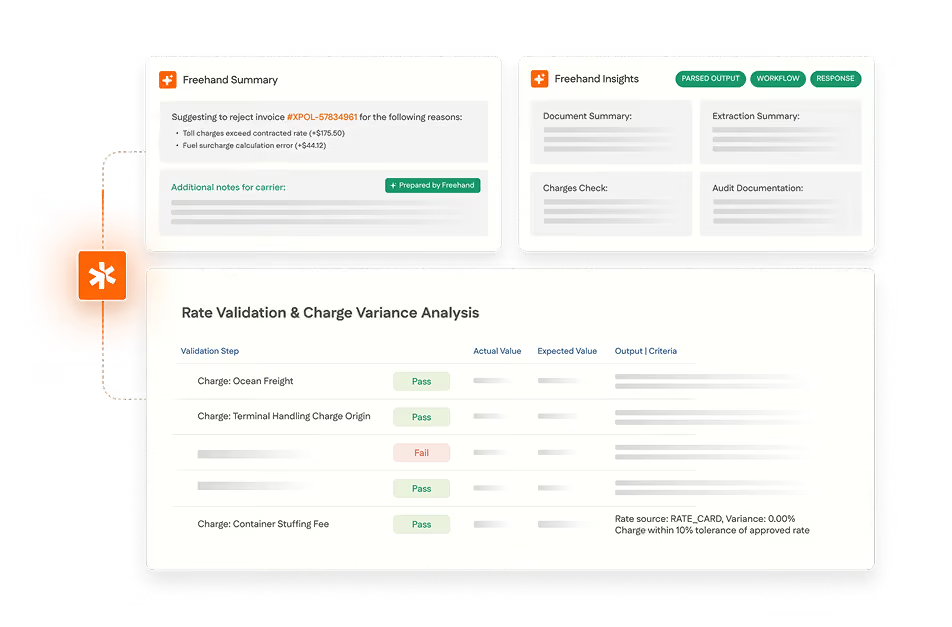
Freehand's invoice audit agent checks inbound freight invoices against contracted rates and routing guide terms with the same coverage as outbound, so a supplier's carrier choice doesn't quietly become an unaudited cost.
{{brown-cta}}
Frequently Asked Questions
What is inbound freight management?
Inbound freight management is controlling carrier selection, routing, and cost for shipments coming in from suppliers, as opposed to outbound freight moving to customers.
What is the difference between inbound and outbound freight?
Inbound freight is the cost of shipments coming into your business from suppliers, tied to a purchase order. Outbound freight is the cost of shipping products to customers, tied to a sales order. They're usually managed by different processes and often different teams.
What is prepaid freight vs. collect freight?
Prepaid freight means the supplier arranges the carrier and bills the freight cost, often as part of the invoice. Collect freight means the buyer arranges the carrier and pays the freight charge directly. Whoever arranges the shipment controls the rate and carrier choice.
Why do so few companies have an inbound routing guide?
Ownership is unclear. Inbound freight sits on the purchase order side of the business, and the team managing supplier relationships isn't always the same team that owns freight cost, so it falls through the gap. Only around 35% of companies have a formal routing guide for inbound freight.
Does inbound freight need to be audited the same way as outbound freight?
Yes. An inbound freight charge that's never checked against a contracted rate still gets capitalized into inventory cost, carrying the error forward into the balance sheet instead of catching it at the invoice.
Every Inbound Invoice, Audited Like an Outbound One.
Freehand checks inbound freight against your routing guide and contracted rates, whether the supplier prepaid it or not.
Your Supplier Picks the Carrier. You Pay Whatever They Billed.
Only 35% of companies have a routing guide for inbound freight. Fewer audit what shows up on the invoice.
Every warehouse. Every provider. Every mile.
Gartner's 2026 outlook on logistics outsourcing, and how AI Teams hold every contract to the terms you agreed.
- Where outsourced logistics quietly loses margin
- Why billed charges drift from the contract
- How AI Teams close the gap