

Outbound Freight: Where the Margin Actually Leaks
Outbound freight looks well-managed, until the shipping fee you charge customers stops matching what carriers actually bill you. See where that gap opens.
.webp)
August 20, 2026
•
8
mins
Outbound freight, the outbound side of your logistics and shipping operation, is the cost of shipping product to customers. Most companies manage it better than inbound freight, since it's tied to a sales order everyone's already watching. The risk that gets missed isn't a lack of oversight. It's that the shipping fee charged to customers gets set once and stops getting checked against what carriers actually bill.
Key Takeaways
- Outbound freight is the cost of shipping finished product to customers, tied to a sales order, distinct from inbound freight, which is tied to a purchase order.
- Outbound and drop-ship freight costs typically run 2 to 5% of revenue for a distributor, and that figure is trending toward 4 to 10% as rates and accessorials climb.
- The real risk with outbound freight isn't neglect. It's that a flat shipping fee quoted to a customer gets locked in once, while the actual carrier cost behind it keeps moving.
- Accessorial charges and surcharges often fall outside the original freight quote entirely, which means the gap between what you charge and what you're actually billed can widen without anyone noticing.
- Freight-out is expensed as a selling cost, not capitalized like freight-in, which means margin erosion on outbound freight shows up directly in SG&A, not buried in inventory value.
What is outbound freight, and how is it different from inbound freight?
Outbound freight is the cost of shipping finished goods to customers, retail locations, or other distribution centers, tied to a sales order, the mirror of inbound freight, which is tied to a purchase order and comes from suppliers. Outbound freight is usually managed with more discipline, since it's directly visible to the team that owns customer relationships and revenue.
For the inbound side of this same distinction, see our guide to inbound freight management.
What are the core steps in the outbound freight process?
Outbound freight runs through four steps before a shipment ever leaves the building: order processing, pick and pack, carrier selection and loading, and documentation. Each step generates data the freight cost eventually gets validated against.
- Order processing: the sales order gets confirmed and released for fulfillment.
- Pick and pack: the correct items get pulled from inventory and packaged for transit.
- Carrier selection and loading: the shipment gets assigned to a carrier and mode (LTL or FTL) and loaded.
- Documentation: the bill of lading and shipping paperwork get generated, the same record an invoice later gets audited against.
That last step is where the billing-reconciliation problem actually starts or gets caught. A bill of lading that doesn't match what the carrier eventually invoices is the same gap covered in the sections below, just visible one step earlier.
{{blue-cta}}What operational challenges come with outbound freight, before the billing gap even shows up?
Outbound freight teams are usually busy solving delivery reliability and capacity, meeting customer delivery windows and absorbing demand spikes, which is exactly why the billing-reconciliation gap goes unnoticed. The operational side gets the attention because a late delivery or a stockout is visible immediately. A shipping fee quietly falling behind carrier cost isn't.
- Meeting customer delivery deadlines: service-level commitments to customers put pressure on carrier selection and mode choice (LTL versus FTL) for every order.
- Absorbing seasonal or unexpected demand spikes: volume swings mean the carrier mix and capacity that worked last quarter may not hold this one.
- Managing mixed shipment types: a single outbound program often runs LTL and full truckload simultaneously, each with a different cost structure to track.
Why does outbound freight still leak margin, even when it's actively managed?
Outbound freight leaks margin because the shipping fee charged to a customer usually gets set once, at quote or order time, while the actual carrier cost behind that shipment keeps changing. A flat rate quoted six months ago doesn't automatically update when fuel surcharges climb or a carrier reprices a lane.
Outbound and drop-ship freight costs typically run 2 to 5% of revenue for a distributor, and industry estimates put that figure trending toward 4 to 10% as freight rates and accessorial charges climb. Even a small unbilled gap per shipment compounds fast across volume.
Where specifically does the gap between charged and actual freight cost open up?
The gap opens in two places: accessorial charges that fall outside the original quote, and carrier rate changes that never make it back into the customer-facing shipping fee. Both are invisible until someone compares the two numbers directly.
| Gap source | What happens |
|---|---|
| Accessorial charges outside the quote | Detention, residential delivery, or address correction fees get billed by the carrier but were never built into the original customer-facing rate |
| Carrier rate drift | Fuel surcharges or contracted rates move after the customer-facing shipping fee was set, and the fee never gets revisited |
| Reclassification or reweigh | A shipment gets rebilled at a higher rate post-pickup, a cost that lands on you, not the customer who was already quoted |
How does outbound freight show up differently in your accounting than inbound freight?
Outbound freight (freight-out) is expensed as a selling cost the period it's incurred. It's never capitalized into inventory value, unlike inbound freight. That means margin erosion on outbound freight hits SG&A directly and immediately, rather than sitting quietly inside inventory value the way an inbound freight-in error would.
For the full accounting treatment of freight-in versus freight-out, see our guide to freight accounting.
How do you actually close the gap between what you charge and what carriers bill you?
You close it by auditing outbound freight invoices with the same rigor as any other freight cost, then feeding that comparison back into how shipping fees get set. Most audit programs check whether a carrier billed the contracted rate. Fewer check whether the rate you charged the customer still reflects that contracted rate.
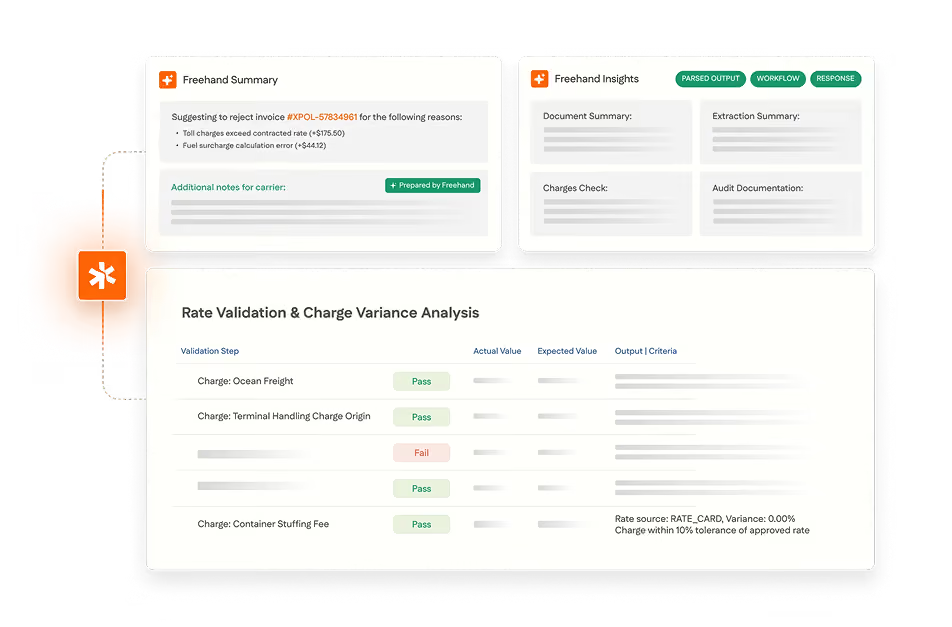
Freehand's invoice audit agent validates every outbound freight invoice against the contracted rate and flags variance before it compounds, and the benchmarking agent checks whether your freight cost per unit is still tracking to current market data, not the number a shipping fee was built on months ago.
{{brown-cta}}
Frequently Asked Questions
What is outbound freight?
Outbound freight is the cost of shipping finished product to customers, tied to a sales order. It's the mirror of inbound freight, which is tied to a purchase order and comes from suppliers.
Why does outbound freight cost more than what's charged to customers?
Because the shipping fee charged to a customer is usually set once, at quote or order time, while the actual carrier cost behind it keeps moving as fuel surcharges, accessorials, and contracted rates change.
Is outbound freight capitalized or expensed?
Outbound freight (freight-out) is expensed as a selling cost (SG&A) in the period it's incurred. It's never capitalized into inventory value, unlike inbound freight.
What percentage of revenue does outbound freight typically represent?
Outbound and drop-ship freight costs typically run 2 to 5% of revenue for a distributor, trending toward 4 to 10% as freight rates and accessorial charges climb.
How do you stop outbound freight from eroding margin?
Audit outbound freight invoices against contracted rates the same way you would any other freight cost, then use that data to check whether the shipping fee charged to customers still reflects current carrier cost, not a rate set months earlier.
Every Outbound Invoice Checked Against What You Actually Quoted.
Freehand validates carrier invoices against your contracted rates and the cost built into the customer quote, closing the gap before it erodes margin.
You Quoted the Customer One Number. The Carrier Billed You Another.
The freight cost baked into your customer's price and the freight cost the carrier actually charges rarely match by the time the invoice lands.
Every warehouse. Every provider. Every mile.
Gartner's 2026 outlook on logistics outsourcing, and how AI Teams hold every contract to the terms you agreed.
- Where outsourced logistics quietly loses margin
- Why billed charges drift from the contract
- How AI Teams close the gap