

Freight Cost Optimization: 8 Strategies That Actually Work
Freight cost optimization runs on 8 levers, from mode selection to carrier negotiation. See which one most strategies skip, and why it costs the most.
.webp)
August 20, 2026
•
8
mins
Freight cost optimization, also called freight spend optimization, runs on eight levers: mode and carrier selection, shipment consolidation, carrier negotiation, technology and TMS adoption, dock and detention management, carrier diversification, fuel efficiency, and freight audit and spend benchmarking. Most strategies work the first seven reasonably well. The eighth lever checks that what gets billed actually matches what was negotiated, and that the rate itself still holds up against the market. It's usually the one left as a sample instead of a system.
Key Takeaways
- Freight cost optimization covers eight levers, from mode selection to invoice audit, and most published strategies treat all eight as roughly equal. They aren't.
- Full-coverage freight audit recovers 1.5 to 2.5% of total freight spend, money that stays lost when audit runs on a sample instead of every invoice.
- Carrier negotiation and mode selection get the most attention because they're visible at contract signing. Audit gets the least because the savings show up quietly, invoice by invoice, months later.
- A negotiated rate and a well-chosen mode only lower cost if the invoice that follows actually reflects them. That's the lever most optimization strategies skip.
- Freehand's AI Teams run full-coverage audit against every invoice automatically, so the other seven levers keep the savings they're supposed to produce.
What are the main levers of freight cost optimization?
Freight cost optimization works through eight levers. Most enterprises execute the first seven with real discipline and treat the eighth as an afterthought. Each lever addresses a different part of where freight spend actually comes from.
| Lever | What it does |
|---|---|
| Mode and carrier selection | Matching each lane to the right mode (LTL, FTL, intermodal) and carrier mix for that volume and distance |
| Shipment consolidation | Combining smaller loads into fewer, fuller shipments to cut per-unit cost |
| Carrier negotiation | Securing better rates through volume commitments and long-term carrier relationships |
| Technology and TMS adoption | Using route planning and transportation management software to plan moves more efficiently |
| Dock and detention management | Reducing driver wait time at pickup and delivery, which drives detention and accessorial charges |
| Carrier diversification | Maintaining backup carriers and modes so one capacity crunch doesn't force a spot-market scramble |
| Fuel efficiency | Reducing fuel consumption through route planning and driver practices |
| Freight audit and spend benchmarking | Checking that every invoice bills the agreed rate and terms, then comparing that spend against current market data on an ongoing basis, not just once at RFP |
Why does mode and carrier selection get the most attention?
Mode and carrier selection sets the baseline cost for a lane. That's why it's the lever every optimization conversation starts with. Choosing FTL over LTL above a certain weight threshold, or intermodal over truck on a long enough haul, changes the cost structure before a single invoice is issued.
For the full breakdown of when each mode makes sense, see our guide to LTL vs. FTL rates.
{{blue-cta}}
How does consolidation and carrier negotiation lower freight cost?
Consolidation reduces the number of shipments moving. Negotiation reduces the rate each one costs. Both only work if the volume behind them is accurate. Combining multiple smaller loads into one fuller shipment spreads fixed costs, pickup, handling, minimum charges, across more freight. Negotiating from real, current shipment data, not last year's estimate, gets a rate that reflects what you actually ship.
A negotiated rate also only holds if the carrier actually takes the loads offered to it at that rate. For how a low tender acceptance rate quietly erodes a negotiated rate before a single invoice is even audited, see our guide to freight tendering.
For how to build negotiating strength from real shipment data, see our guide to freight procurement.
Where do technology, dock operations, and diversification fit in?
Technology, dock management, and carrier diversification all reduce cost indirectly. They cut the friction and risk around the shipment itself. None of them changes the contracted rate. Each one changes whether that rate holds up in practice.
- Technology and TMS adoption: route planning software plans moves more efficiently, but it optimizes the plan, not what the carrier eventually bills for executing it.
- Dock and detention management: faster loading and unloading cuts the detention and accessorial charges that accumulate when a driver waits.
- Carrier diversification: a backup carrier network means a capacity crunch doesn't force an expensive, unplanned spot-market booking.
Why are freight audit and spend benchmarking the most overlooked lever, and the one with the most money in it?
Freight audit is overlooked because the other seven levers show their savings right away, at a signed contract or a chosen mode. Audit only shows its savings months later, invoice by invoice, and only if someone is actually checking. A negotiated rate that never gets enforced at invoice level isn't a real savings. It's a number on a contract.
Full-coverage audit checks every invoice, not a sample. It recovers 1.5 to 2.5% of total freight spend. On $30M in annual freight, that's $450,000 to $750,000 a year, money the other seven levers already assumed was theirs.
{{brown-cta}}
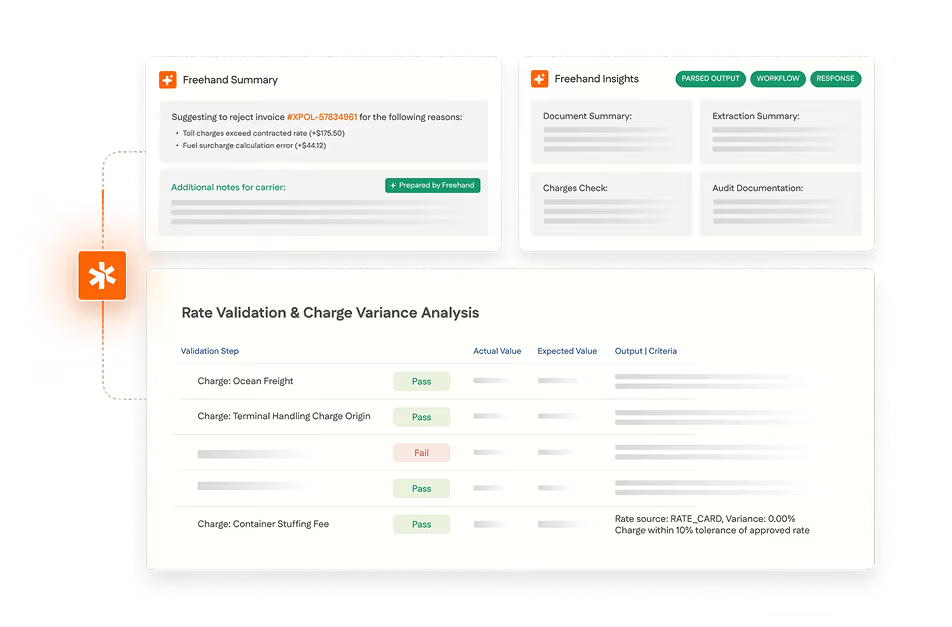
Most published freight cost optimization guides list audit as one tactic among eight. In practice, it's the lever that decides whether the other seven actually deliver the savings they get credited with. Freehand's invoice audit agent checks every invoice against the contracted rate, surcharge index, and accessorial terms. Coverage runs at 100%, not a sample, so a negotiated rate or a smarter mode choice keeps the savings it was supposed to produce.
Audit alone catches what a single invoice got wrong. It doesn't tell you whether a contracted rate that was competitive last year is still competitive now. That's a separate question, and it's why benchmarking sits next to audit rather than replacing it. Freehand's benchmarking agent checks your freight cost per unit and audit exception rates against current market data on an ongoing basis, not once a year at RFP, so a rate that's quietly drifted above market gets flagged before the next contract cycle, not after.
For the full financial-controls framework, not just the tactics list, see our guide to building a freight spend management strategy.
Frequently Asked Questions
What is freight cost optimization?
Freight cost optimization means reducing total freight spend across levers like mode selection, consolidation, carrier negotiation, and invoice audit, rather than focusing on any single tactic alone.
What is the fastest way to reduce freight costs?
Freight audit usually produces the fastest, most measurable recovery. It recovers money already owed on freight already shipped, 1.5 to 2.5% of total spend, without waiting on a contract renegotiation or a mode change.
Does freight cost optimization require new technology?
Some levers, like TMS-based route planning, benefit from technology. Others, like full-coverage invoice audit, are more a coverage decision than a technology one. What matters is checking every invoice instead of a sample.
How much can a company save through freight cost optimization?
It varies by lever and by how much is currently left unmanaged. Full-coverage audit alone typically recovers 1.5 to 2.5% of total freight spend, on top of whatever consolidation, negotiation, and mode selection already add.
Is freight cost optimization a one-time project or an ongoing process?
Ongoing. Contracted rates drift, surcharge indices change, and consolidation opportunities shift with volume. Treat it as a one-time project, and every lever loses ground within a year.
The Lever Most Strategies List Last Recovers the Most.
Freehand's invoice audit agent checks 100% of invoices against the contracted rate, so the other seven levers keep the savings they're already credited with.
Seven Levers Save Money at Signing. One Saves It at Every Invoice.
Mode selection and carrier negotiation show their savings right away. Audit only shows its savings months later, and only if someone is actually checking.
Every warehouse. Every provider. Every mile.
Gartner's 2026 outlook on logistics outsourcing, and how AI Teams hold every contract to the terms you agreed.
- Where outsourced logistics quietly loses margin
- Why billed charges drift from the contract
- How AI Teams close the gap