
Best Freight Invoice Processing Software in 2026: 8 Platforms Compared
.webp)
June 29, 2026
•
13
mins
Comparing the top freight invoice processing software options for 2026: 1. Freehand, 2. Loop, 3. OpenEnvoy, 4. Cass Information Systems, 5. Trax Technologies, 6. Intelligent Audit, 7. GoComet.
Manual freight invoice processing takes 5 to 9 days per invoice and leaks money to errors and disputes. Automated processing cuts that time by 60 to 75%, drops billing disputes by up to 55%, and pulls cycle time from receipt to GL post under 24 hours. The question is how much of the work the software actually does: just capture, or capture through payment.
This comparison is written for enterprise shippers, the $1B-plus companies processing hundreds of thousands of carrier invoices a year across truckload, LTL, parcel, ocean, and air. Freight invoices arrive as EDI, PDF, spreadsheet, and email, each in a different layout, and the manual work of reading, validating, coding, and paying them is where cycle time and errors pile up.
The platforms below turn that document pile into cleared, coded, paid invoices. They differ on how much of the work runs untouched, and the table scores them on that. Related comparisons: for overcharge audit specifically, freight audit software; for the payment and disbursement side, freight payment software.
TL;DR
- Freehand: AI Teams that capture, validate, GL-code, and pay freight invoices end to end, with no manual exception queue and no preprocessing.
- Loop: A logistics data platform whose DUX engine normalizes freight and parcel invoices at high touchless rates, strongest on clean data.
- OpenEnvoy: Real-time autonomous finance that verifies invoices before money moves, with n-way matching and sync to 24-plus ERPs.
- Cass Information Systems: Large-scale freight payment processing with decades of heritage and a rules-based audit ceiling.
- Trax Technologies: Global multi-modal invoice processing with strong reporting, though exception resolution stays with your team.
- Intelligent Audit: Analytics-led processing and overcharge recovery backed by a services team.
- GoComet: Automated invoice reconciliation with rate benchmarking, strong on validating charges against contracted rates.
Comparison table: top freight invoice processing software for 2026
What is freight invoice processing software?
Freight invoice processing software automatically verifies freight bills against shipment data, rate agreements, and business rules, then moves clean invoices to payment.
Core functions the software performs:
- Captures invoices in any format: EDI 210, PDF, spreadsheet, and email attachments.
- Extracts charges, references, and shipment data with machine-learning models rather than rigid templates.
- Validates each charge against contracted rates, accessorial rules, and shipment records.
- Codes charges to the right GL account and cost center.
- Routes cleared invoices to the ERP or TMS for payment, and exceptions for resolution.
Technically, it ingests PDFs, EDI messages, and images, classifies and extracts fields like BOL, PRO, weight, and charges, then matches each against the rate, shipment, and PO. The key difference between platforms is scope: the most advanced ones go beyond extraction to resolve exceptions and pay carriers autonomously, while others only capture the data.
For a logistics finance or AP team, that means cycle time from invoice to GL post drops from days to under 24 hours, with fewer disputes and cleaner accruals.
Automated processing cuts invoice cycle times from days to hours and reaches high touchless rates, which is why an agentic freight audit and payment software layer that clears and pays on its own separates from a capture tool that still hands exceptions to a person.
Key benefits of freight invoice processing software
- Cost recovery: automatically catches accessorial overcharges, duplicate billing, and rate errors before they are paid.
- Time savings: replaces manual spreadsheet data entry with high-accuracy automated capture, cutting processing time by 60 to 75%.
- Visibility: centralizes multi-carrier invoice data into dashboards aligned with your financial KPIs.
The platforms that go furthest add a fourth benefit, autonomous resolution, closing exceptions and paying carriers without a manual queue.
How we evaluated these platforms
We scored each vendor on the decision an enterprise AP and logistics team makes when a carrier invoice lands: which platform reads it, validates it, codes it, and pays it with the least manual touch. All seven were assessed on the same weighted criteria, using vendor documentation, Gartner Peer Insights, and G2 review data. Weights reflect what drives a touchless invoice cycle for a high-volume freight program.
- AI autonomy and touchless processing (25%): Does the platform clear and pay invoices on its own, or hand a queue to a human?
- Document capture and extraction accuracy (20%): How well it ingests any format and extracts charges without templates.
- Validation depth and exception handling (18%): Matching against rates, accessorials, and shipment records, and how exceptions resolve.
- GL coding and ERP/TMS straight-through (15%): Correct coding and routing cleared invoices to the ledger without rekeying.
- Freight-native coverage (12%): Multi-modal support and accessorial depth across TL, LTL, parcel, ocean, and air.
- Time-to-value and pricing transparency (10%): Speed to go live and whether pricing is disclosed.
This is an independent editorial comparison referencing Gartner and G2 alongside vendor documentation; it is not a certified third-party ranking.
Best freight invoice processing software, ranked for 2026
Platforms are ordered by scope, AI maturity, and verifiable evidence. End-to-end autonomous platforms lead because they process the whole invoice, not just capture it. Extraction-only tools rank lower on scope but fit teams that only need accurate data capture. Vendor figures we could not confirm are labeled vendor-claimed.
1. Freehand
Best for:
Enterprises that want carrier invoices captured, validated, coded, and paid without an exception queue to staff. Built for AP and logistics leaders tired of cycle times measured in weeks and headcount that rekeys invoices.

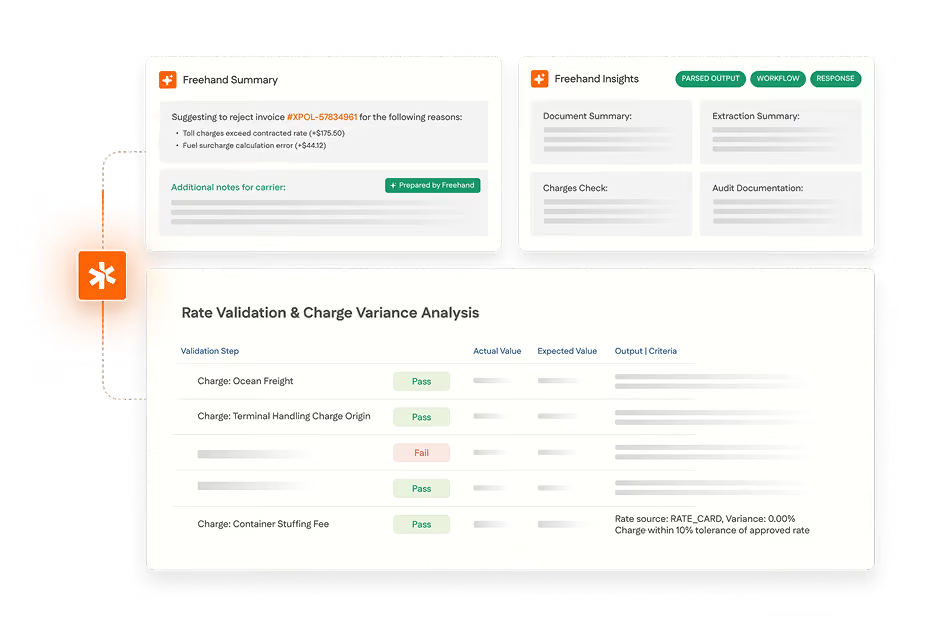
Freehand deploys autonomous AI Teams that run the invoice from arrival to payment. Its adaptive ingestion normalizes EDI 210, PDF, Excel, and raw email attachments with zero preprocessing, its intelligent 4-way matching validates every line against contracted rates, shipment specs, purchase orders, and carrier history, and its localized GL mapping codes each charge to the right cost center. Cleared invoices route to payment and exceptions resolve autonomously. Where the incumbents give you a capture tool or a managed service, Freehand runs the whole cycle and cuts it 80% to 90%.
As invoices arrive, the activity matching agent lines each charge up against the shipment and contract, the pre-send validation agent catches errors before anything reaches payment, and where a charge fails the check, the dispute generation agent drafts the challenge automatically.
Key features:
- Autonomous AI Teams capture, validate, audit, resolve, and pay invoices end to end
- Invoice validation agent ingests any format and normalizes it before processing
- Invoice audit agent runs multi-way matching against rate, shipment, and PO
- Intelligent 4-way matching against contracted rates, shipment specs, purchase orders, and carrier history.
- Autonomous exception resolution rather than a queue for a person to work.
- Real-time GL coding posts automatically after validation
- Native SAP, Oracle, NetSuite, and Dynamics connectors, TMS-agnostic
- Connects to accounts payable automation software for payment
- Cuts invoice cycle times 80% to 90% and suppresses 70%-plus of recurring exceptions within 90 days.
- Client-exclusive model trained on your data
- Managed freight payment software execution once charges clear.
- Pairs with enterprise accounts payable automation software workflows delivered as completed work.
Pricing:
Performance-based pricing scales with freight spend volume and invoice count across Essential, Professional, and Enterprise tiers, typically 50% to 60% lower than traditional audit firms. No per-seat licensing.
Pros:
- Runs the full cycle from capture to payment, not just capture.
- Zero preprocessing and no manual exception queue.
- Full data ownership and system-agnostic connectors.
Cons:
- A newer name than the legacy payment processors.
- Deepest fit is enterprise invoice volume rather than a small AP desk.
What Users Say
Love: The full cycle, not just capture. Freehand ingests any invoice format with zero preprocessing, matches every line 4 ways, codes the GL, and pays, cutting cycle times 80% to 90% without an exception queue. (source)
Complain: Younger name, enterprise-volume fit. As a newer entrant, Freehand carries a shorter public track record than legacy processors, and its strongest fit is high enterprise invoice volume rather than a small desk. (source)
2. Loop
Best for:
Data-forward teams that want clean, normalized freight and parcel invoice data in a modern, real-time interface.
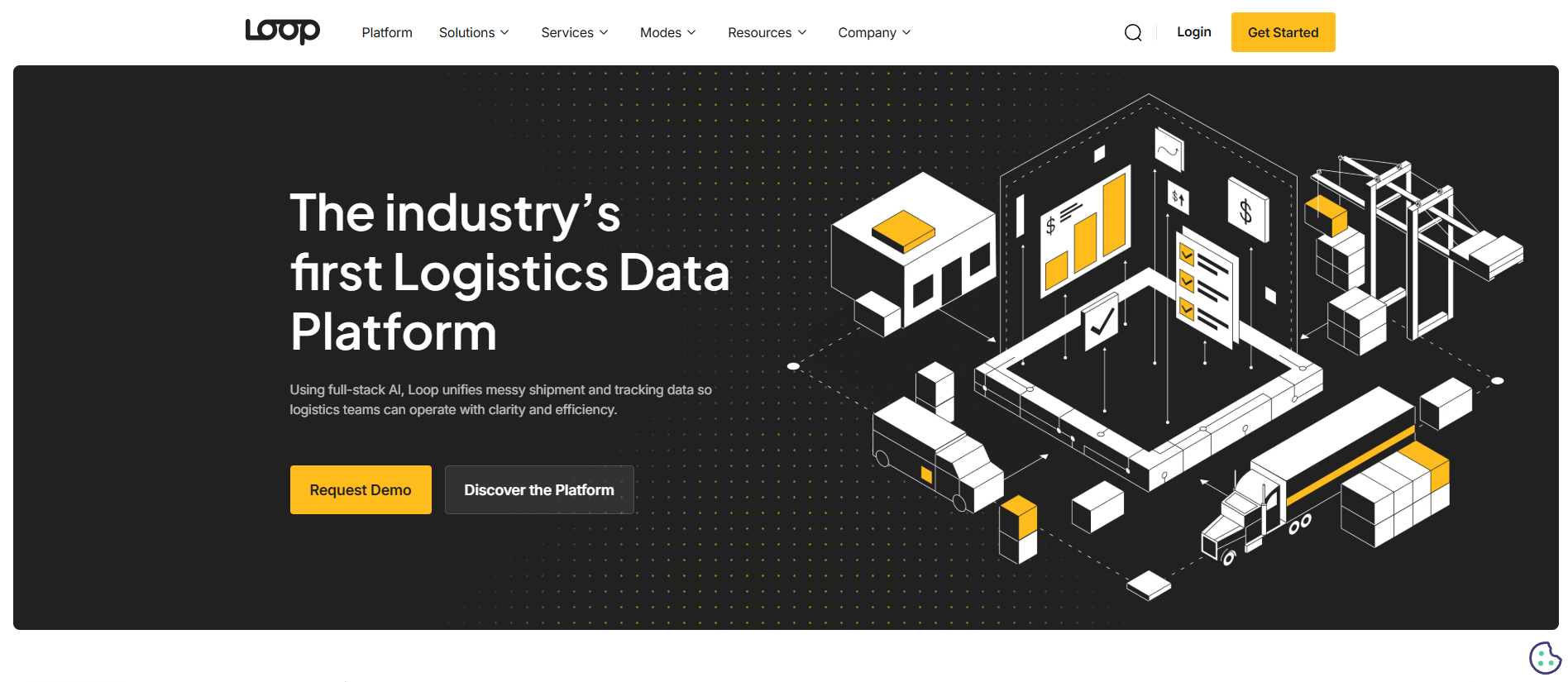
Loop is a logistics data platform whose DUX engine normalizes freight and parcel invoices at high touchless rates, bringing real-time control-tower visibility to shippers. Its merger with Data2Logistics and its J.P. Morgan Payments partnership expanded its parcel and payment reach. Its strength is turning messy invoice data into a clean, single source of truth. The catch: clean data is the input, and someone on your team still acts on the dashboards to resolve exceptions.
Key features:
- DUX engine for high touchless invoice normalization.
- Capture and extraction across freight and parcel.
- Real-time control-tower visibility and dashboards.
- Invoice validation against contracted rates.
- Global payment execution through a bank partnership.
- API-forward integration with modern data stacks.
- Anomaly and exception surfacing for review.
- Coverage suited to 3PL and 4PL audit software scenarios.
Pricing:
Custom pricing by quote; not publicly disclosed. Carrier payment runs through its bank partnership.
Pros:
- Strong invoice normalization and clean data output.
- Modern, real-time interface.
Cons:
- Surfaces issues but leaves resolution to your team.
- Payment tied to its bank partnership can constrain banking flexibility.
- Freight-native product is newer than legacy processors.
What Users Say
Love: Real-time normalization and visibility. Loop brings real-time freight invoice automation to shippers, normalizing messy transportation data into a single source of truth. (source)
Complain: Payment tied to a bank partner. Loop executes carrier payments through its J.P. Morgan Payments partnership, which can limit teams that want independent corporate banking arrangements. (source)
Not the right fit? See our Loop alternatives breakdown.
3. OpenEnvoy
Best for:
Finance teams that want every invoice verified in real time before money moves, across AP and AR.
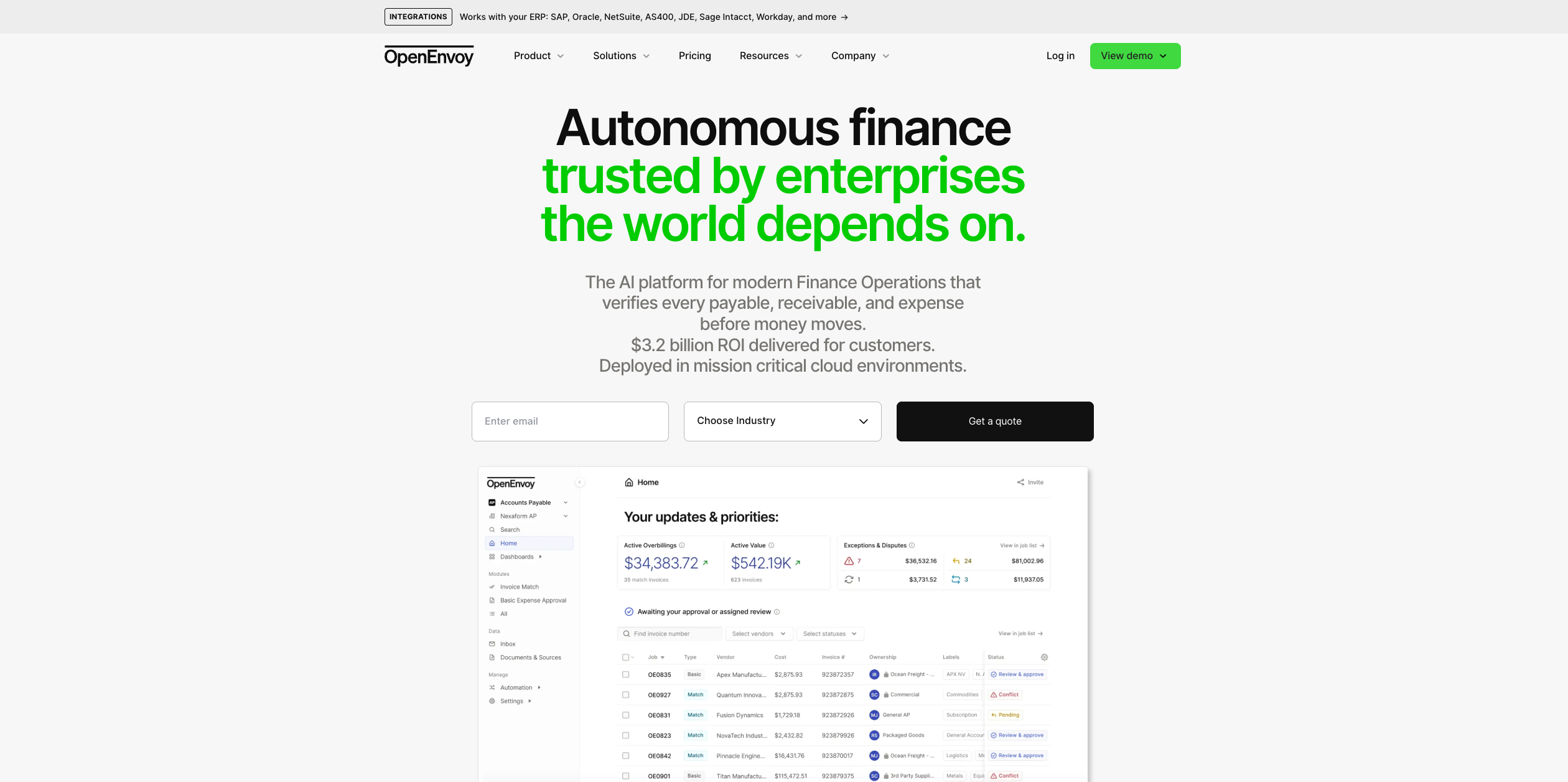
OpenEnvoy is an AI autonomous finance platform that captures invoices in any format, runs real-time pre and post audits, performs line-level dedupe and n-way matching, and syncs to more than 24 ERPs, all without asking suppliers to onboard a portal. For freight it verifies fuel surcharges, accessorials, detention, and demurrage across trucking, ocean, rail, and air. Its strength is real-time verification before payment; it is a broad finance platform rather than a freight-native processor.
Key Features
- Invoice capture in any format without supplier portals.
- Real-time pre, post, and secondary audits.
- Line-level dedupe and n-way matching.
- Fuel surcharge, accessorial, detention, and demurrage verification.
- GL coding and approval workflows.
- Sync to 24-plus ERPs.
- Cash application across AP and AR.
- Coverage that extends toward accounts receivable automation software.
Pricing:
Custom pricing by quote; not publicly disclosed. Structured around volume and ERP scope.
Pros:
- Real-time verification before money moves.
- Broad ERP sync and no supplier portal.
Cons:
- A broad finance platform rather than a freight-native tool.
- Reviewers note occasional GL coding errors.
- Freight depth is one capability among many.
What Users Say
Love: Faster AP reconciliation. A reviewer notes OpenEnvoy "saves our team a lot of time in our AP reconciliation process," with accurate GL coding making the billing process smoother. (source)
Complain: Occasional coding misses. Reviewers cite cases of mislabeled GL codes and missed freight or dropship charges that needed correction. (source)
4. Cass Information Systems
Best for:
Enterprises that prioritize payment scale, heritage, and financial stability over autonomous processing.

Cass operates a bank-first model that processes and pays freight invoices at large scale, with decades of reliability and deep carrier relationships. It is a trusted benchmark for cost competitiveness and business intelligence. The tradeoff is a rules-based audit ceiling and manual exception handling, so complex accessorials outside the pre-set rules can pass through and headcount stays in the loop.
Key features:
- Large-scale freight invoice processing and carrier payment.
- Rules-based validation against contracted rates.
- Business-intelligence reporting.
- Multi-modal invoice support.
- ERP integration via established file feeds.
- GL coding and cost allocation support.
- Long-standing carrier relationships.
- Compatible with enterprise parcel audit software workflows.
Pricing:
Custom, typically per-invoice processing fees plus the banking model. Not published.
Pros:
- Unmatched financial security and a long track record
- Strong audit discipline at high invoice volume
Cons:
- A managed service rather than self-serve software
- Implementation can be long, and it is not autonomous
Reviewers describe Cass as one of the most trusted names in freight payment. See the Cass reviews on Gartner Peer Insights.
What Users Say
Love: Trusted processing at scale. A Senior Director of Transportation calls Cass "a benchmark amongst it's peer group," citing ease of transition and business intelligence. (source)
Complain: Very thin, dated review signal. Cass shows a single Gartner rating from 2023, so there is little current peer feedback to validate. (source)
Not the right fit? See our Cass Information Systems alternatives breakdown.
5. Trax Technologies
Best for:
Large enterprises that process freight invoices at high volume across many regions and want deep spend analytics.
Trax is a long-established freight audit and payment provider whose Prizma.AI platform processes global freight invoices with strong spend analytics and reporting. It covers all modes and is a common enterprise incumbent. Its strength is reporting depth; its structural limit is that its AI is oriented to detection, surfacing exceptions that your team still reviews and resolves.
Key features:
- High-volume freight invoice processing and audit
- Prizma.AI validation on decades of freight data
- Transportation spend analytics and benchmarking
- Broad global carrier network
- Compliance checks and discrepancy resolution
- Payment processing and timing
- ERP integrations
- SOC 2, GDPR, and ISO 27001
Pricing:
Custom, premium managed-service pricing. Not published.
Pros:
- Deep analytics and broad global coverage
- Proven at enterprise invoice volume
Cons:
- Exception resolution requires human reviewers.
- Shared AI model trained on pooled client data.
- Reviewers cite support gaps and an aging platform.
What Users Say
Love: Established multi-modal processing and reporting. Long-standing coverage of global freight spend across modes, with reviewers valuing its reporting depth. (source)
Complain: Support gaps and unclear exception handling. A Manager at a $10B-plus manufacturer cited "too many gaps in operations and management" and an aging TPS platform. (source)
Not the right fit? See our Trax Technologies alternatives breakdown.
6. Intelligent Audit
Best for:
Shippers focused on recovery and anomaly detection across freight and parcel invoices
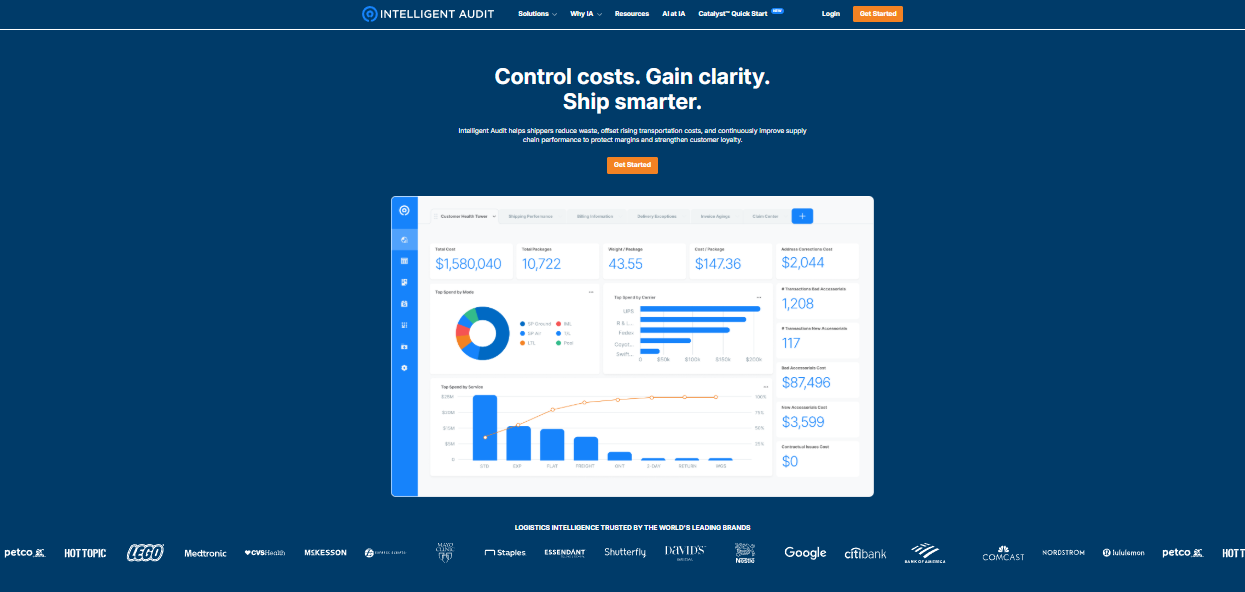
Intelligent Audit, founded in 1996, processes and audits more than 2 billion shipments annually (vendor-claimed). It pairs freight and parcel invoice audit with DeepDetectAI for anomaly and fraud detection, plus optimization modeling beyond basic error catching.
Key features:
- DeepDetectAI anomaly and fraud detection
- Freight and parcel invoice audit and recovery
- SKU-level cost visibility
- Contract renewal alerts
- Payment via a TriumphPay integration
- ERP integration and cost allocation
- Advanced analytics and optimization modeling
- Catalyst program for smaller businesses
Pricing:
Custom, often with a savings-based component plus a platform fee. Not published.
Pros:
- Nearly three decades of audit data
- Strong recovery and anomaly detection
Cons:
- Exceptions resolved by human analysts
- Configuration needs ongoing consultant involvement
What Users Say
Love: Clear invoice visibility and layered approvals. A Technical Program Manager praised easy navigation, a clear view of all logistics invoices, and a multi-layer approval workflow with scheduled reporting. (source)
Complain: No pending-approval notifications. The same reviewer wanted email alerts when an invoice is awaiting approval, which the tool currently lacks. (source)
Not the right fit? See our Intelligent Audit alternatives breakdown.
7. GoComet
Best for:
Teams that want automated invoice reconciliation with rate benchmarking to validate charges against contracted and market rates.
GoComet automates invoice reconciliation, checking charges against confirmed rates and its GoComet Freight Index, which benchmarks across 25,000-plus quotes from 4,000-plus vendors. It tracks contract utilization and reconciles invoices after the award. Its strength is validation and rate visibility; its reconciliation OCR reads PDF bills but not photocopies, and its contract-lifecycle depth is lighter than dedicated processors.
Key features:
- Automated invoice reconciliation against confirmed rates.
- GoComet Freight Index rate benchmarking.
- Contract utilization tracking after the award.
- RFQ and reverse-auction rate negotiation.
- AI and ML shipment tracking.
- Bias-controlled audit trail on award decisions.
- Digital record of every bid and award.
- Complements enterprise procurement software workflows.
Pricing:
Custom pricing by quote; not publicly disclosed. GoComet reports 8% to 15% freight cost savings across the procurement cycle.
Pros:
- Strong reconciliation and rate benchmarking.
- High G2 review volume and quick implementation.
Cons:
- Reconciliation OCR reads PDFs, not photocopies.
- No SKU-level visibility on the dashboard.
- Lighter on end-to-end payment than dedicated processors.
What Users Say
Love: Quick onboarding and reconciliation. Reviewers praise guided onboarding and customizable workflows; G2 rates GoComet 4.9 out of 5 across 240-plus reviews. (source)
Complain: Reconciliation and dashboard gaps. Reviewers note the reconciliation OCR reads only PDF bills, not photocopies, and the dashboard lacks SKU-level visibility. (source)
Other freight invoice tools logistics teams consider
These narrower tools come up in evaluations but cover only part of the processing lifecycle.
- FreightPOP: a cloud platform that compares carrier quotes to invoices and integrates with ERP systems, strongest as a TMS-side quote-to-invoice check.
- Rossum and Nanonets: AI document-extraction tools that read invoices accurately, then hand audit and payment off to other systems.
How to choose the right freight invoice processing software
Two Ways:
The first question is scope: do you need to capture invoices, or process them all the way to payment?
- If you only need accurate data capture from many carriers, an extraction tool like Lido is fast and inexpensive.
- If you need audit and payment at incumbent scale, Cass and Trax bring track record and analytics, and Intelligent Audit adds recovery depth.
- If you want the whole lifecycle handled with minimal manual work, the AI-native platforms go furthest. Freehand captures, audits, resolves, and pays autonomously, Loop automates contract-aware audit, Pando brings four-way matching and accruals, and OpenEnvoy audits in real time before payment.
One number frames the urgency: cutting cycle time from 5 to 9 days to under 24 hours changes how fast finance closes the month. Match the platform to the scope you need, then book the right demos.
Match the tool to how much of the invoice cycle you want to run untouched. Run each shortlist vendor against these questions:
- Does it capture any format (EDI, PDF, Excel, email) without templates or preprocessing?
- Does it validate every line against contracted rates, or sample and flag?
- Does it code the GL and route cleared invoices straight to the ERP, or hand back a queue?
- Does it pay once charges clear, or stop at clean data or a report?
- How much of the cycle runs touchless, and how fast does it go live?
Weight autonomy and straight-through processing highest. A capture tool that produces clean data still leaves the coding, exceptions, and payment to people.
Frequently Asked Questions
What is freight invoice processing software?
Software that captures, extracts, validates, and codes carrier invoices, then routes cleared invoices to the ERP or TMS for payment, cutting the manual work of reading and reconciling freight bills.
How does freight invoice processing work?
Invoices arrive by EDI, PDF, or email; machine learning extracts the charges, validates them against contracted rates and shipment data, codes the GL, and routes cleared invoices to payment.
How is invoice processing different from freight audit?
Freight audit checks invoices for overcharges. Invoice processing is the full workflow around it: capturing, extracting, coding, and paying. Agentic platforms run both as one autonomous cycle.
Can freight invoices be processed touchless?
Yes. Modern tools capture any format and validate automatically. Agentic platforms clear and pay without a human queue, while capture tools still hand exceptions to a person.
How much faster is automated freight invoice processing?
Automation cuts cycle times from days to hours, with some programs dropping 12-day cycles to under 48 hours and per-invoice handling from 30 minutes to about one minute.
Does it integrate with my ERP and TMS?
The strongest tools have pre-built connectors to SAP, Oracle, NetSuite, and major TMS platforms, so cleared invoices post to the ledger without rekeying. Others rely on file-based feeds.
Who needs freight invoice processing software?
Enterprises processing high volumes of carrier invoices across modes, typically AP and logistics teams replacing manual entry or a BPO to cut cycle time and error rates.
Every warehouse. Every provider. Every mile.
Gartner's 2026 outlook on logistics outsourcing, and how AI Teams hold every contract to the terms you agreed.
- Where outsourced logistics quietly loses margin
- Why billed charges drift from the contract
- How AI Teams close the gap